Replacement Brake Pads and Rotors Worth Buying
For most daily drivers, Akebono ProACT ceramic pads give the quietest, lowest dust stop with minimal rotor wear. Power Stop Z23 kits add slotted rotors for drivers who tow or brake hard. Budget shoppers do well with Bosch QuietCast pads paired with their own rotors.
Akebono ProACT ceramic pads are the pick for a quiet, low dust commuter stop, while Power Stop Z23 Evolution kits suit trucks and tow vehicles that need firmer bite under load. Budget drivers can lean on Bosch QuietCast pads with a separate rotor purchase.
Brake part numbers are vehicle specific, so the same pad compound feels different on a compact sedan than on a half ton pickup. We compared fitment data, friction material, owner feedback on noise and dust, and whether each kit includes rotors or pads only before ranking these seven.
The top picks, ranked

Akebono ProACT ACT785 Ultra Premium Ceramic Brake Pads
Akebono’s ceramic friction formula targets low noise and minimal dust buildup on alloy wheels. The pad set ships with OE style shims for a quieter contact with the caliper. It fits a wide range of Honda, Toyota and Acura applications without rotor replacement.
Pros
- Very low brake dust on wheels
- Quiet under normal braking
- Smooth pedal feel at low speed
Cons
- No rotors included
- Not rated for heavy towing

Power Stop Z23 Evolution Sport Brake Kit
This kit pairs drilled and slotted rotors with a carbon fiber ceramic pad for stronger bite under load. The slots help clear gas and debris during repeated hard stops, which matters when towing a trailer. Power Stop sells it as a matched front or rear set.
Pros
- Stronger bite under heavy load
- Rotors and pads matched together
- Handles repeated hard stops better than stock
Cons
- Louder than a ceramic only pad
- Higher rotor cost to replace
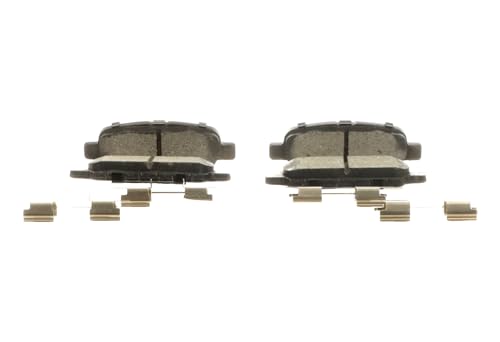
Bosch QuietCast BC905 Ceramic Disc Brake Pads
Bosch’s QuietCast line uses a ceramic compound with an integrated wear sensor on applicable models. It is priced for drivers replacing pads on a routine schedule rather than chasing performance gains. Coverage spans a broad range of Ford, Chevrolet and Nissan models.
Pros
- Lower cost than premium ceramic lines
- Wide vehicle coverage
- Wear sensor warns before metal to metal contact
Cons
- Less dust control than top tier ceramic pads
- Rotors sold separately

EBC Brakes Redstuff Ceramic Low Dust Brake Pads
EBC’s Redstuff compound is built to hold consistent friction at higher pad temperatures than a standard ceramic pad. Enthusiast owners use it on sport sedans and hot hatches that see occasional track days. The pad still runs quiet enough for street use.
Pros
- Holds bite at higher temperatures
- Good street manners when cold
- Popular with autocross and track day drivers
Cons
- Overkill for pure highway commuting
- Pricier than standard ceramic pads

ACDelco Advantage 14D1367CH Ceramic Brake Pad Set
ACDelco builds this pad set to match the original equipment shape used on many Chevrolet and GMC trucks and SUVs. The ceramic friction material targets the same pedal feel owners expect from the factory pad. It is a straightforward swap without machining the rotor.
Pros
- Matches factory pedal feel closely
- Straightforward bolt on fit
- Backed by ACDelco’s GM parts experience
Cons
- Limited mainly to GM applications
- No rotor kit option

Centric Parts C-Tek Standard Brake Rotor
Centric’s C-Tek rotor is a plain faced, non slotted design meant to match factory stopping performance. It suits drivers replacing warped or thin rotors alongside new pads rather than chasing a performance upgrade. Centric lists separate part numbers for front and rear positions.
Pros
- Priced for routine rotor replacement
- Coating helps resist surface rust in storage
- Smooth face keeps pad wear even
Cons
- No performance gain over stock geometry
- Pads sold separately

Wagner ThermoQuiet QC1367 Ceramic Disc Pad Set
Wagner’s ThermoQuiet line applies an integrally molded insulator to the backing plate to damp vibration at the source. Owners who have dealt with squealing stock pads often move to this line specifically for the quieter result. It covers a wide mix of domestic and import vehicles.
Pros
- Specifically engineered to cut squeal
- Wide vehicle application list
- Consistent ceramic dust control
Cons
- Rotors not included
- No slotted or drilled option in this line
How to pick the right one
What to look for in replacement brakes Start with the friction material. Ceramic pads run quieter and produce lighter dust, which suits most commuters. Semi metallic and carbon fiber ceramic blends bite harder under load but create more brake dust and some noise. Always match the part number to your exact trim, since rotor diameter and caliper type vary even within one model year.
Pads only versus a full pad and rotor kit Rotors wear thinner every time they get resurfaced, so a rotor near minimum thickness should be replaced rather than reused. A combined kit like the Power Stop Z23 saves the step of separately checking rotor thickness against spec. If your rotors still measure above minimum and show no deep grooves, a pad only swap such as the Akebono ProACT is enough.
Best for towing and heavy loads Trucks and SUVs that tow regularly generate more heat at the rotor face, which is where slotted designs like the Z23 kit help vent gas and debris. A standard ceramic commuter pad can fade faster under that repeated heat cycling. Drivers who tow occasionally rather than constantly can often stay with a standard ceramic pad and simply inspect more often.
Installation and break in New pads need a proper break in period, typically a few dozen moderate stops from highway speed, to transfer an even friction layer onto the rotor. Skipping this step is a common cause of early squeal on an otherwise good pad. Torque the caliper bolts to the service manual spec and always replace retaining clips or shims rather than reusing worn ones.
The lineup, side by side
| # | Model | Friction material | Best for | Score | Price |
|---|---|---|---|---|---|
| 1 | Akebono ProACT ACT785 Ultra Premium Ceramic Brake Pads | Ceramic | Best overall | 9.4 | Check price |
| 2 | Power Stop Z23 Evolution Sport Brake Kit | Drilled and slotted | Best for towing and trucks | 9.1 | Check price |
| 3 | Bosch QuietCast BC905 Ceramic Disc Brake Pads | Ceramic | Best budget | 8.6 | Check price |
| 4 | EBC Brakes Redstuff Ceramic Low Dust Brake Pads | Aramid fiber ceramic | Best for performance driving | 8.9 | Check price |
| 5 | ACDelco Advantage 14D1367CH Ceramic Brake Pad Set | Ceramic | Best for GM vehicles | 8.7 | Check price |
| 6 | Centric Parts C-Tek Standard Brake Rotor | Solid or vented, smooth face | Best rotor only replacement | 8.5 | Check price |
| 7 | Wagner ThermoQuiet QC1367 Ceramic Disc Pad Set | Ceramic | Best for noise sensitive drivers | 8.8 | Check price |
Questions worth asking
How do I know if my brakes need replacing?
Common signs include a squealing or grinding noise, a longer pedal travel before the car slows, pulsation felt through the pedal or steering wheel, and visible pad thickness under 3 millimeters when you look through the wheel spokes.
Are ceramic brake pads better than semi metallic pads?
Ceramic pads run quieter and produce less visible dust, which suits daily commuting. Semi metallic pads generally handle higher heat and heavier loads better, which fits towing or performance driving.
Can I replace brake pads without replacing the rotors?
Yes, as long as the existing rotors measure above the minimum thickness stamped on the rotor and show no deep grooves or heavy rust pitting. A shop can check rotor thickness with a micrometer during a pad swap.
Do slotted or drilled rotors stop a car faster than plain rotors?
On a street vehicle under normal conditions, the stopping distance difference is small. The real benefit shows up under repeated heavy braking, such as towing or track driving, where slots help vent gas and debris.
Why are my new brake pads squeaking?
New pads often need a break in period of a few dozen moderate stops before the squeal fades. If noise continues after that, check that an anti squeal shim or clip was not left off during installation.
How long do ceramic brake pads typically last?
Lifespan depends heavily on driving style and terrain, but ceramic pads commonly last longer than semi metallic pads in city driving because of their harder friction compound and lower wear rate.
What is the difference between front and rear brake pads?
Front brakes handle a larger share of stopping force on most vehicles because weight shifts forward under braking, so front pads are often thicker and wear faster than rear pads.
Is it safe to drive with a brake wear warning light on?
A wear warning light means the pad has reached its minimum thickness and should be replaced soon. Continuing to drive risks metal to metal contact, which damages the rotor and increases stopping distance.
Do I need special tools to replace brake pads at home?
A basic kit works for most vehicles: a lug wrench, jack and stands, a C clamp or dedicated caliper tool to retract the piston, and a torque wrench for the caliper bolts and wheel lugs.
Final word
The Akebono ProACT ceramic pads are the right call for most commuters who want quiet, low dust stopping without touching the rotors. Anyone who tows a trailer or drives a loaded truck regularly should move up to the Power Stop Z23 kit for the slotted rotor and firmer bite. Drivers on a tight budget who just need a safe, routine pad swap can rely on the Bosch QuietCast set and check rotor thickness separately before buying.
Tony Russo
Tony trained as an automotive technician and spent years in service and parts retail before moving into writing. He focuses on garage tools, car care products and accessories from a hands-on maintenance perspective.

