How to Pick a Soup Bowl That Won’t Spill or Cool
Sweese’s 20-ounce porcelain bowls balance everyday capacity with chip resistance. Le Creuset’s stoneware bowl handles oven-finished dishes like French onion soup up to 500 degrees. Cook N Home’s melamine set survives outdoor use where ceramic or glass would crack on concrete.
Sweese’s 20-ounce porcelain bowls lead this list for daily soup servings, balancing capacity with the chip resistance most families need. Le Creuset’s stoneware bowl serves cooks who finish dishes like French onion soup under a broiler. Cook N Home’s melamine set fits campers and patio diners who need something that won’t shatter outdoors.
A bowl that’s too shallow spills soup before the meal ends, while one too deep loses heat by the last spoonful. We compared material, capacity, heat retention, and oven or microwave ratings across seven current listings to rank these options.
What matters most
What to look for in a soup bowl Capacity decides whether a bowl works as a starter course or a full meal on its own. Material shapes heat retention, weight, and whether a bowl can go under a broiler or into a microwave. Rim width matters when soup is served with bread or crackers on the side. Households with tight cabinet space should also check whether a set stacks cleanly.
Comparing bowl materials Porcelain, used in Sweese’s bowls, resists chipping and holds warmth reasonably well without adding much weight. Stoneware, found in Le Creuset’s bowl, retains heat longest and tolerates oven temperatures up to 500 degrees. Glass options like Corelle’s Vitrelle weigh less and resist thermal shock better than ordinary glassware. Melamine, used in Cook N Home’s set, trades microwave and oven use for resistance to shattering outdoors.
Matching capacity to the soup you’re serving Broths and lighter soups fit smaller 16 to 18-ounce bowls, like Libbey’s or Corelle’s Vitrelle. Heartier stews and chili call for 24 to 32-ounce bowls, such as Cook N Home’s or DOWAN’s, without a refill trip. French onion soup and other broiler-finished dishes need an oven-safe bowl like Le Creuset’s stoneware. Sizing the bowl to the soup style cuts down on spills from an overfilled shallow rim.
Best bowls for outdoor meals and kids Melamine handles patio dinners and camping trips better than ceramic or glass, since a drop on concrete won’t shatter it. Lighter glass bowls, like Corelle’s Vitrelle, suit kids carrying their own serving to the table. Stoneware and porcelain, while sturdy, add weight that can be harder for young kids to manage safely. Outdoor entertaining calls for a shatter-resistant set kept apart from everyday indoor dishware.
What we recommend

Sweese 20-Ounce Porcelain Bowls
Sweese’s porcelain bowls hold 20 ounces, enough for a full serving without soup crowding the rim. Rounded edges make the bowl comfortable to hold while eating standing or seated. Porcelain resists chipping better than thinner ceramic alternatives sold at a similar price.
Pros
- Holds a full 20-ounce soup portion without overflow
- Microwave and dishwasher safe for quick reheating and cleanup
- Porcelain construction resists chips through daily use
Cons
- Heavier in hand than melamine or plastic bowls
- Sold in a single color per set

DOWAN Soup Bowls 32-Ounce
DOWAN’s bowls hold 32 ounces, sized for families who treat soup as the main course rather than a starter. Wide rims leave room for crackers or bread along the edge. Ceramic glaze resists staining from tomato-based or turmeric-heavy broths that discolor plainer finishes.
Pros
- 32-ounce capacity covers full-meal soup portions
- Wide rim leaves space for bread or toppings
- Glaze resists staining from colorful or acidic broths
Cons
- Takes more cabinet space than standard-size bowls
- Feels heavy for kids to carry when full

Corelle Vitrelle Winter Frost White Soup Bowl
Corelle’s Vitrelle glass weighs noticeably less than ceramic or porcelain, easier for kids or older adults to lift when full. This glass resists thermal shock cracking better than standard glassware sold nearby. An 18-ounce capacity suits a standard soup or cereal serving.
Pros
- Lighter in hand than ceramic or porcelain bowls
- Resists thermal shock cracking better than plain glass
- Stackable shape saves cabinet space
Cons
- Smaller capacity than DOWAN’s or Sweese’s largest options
- Rim can chip if dropped on tile

Le Creuset Stoneware 21-Ounce Bowl
Le Creuset’s stoneware bowl moves from oven to table, useful for baked soups like French onion that need a broiler finish. Its glaze comes in more color options than most budget ceramic sets. A 21-ounce capacity roughly matches the standard porcelain bowls here.
Pros
- Oven safe up to 500 degrees for broiled toppings
- Available in more glaze colors than most sets
- Stoneware holds heat longer than porcelain
Cons
- Costs more than porcelain or ceramic alternatives
- Sold individually rather than in a discounted set

Bormioli Rocco Tavola Soup Bowl
Bormioli Rocco’s opal glass bowls cost less than most porcelain sets while still holding a standard 19-ounce serving. This glass resists staining from acidic broths better than some ceramic glazes. A stackable shape keeps a set of six from crowding a shelf.
Pros
- Costs less than comparable porcelain sets
- Opal glass resists staining from acidic broths
- Stackable design saves shelf space
Cons
- Retains less heat than stoneware or ceramic
- Holds less than DOWAN’s 32-ounce option
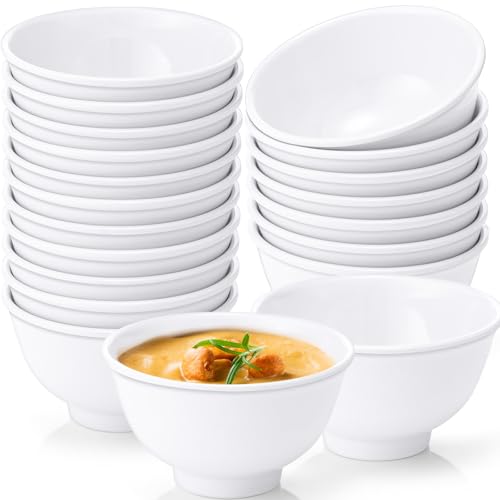
Cook N Home Melamine Soup Bowls
Cook N Home’s melamine bowls resist shattering, a practical fit for patio dinners or camping trips. A 24-ounce capacity handles a hearty bowl of chili or stew. Melamine is not microwave safe, unlike every ceramic and glass option on this list.
Pros
- Shatter resistance suits outdoor and camping use
- 24-ounce capacity holds hearty soups and stews
- Lightweight for carrying to a patio or picnic table
Cons
- Not microwave safe, unlike the ceramic and glass picks here
- Not rated for oven or broiler use

Libbey Classic Soup Bowls
Libbey’s tempered glass bowls ship in a larger 12-piece set, useful for households that entertain often. Tempered construction resists rim chipping better than standard glass. A 16-ounce capacity suits a lighter soup course or side serving rather than a main meal.
Pros
- 12-piece set covers larger households or gatherings
- Tempered glass resists chipping around the rim
- Lower cost per bowl than smaller premium sets
Cons
- Smallest capacity of any bowl in this list
- Holds heat for less time than stoneware options
The lineup, side by side
| # | Model | Material | Best for | Score | Price |
|---|---|---|---|---|---|
| 1 | Sweese 20-Ounce Porcelain Bowls | Porcelain | Best overall | 9.4 | Check price |
| 2 | DOWAN Soup Bowls 32-Ounce | Ceramic | Best for large portions | 9.2 | Check price |
| 3 | Corelle Vitrelle Winter Frost White Soup Bowl | Vitrelle glass | Best lightweight option | 9.0 | Check price |
| 4 | Le Creuset Stoneware 21-Ounce Bowl | Stoneware | Best premium option | 8.7 | Check price |
| 5 | Bormioli Rocco Tavola Soup Bowl | Opal glass | Best value | 8.5 | Check price |
| 6 | Cook N Home Melamine Soup Bowls | Melamine | Best for outdoor use | 8.2 | Check price |
| 7 | Libbey Classic Soup Bowls | Tempered glass | Best for everyday use | 8.0 | Check price |
Frequently asked questions
What size bowl is best for soup?
A 16 to 20-ounce bowl works for a standard course, while 24 to 32-ounce bowls suit soup served as the main meal.
Is ceramic or glass better for soup bowls?
Ceramic holds heat slightly longer, while tempered or Vitrelle glass weighs less and resists thermal shock, so the choice often comes down to handling.
Can soup bowls go in the microwave?
Most porcelain, ceramic, and glass bowls on this list are microwave safe, but melamine bowls like Cook N Home’s are not.
Which bowl material holds heat the longest?
Stoneware, like Le Creuset’s bowl, keeps soup hot longer than porcelain, glass, or melamine because of its thicker, denser walls.
Are melamine bowls safe for hot soup?
Yes for serving at the table, though melamine should never go into a microwave or oven to reheat leftovers.
Can a soup bowl go in the oven for broiled dishes?
Only oven-rated materials like Le Creuset’s stoneware, rated to 500 degrees, belong under a broiler; porcelain and glass bowls typically aren’t oven safe.
What’s the difference between a soup bowl and a cereal bowl?
Soup bowls generally hold more volume and have a wider rim for spoons, while cereal bowls run smaller and shallower.
How many ounces should a soup bowl hold?
Most standard soup bowls hold 16 to 24 ounces, with 32-ounce bowls reserved for full-meal servings.
What’s the best soup bowl for camping or outdoor use?
Melamine bowls like Cook N Home’s resist shattering on concrete or gravel where ceramic and glass would crack.
Are porcelain soup bowls durable?
Porcelain resists chipping better than thinner ceramic, though it’s still not rated for oven use the way stoneware is.
Our take
Sweese’s 20-ounce porcelain bowls earn the top spot for balancing capacity, chip resistance, and dishwasher convenience during daily meals. Cooks who finish dishes like French onion soup under a broiler should reach for Le Creuset’s oven-safe stoneware instead, since porcelain can’t handle that heat. Campers and patio hosts will get more practical use out of Cook N Home’s shatter-resistant melamine set.
Dana Whitfield
Dana spent eight years buying and merchandising for a regional kitchenware retailer before moving into editorial work. She has handled thousands of SKUs across cookware, small appliances and kitchen organization, and focuses on the practical differences that matter once a product is actually in daily use.