What Should You Look for in Bookshelf Speakers?
The Edifier R1280T is the top bookshelf speaker pick since it needs no separate amplifier and delivers balanced sound out of the box. The Klipsch R-51M rewards a good amplifier with more detail, and the ELAC Debut B6.2 is the audiophile upgrade with deeper bass.
Most shoppers do best with the Edifier R1280T, a powered pair that skips the amplifier entirely. Owners chasing more detail step up to the passive Klipsch R-51M with a receiver. Audiophiles who want deeper, more refined bass should look at the ELAC Debut B6.2.
Bookshelf speaker shopping gets complicated fast, since the right pick depends on whether you want an all-in-one powered pair or a passive set built around a receiver. Small cabinets also cap how much bass they can realistically produce. We compared published specifications and recurring themes in verified owner feedback. Sound balance, connectivity, and build quality mattered most, without staging any lab tests.
The best picks, ranked
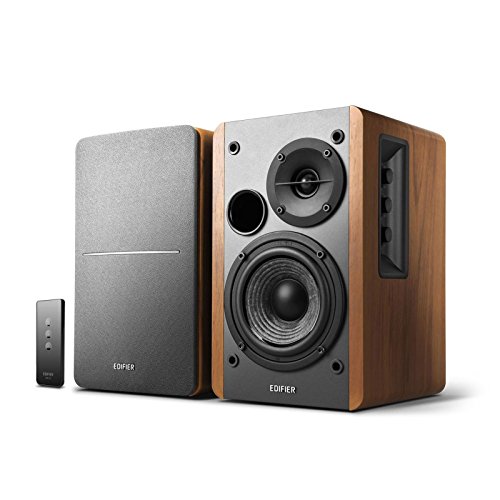
Edifier R1280T
This self-powered pair skips the need for a separate amplifier, so real stereo sound reaches a desk or shelf with one cable. Owners report a warm, balanced tone. Dual RCA inputs plus side-mounted bass and treble dials add practical control most all-in-one speakers skip.
Pros
- No amplifier needed for full stereo sound
- Bass and treble dials on the cabinet
- Two RCA inputs handle multiple sources
Cons
- No Bluetooth on this model
- Bass depth stays modest without a subwoofer

Klipsch R-51M
A horn-loaded tweeter pairs with a copper-spun woofer for a sound owners describe as lively and detailed. Movies and rock tracks especially benefit from the added punch. Being passive, the pair needs a receiver or amplifier to actually play.
Pros
- Dynamic, detailed sound with strong clarity
- Horn tweeter adds lively energy to movies
- Efficient enough for modest amplifiers
Cons
- Requires a separate amplifier or receiver
- Bright tuning can fatigue some listeners

ELAC Debut B6.2
Designer Andrew Jones aimed for a neutral, refined balance, and owners often say it punches above its price class. A larger 6.5-inch woofer digs deeper than most compact rivals, based on published specifications. That extra output rewards a capable amplifier rather than a budget one.
Pros
- Neutral, refined sound for the class
- Larger woofer reaches deeper bass
- Handles a wide range of music genres
Cons
- Bigger cabinet needs more shelf room
- Needs a quality amplifier to shine

Kanto YU
Built-in Bluetooth and multiple inputs make this powered pair a tidy all-in-one for a turntable or TV. Owners report clean, room-filling sound. A bundled remote adds convenience that most passive setups cannot match without extra gear.
Pros
- Built-in Bluetooth for wireless streaming
- Multiple inputs suit TV and turntables
- No separate amplifier required
Cons
- Costs more than passive rivals of similar size
- Deep bass still benefits from a subwoofer

Micca RB42
A dense, compact cabinet packs in more warmth and bass than its small size suggests, according to owner reports. The sealed 4-inch woofer favors a rich, laid-back tone over sharp detail. Lower sensitivity means it wants a bit more amplifier power than average.
Pros
- Rich, warm sound from a small cabinet
- Impressive bass for the compact size
- Solid, weighty build quality
Cons
- Lower sensitivity wants more amplifier power
- Compact size caps maximum volume

Sony SSCS5
A three-way design adds a super tweeter aimed at extending high-frequency detail past what typical two-way speakers reach. Owners report a clean, balanced sound. That combination makes it a popular first pick for a stereo setup or home theater system.
Pros
- Three-way design adds treble detail
- Balanced sound at a friendly price point
- Compact enough for most shelves
Cons
- Bass stays light without a subwoofer
- Needs an amplifier or receiver to run

Polk Audio T15
Wide retail availability makes this one of the most common entry points into passive stereo sound. Owners describe pleasant, inoffensive tone for the price. Wall-mount keyholes and easy amplifier matching round out a setup built for a first home-theater system.
Pros
- Very affordable entry into stereo sound
- Wall-mountable for flexible placement
- Easy to drive with modest receivers
Cons
- Limited low-end and fine detail
- Build feels basic next to pricier pairs
What to look for
What matters most when comparing bookshelf speakers? Sound balance, bass depth, build quality, and connectivity separate one pair from another. Whether a pair is powered or passive changes the rest of the setup too. Rather than claim lab measurements, we compared published specifications alongside recurring themes in verified owner feedback to flag speakers that deliver clean, enjoyable sound at their price level.
Powered vs passive bookshelf speakers: which should you buy? Powered speakers like the Edifier R1280T and Kanto YU include built-in amplification, so a source is all you add. Passive speakers such as the Klipsch R-51M and ELAC Debut B6.2 need a separate receiver or amplifier. That extra step lets you upgrade electronics later for better sound.
Which bookshelf speakers fit your room and source? Small rooms and desks pair well with compact powered speakers. Larger rooms benefit from bigger woofers and a dedicated amplifier instead. Sources matter too, since Bluetooth, optical, and phono inputs decide how easily a turntable, TV, or phone connects.
Do bookshelf speakers need a subwoofer? Bookshelf speakers focus on midrange and treble, trading some deep bass for a compact cabinet. Bass-heavy music and big movie effects usually call for a subwoofer alongside them. Even strong performers on this list reach their limits in the lowest octaves.
How they compare
| # | Model | Type | Best for | Score | Price |
|---|---|---|---|---|---|
| 1 | Edifier R1280T | Active powered pair | Best overall | 9.4 | Check price |
| 2 | Klipsch R-51M | Passive | Best for dynamics | 9.1 | Check price |
| 3 | ELAC Debut B6.2 | Passive | Best audiophile passive pair | 8.9 | Check price |
| 4 | Kanto YU | Active powered pair | Best powered with connectivity | 8.7 | Check price |
| 5 | Micca RB42 | Passive sealed | Best compact bass | 8.5 | Check price |
| 6 | Sony SSCS5 | Passive three-way | Best value passive pair | 8.3 | Check price |
| 7 | Polk Audio T15 | Passive | Best budget pair | 8.1 | Check price |
Frequently asked questions
What is the difference between powered and passive bookshelf speakers?
Powered speakers include a built-in amplifier and only need a source like a phone or turntable. Passive speakers require a separate amplifier or receiver, which lets you upgrade the electronics independently later.
Do I need an amplifier for these speakers?
It depends on the model. Active pairs like the Edifier R1280T and Kanto YU need no amplifier. Passive models such as the Klipsch R-51M, ELAC Debut B6.2, Sony SSCS5, and Polk T15 all require a receiver or amplifier.
Are bookshelf speakers good for a turntable?
Yes, as long as the setup includes a phono stage. Powered speakers with a line input work with a turntable that has a built-in preamp. Passive speakers connect through a receiver or amplifier that supplies phono input.
Do bookshelf speakers need a subwoofer?
Not always, but many benefit from one. Compact cabinets limit deep bass, so fans of electronic music, hip-hop, or movie effects often add a subwoofer. Acoustic and vocal-focused listeners may be satisfied without one.
Can I wall-mount bookshelf speakers?
Some models, including the Polk Audio T15, include wall-mount keyholes. Others sit best on stands or a sturdy shelf. For the cleanest sound, keep tweeters near ear level and away from tight corners.
Which bookshelf speakers work best for Bluetooth streaming?
A powered speaker with built-in Bluetooth, like the Kanto YU, is the simplest choice for wireless streaming. Passive speakers only add Bluetooth through a separate receiver or adapter that supports wireless input.
How big should bookshelf speakers be for my room?
Match woofer size to room size. Compact 4-inch woofers suit desks and small rooms. Woofers from 5-inch to 6.5-inch, like the one in the ELAC Debut B6.2, fill medium rooms with fuller sound.
Are more expensive bookshelf speakers always better?
Not necessarily. Value picks like the Sony SSCS5 and Polk T15 deliver satisfying sound for casual listening. Pricier models add refinement and deeper bass, but the right choice depends on your room and source.
What cables do passive bookshelf speakers need?
Passive speakers connect to an amplifier or receiver with standard speaker wire. Choose a gauge suited to the run length, and match the amplifier’s power output to the speakers’ recommended range.
Can bookshelf speakers work in a home theater?
Yes. Many listeners use bookshelf speakers as front or surround channels in a home theater system. Passive models pair with an AV receiver, and adding a center channel plus subwoofer completes the setup.
Our pick
The Edifier R1280T remains the easiest overall pick, delivering balanced, room-ready stereo sound with no amplifier to buy. Listeners chasing more detail should step up to the Klipsch R-51M or ELAC Debut B6.2 alongside a good amplifier. Tight budgets are well served by the Polk T15.
Marcus Chen
Marcus covered consumer electronics for enthusiast tech publications for six years before joining ChoiceCrest. He specializes in translating manufacturer spec sheets into plain-language buying advice, with a focus on audio, computing accessories and smart-home gear.