Bookshelf Speakers with USB-C: Top Picks for Modern Audio
For most people, the Audioengine A2+ Wireless is the best bookshelf speaker with USB-C, offering a built-in DAC, aptX HD Bluetooth, and rich sound for desktop use, but it lacks a subwoofer output for deep bass.
USB-C is becoming the standard for digital audio, but finding bookshelf speakers that use it can be tricky. The good news: several quality powered speakers now include USB-C inputs, making it easy to connect modern laptops and phones.
We looked at popular models from Audioengine, Edifier, Kanto, and others. Each speaker below has been chosen for its sound quality, features, and value. We compared specifications and user reviews to help you pick the right pair for your space.
How to pick the right one
The top picks, ranked

Audioengine A2+ Wireless
The A2+ Wireless are compact powered speakers with a USB-C input that supports digital audio up to 24-bit/192kHz. They deliver a surprisingly full sound for their size, with a built-in DAC and Bluetooth 5.0 with aptX HD. Owners report clear mids and detailed highs, though bass is limited without a sub.
Pros
- USB-C digital input with high res support
- Compact size fits any desk
- Built-in DAC delivers clean audio
Cons
- No subwoofer output
- Bass response is limited

Edifier S360DB
The Edifier S360DB is a 3-way powered speaker system with a separate 8-inch wireless subwoofer. It offers multiple inputs including USB-C, optical, coaxial, and Bluetooth. With 150W total output, it fills a room with deep bass and clear highs. Users love the remote control and room-filling sound, but the subwoofer adds significant size.
Pros
- Includes wireless subwoofer for deep bass
- Multiple digital inputs including USB-C
- Powerful 150W output
Cons
- Large footprint
- Subwoofer cable required for power

Kanto YU6
The Kanto YU6 are powered bookshelf speakers with a USB-C input that supports a direct digital connection from a computer. They also feature a phono preamp for turntables, optical, RCA, and Bluetooth with aptX. With 100W of power and 5.25-inch Kevlar drivers, they produce a balanced sound. Users appreciate the built-in phono stage and remote control.
Pros
- Phono input for turntables
- USB-C digital input
- Built-in subwoofer output
Cons
- No Wi-Fi or network streaming
- Slightly larger than desktop-sized speakers
Edifier R1280DB
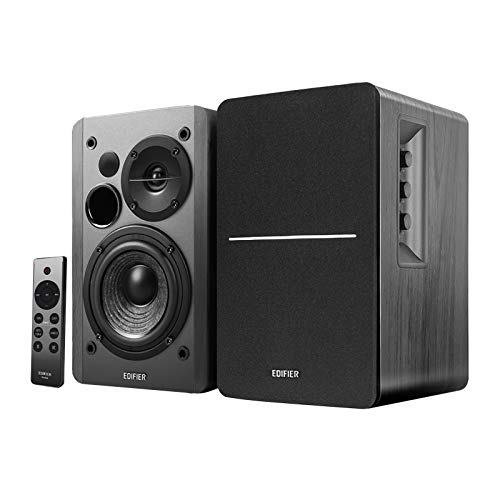
The Edifier R1280DB is an updated version of their popular R1280T, adding Bluetooth and a USB-C input. It offers 42W of total power and dual RCA inputs. While not audiophile-grade, they deliver clear sound with decent bass for the price. Users find them ideal for desktop setups and small rooms.
Pros
- Very affordable
- Includes USB-C and Bluetooth
- Compact and easy to place
Cons
- Limited bass response
- No optical input

Fluance Ai61
The Fluance Ai61 are powered bookshelf speakers that offer a 120W peak power output and a USB-C input for digital audio. They feature a 6.5-inch woven glass fiber driver and a 1-inch silk tweeter, producing a wide soundstage. Users report excellent dynamics and clarity, though the speakers are heavy and require ample shelf space.
Pros
- High power output for larger rooms
- USB-C, optical, and Bluetooth inputs
- Excellent build quality
Cons
- Heavy and large
- No phono input

Klipsch R-41PM
The Klipsch R-41PM are powered bookshelf speakers featuring a 4-inch copper-spun woofer and a 1-inch aluminum LTS tweeter with a 90×90 square Tractrix horn. They include a USB-C input for digital audio, along with phono, optical, and Bluetooth. They deliver the signature Klipsch dynamic and efficient sound, ideal for music and movies. Owners love their energetic presentation but note that they may need a sub for deep bass.
Pros
- Signature horn tweeter sound
- Multiple inputs including phono and USB-C
- High efficiency and dynamic range
Cons
- Bass is not very deep
- Horn tweeters may be bright for some listeners
Swan M200MkIII
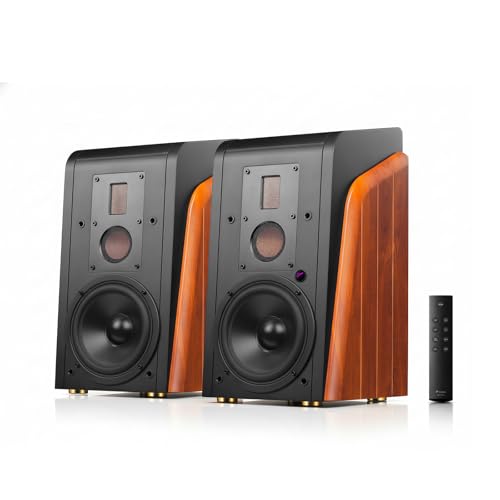
The Swan M200MkIII are powered bookshelf speakers that offer a USB-C input (labeled USB) for digital connection. They feature a 5-inch polypropylene woofer and a 1-inch silk dome tweeter, with a total power of 80W. Known for their flat frequency response and accurate sound, they are popular among audio enthusiasts. Users appreciate the studio-like quality, but the speakers lack a subwoofer output.
Pros
- Neutral, accurate sound
- USB-C input for digital audio
- Build quality is solid
Cons
- No subwoofer output
- No Bluetooth
The lineup, side by side
| # | Model | Inputs | Best for | Score | Price |
|---|---|---|---|---|---|
| 1 | Audioengine A2+ Wireless | USB-C, 3.5mm, RCA, Bluetooth | Desktop listeners who want premium sound and aptX HD | 9.4 | Check price |
| 2 | Edifier S360DB | USB-C, optical, coaxial, RCA, Bluetooth | Those who want powerful sound with a wireless subwoofer | 9.1 | Check price |
| 3 | Kanto YU6 | USB-C, optical, RCA, phono, Bluetooth | Versatile connectivity with phono input and USB-C | 9.0 | Check price |
| 4 | Edifier R1280DB | USB-C, 2x RCA, Bluetooth | Budget-friendly bookshelf speakers with USB-C | 8.7 | Check price |
| 5 | Fluance Ai61 | USB-C, optical, RCA, Bluetooth | High-power home audio with USB-C and room-filling sound | 8.9 | Check price |
| 6 | Klipsch R-41PM | USB-C, phono, optical, RCA, Bluetooth | Those who want a classic horn tweeter sound with USB-C | 8.8 | Check price |
| 7 | Swan M200MkIII | USB-C, RCA, optical, coaxial | Audiophiles who want a neutral sound signature | 8.6 | Check price |
Common questions
Can I use USB-C speakers with my phone?
Yes, if your phone has a USB-C port and supports audio output over USB-C, you can connect it directly. Some Android phones do, but iPhones with Lightning require an adapter. Alternatively, you can use Bluetooth if the speakers support it.
Do USB-C speakers need a separate DAC?
No, most powered speakers with USB-C have a built-in DAC that converts the digital signal to analog. You just plug in the USB-C cable and play audio.
What is the difference between USB-C and optical input?
Both carry digital audio. USB-C can also carry data and power, while optical uses a light signal. USB-C is more common on computers, while optical is often found on TVs. Many speakers offer both.
Will USB-C speakers work with a Mac or PC?
Yes, most computers with USB-C ports recognize the speakers as an audio device. On Windows, you may need to select the speaker as the default output device. Macs generally work plug-and-play.
Can I connect a turntable to these speakers?
Some models like the Kanto YU6 and Klipsch R-41PM have a phono input, so you can connect a turntable directly. Others only have RCA or USB inputs, so you would need a separate phono preamp.
Do these speakers come with a remote control?
Many do, including the Audioengine A2+, Edifier S360DB, Kanto YU6, and Klipsch R-41PM. Check the specifications for each model to be sure.
How much power do I need for bookshelf speakers?
For desktop use, 20-40 watts per channel is sufficient. For larger rooms, look for at least 50 watts per channel. The speakers’ sensitivity also matters; higher sensitivity means they need less power to produce the same volume.
Can I use these speakers for a home theater setup?
Some models have optical or coaxial inputs that can connect to a TV. However, bookshelf speakers typically lack a center channel and may not support surround sound. They are best for stereo music listening or as part of a simple 2.1 setup with a subwoofer.
What is aptX HD?
aptX HD is a Bluetooth codec that supports high-resolution audio up to 24-bit/48kHz. It provides better sound quality than standard aptX, but both the source and speaker must support it to benefit.
Do these speakers have a headphone jack?
Most bookshelf speakers do not include a headphone output. If you need one, consider a separate headphone amp or a speaker with a front-panel jack, though rare.
Final word
If you want the best overall performance for a desktop, go with the Audioengine A2+ Wireless. It offers a USB-C input, excellent sound quality, and a small footprint. For larger rooms and deeper bass, the Edifier S360DB with its wireless subwoofer is a strong choice. Budget buyers will appreciate the Edifier R1280DB, which brings USB-C to an affordable price point.
Marcus Chen
Marcus covered consumer electronics for enthusiast tech publications for six years before joining ChoiceCrest. He specializes in translating manufacturer spec sheets into plain-language buying advice, with a focus on audio, computing accessories and smart-home gear.


