Which Bluetooth charger keeps a road trip running?
CTEK CS FREE wins for the car itself, charging, maintaining and boosting a 12 volt battery while its app reports state of charge. EcoFlow RIVER 2 suits laptops and camera batteries, refilling in about an hour. Battery Tender 5 Amp covers the storage weeks at home.
CTEK CS FREE is the buy when your worry is a car that will not start. It charges, maintains and boosts a 12 volt battery, then sends condition data to your phone. Laptops sit outside its job description, so pair it with a power station when screens matter.
Search results here mix two product types: chargers that serve the car battery, and power stations that serve everything you plug in. We compared watt hours, charge current, port layout and cell chemistry, then looked at what each Bluetooth app actually displays. Owner reports on real runtime and recharge times in a hot car settled the close calls.
The best picks, ranked

CTEK CS FREE
Four jobs live inside one small housing: charging, maintenance, adaptive boost and power supply duty during service work. Voltage and charge stage arrive as plain numbers in the CTEK app instead of a blinking LED code. Feed it from a USB-C power bank and it still works in a car park with no socket nearby.
Pros
- Runs from a USB-C power bank far from any outlet
- App reports state of charge as a readable number
- Adaptive boost can bring a flat 12 volt battery back to a start
Cons
- Boosting a deeply discharged battery takes many minutes
- Laptops and mains appliances stay outside its remit

EcoFlow RIVER 2
A 256Wh LiFePO4 pack sits behind 300 watts of AC output, which covers laptops, camera batteries and a CPAP in a motel with tired sockets. Mains recharge finishes in roughly an hour, so a lunch stop refills it. Bluetooth and Wi-Fi both link to the app, which counts down remaining runtime.
Pros
- Refills fully during a single meal stop
- LiFePO4 cells handle hot car interiors better than older chemistry
- Light enough to carry from the boot to a tent
Cons
- Kettles and hair dryers exceed the 300 watt ceiling
- Charging from a 12 volt car socket is slow

Anker Prime Power Bank 27650mAh 250W
Anker fits 27650mAh and 250 watts of total output into something glovebox sized. Two USB-C ports run a laptop and a phone together, while the screen reports watts per port and charge remaining. No app pairing exists here, so that display is your only gauge.
Pros
- Charges a laptop at full speed rather than trickle speed
- Slips into a glovebox or door pocket
- Sits under the common 100Wh carry-on limit
Cons
- Monitoring stays on the built-in screen with no phone link
- Mains-only gear needs an AC socket this lacks

BLUETTI EB3A
Behind 268Wh of LiFePO4 sits a 600 watt inverter, which reaches small appliances the RIVER 2 turns away. Input, output and battery temperature all appear in the BLUETTI app over Bluetooth. Plug options run to a 12 volt car socket and a wireless pad, useful when four people share one back seat.
Pros
- Higher continuous output than similarly sized rivals
- LiFePO4 cells are rated for thousands of cycles
- Car socket output suits coolers and tyre pumps
Cons
- Fan noise carries once the inverter works hard
- Lifting it in and out of a boot is a two hand job

Anker SOLIX C300 DC
Dropping the AC inverter cuts weight while 288Wh of LiFePO4 cells stay in place. USB-C peaks at 140 watts, which feeds most modern laptops directly. A built-in light and app monitoring make it practical inside a tent across several nights.
Pros
- Light for its capacity because no inverter is fitted
- 140 watt USB-C charges laptops without an adapter
- Silent in use, since there is no inverter fan
Cons
- Mains-only devices need an AC socket this omits
- Getting full value depends on owning USB-C gear

Battery Tender 5 Amp Bluetooth Battery Charger
Weeks of standing still are when road trip trouble actually begins. Five amps of multi-stage charging refills a 12 volt battery, then holds it without cooking the plates. Voltage and charge stage report to the app, so checking means opening a phone rather than a bonnet.
Pros
- Safe to leave connected through weeks of storage
- Ring terminal lead turns reconnection into a one second job
- App reading replaces a multimeter for routine checks
Cons
- Five amps is slow on a large, deeply flat battery
- Mains power is required, so it stays at home
Jackery Explorer 100 Plus
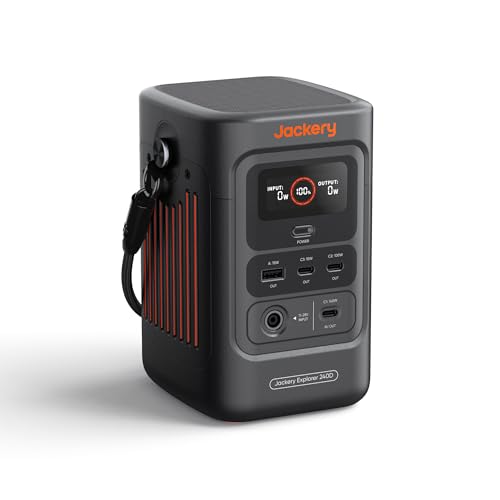
Capacity stops at 99Wh on purpose, just below the usual airline carry-on ceiling. Weight near 2.1 pounds keeps it in a day bag rather than a boot. An AC socket is still included, which most power banks this small skip.
Pros
- Travels as carry-on under the common 100Wh rule
- Light enough to carry around all day
- Includes an AC socket unlike rival power banks
Cons
- Capacity stretches to a phone, a camera and one laptop top-up
- 128 watts rules out most household appliances
How they stack up
| # | Model | Functions | Best for | Score | Price |
|---|---|---|---|---|---|
| 1 | CTEK CS FREE | Charger, maintainer, adaptive boost, power supply | Best overall | 9.4 | Check price |
| 2 | EcoFlow RIVER 2 | 256Wh LiFePO4 | Best for power on the move | 9.2 | Check price |
| 3 | Anker Prime Power Bank 27650mAh 250W | 27650mAh, about 99.5Wh | Best for laptops in the car | 9.0 | Check price |
| 4 | BLUETTI EB3A | 268Wh LiFePO4 | Best value power station | 8.7 | Check price |
| 5 | Anker SOLIX C300 DC | 288Wh LiFePO4 | Best for camping nights | 8.5 | Check price |
| 6 | Battery Tender 5 Amp Bluetooth Battery Charger | 5 amps | Best for upkeep between trips | 8.3 | Check price |
| 7 | Jackery Explorer 100 Plus | 99Wh LiFePO4 | Best budget | 8.0 | Check price |
What matters most
What Bluetooth actually adds to a charger Blinking LEDs tell you very little. An app link turns that into voltage, charge stage and remaining runtime, numbers you can act on. CTEK and Battery Tender use Bluetooth for battery condition, while EcoFlow, BLUETTI, Anker SOLIX and Jackery use it for watts in and out. Treat the app as a gauge, not a feature. Skip any model where pairing only toggles a light or renames the unit.
Keeping the 12 volt battery healthy between stops Hotel to hotel hops rarely replace what starting and idling drain, especially with a fridge or dash cam wired in. Maintenance before departure matters more than anything riding in the boot, and that is the Battery Tender’s job. Out on the road, CS FREE can run from a USB-C power bank and push a flat battery back to a start. Patience is the catch, since adaptive boost works in minutes rather than seconds. Keep jump leads in the car regardless.
How many watt hours do you need in the car? Watt hours set runtime, and the inverter sets what you can plug in at all. Around 256Wh, as in the RIVER 2, covers two phones, a laptop and camera batteries across a weekend. Heating elements stay out of reach at 300 or even 600 watts, so kettles and hair dryers are not happening. Fridges and CPAP machines push the requirement past everything on this list. LiFePO4 is the chemistry to want in a car, because heat tolerance and cycle life both improve.
Best for flying, camping and packing light Airlines generally cap lithium batteries in carry-on at 100Wh. Jackery Explorer 100 Plus and Anker Prime both sit deliberately under that line, while anything larger travels by road only. For tent nights with USB gear only, losing the inverter saves weight and fan noise, which is the whole argument for the Anker SOLIX C300 DC. Pay for an AC socket only when something in your bag genuinely needs mains. Drivers who only charge phones should skip power stations entirely and put the money into a maintainer.
Good to know
What does a Bluetooth battery charger do that a normal one cannot?
It reports voltage, charge stage and fault codes to a phone app. Guesswork about a weak battery turns into a number you can read from indoors.
How many watt hours do you need for a weekend road trip?
Roughly 250Wh covers phones, a laptop and camera batteries for two people. Add a 12 volt fridge or a CPAP and the requirement climbs steeply.
Can you charge a car battery while driving?
Your alternator already does that, though short hops may not replace what starting consumes. A maintainer at home closes that gap better than anything carried on board.
Is LiFePO4 better than lithium ion for car use?
In a hot vehicle, yes. LiFePO4 tolerates heat more safely and is rated for thousands of cycles, which suits gear living in a boot.
Can you take a power station on a plane?
Only within the usual 100Wh carry-on limit, which is why the Jackery Explorer 100 Plus and Anker Prime stop just below it. Bigger units must go by road.
Will a battery maintainer drain the battery if left connected?
Multi-stage designs such as the Battery Tender switch to a hold stage rather than drawing current back out. Check the manual before leaving anything attached for months.
Do you still need a jump starter in the car?
An adaptive booster like CS FREE needs time, often many minutes. A dedicated jump pack is faster when somebody is waiting behind you.
Which pick runs a laptop from the passenger seat?
Anker Prime handles laptops over USB-C at up to 250 watts total. Choose the EcoFlow RIVER 2 instead when something in the bag needs a mains plug.
Does a power station recharge from the car socket while you drive?
Most do, including the RIVER 2 and EB3A, but a 12 volt socket delivers far less than mains. Expect several hours of driving to make a real difference.
CTEK CS FREE vs Battery Tender 5 Amp: which suits your car?
Battery Tender fits a car that sits at home between trips and needs weeks of upkeep. CS FREE earns its place when you want one unit that travels and can boost a flat battery.
Final word
Buy the CTEK CS FREE if your real fear is a car that will not start, since it maintains, charges and boosts while reporting condition to the app. Drivers whose trip problem is dead phones and laptops should take the EcoFlow RIVER 2 instead, where 256Wh and a one hour recharge match a driving day. Flyers and light packers are better served by the Jackery Explorer 100 Plus.
Tony Russo
Tony trained as an automotive technician and spent years in service and parts retail before moving into writing. He focuses on garage tools, car care products and accessories from a hands-on maintenance perspective.