Bird Seed Catchers That Keep Your Patio Clean
Gray Bunny Seed Catcher Tray balances catch width and drainage under most hanging feeders. Wild Wings WWSH1 Seed Hoop 16 Inch stretches a wide fabric catch across a small hook. More Birds Seed Catcher clips under a single tube feeder for the least outlay. Coverage should match how much your feeder scatters.
Coverage and drainage decide whether a catcher helps. Gray Bunny Seed Catcher Tray gets both right under a typical hanging feeder, with a mesh base that sheds rain. Wide and light, the Wild Wings WWSH1 Seed Hoop 16 Inch hangs off the same hook as the feeder. Small tube setups do fine with the compact More Birds Seed Catcher.
Most seed catchers fail for one of two reasons. Undersized trays miss the spill radius, and solid bottoms turn caught seed into a wet, mouldy layer within days. We compared listed catch width, drainage design, how each attaches to hanging, pole or base mounts, and how well the material holds shape outdoors. Owner reports on sagging, sway and cleanup effort filled in the rest.
The top picks, ranked

Gray Bunny Seed Catcher Tray
Three adjustable cables suspend this tray under the feeder, so you set the drop distance to match the spill. Mesh across the base lets rain run straight through instead of pooling around hulls. Coverage is wide enough for a standard tube or hopper feeder without dominating the view. Rinsing it takes a hose and a shake.
Pros
- Catch width suits typical hanging feeders
- Mesh base drains after rain
- Cable height adjusts to the spill
Cons
- Cables tangle during the first setup
- Needs rinsing every few weeks

Wild Wings WWSH1 Seed Hoop 16 Inch
Mesh fabric stretched over a 16 inch hoop gives a broad catch for very little weight. Water passes straight through the weave, so seed dries rather than souring. It shares the feeder hook, meaning no extra bracket or pole work. Come autumn, the hoop folds flat and stores in a shed drawer.
Pros
- Sixteen inch span catches a wide spill
- Open weave drains fast
- Folds flat for winter storage
Cons
- Fabric sags after a season or two
- Swings in exposed positions

More Birds Seed Catcher
This shallow dish clips directly under a small hanging or pole mounted feeder. Tube feeders drop less seed than hoppers, so a compact catch handles most of it. Installation is a single clip with no cables to untangle. Weather resistant plastic survives sun and frost, though the shallow profile holds water after heavy rain.
Pros
- Clips on in under a minute
- Right scale for one tube feeder
- No cables or brackets needed
Cons
- Narrow catch misses wind blown seed
- Drainage is limited after downpours
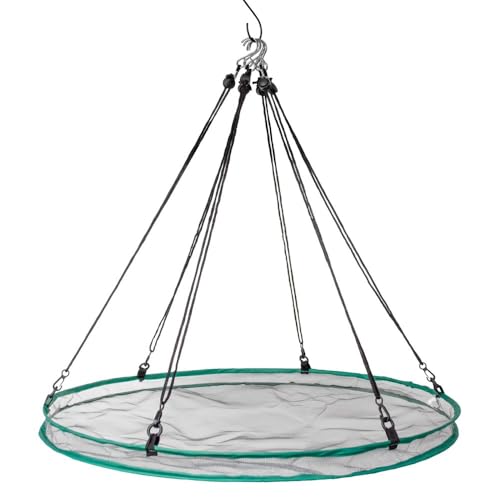
Songbird Essentials Seed Hoop Tray
A wider hoop reaches the scatter radius that big hopper and multi-port feeders create. Six or eight perches means seed lands further out, and small trays simply miss it. Open mesh drains quickly once the rain stops. Busy stations feeding finches and sparrows all day benefit most from the extra span.
Pros
- Reaches the spill radius of big feeders
- Open mesh dries quickly
- Handles high traffic feeding stations
Cons
- Awkward to store off season
- Larger surface catches more wind

Nature’s Way Bird Products Seed Catcher Tray
Clamping around a standard feeder pole keeps this tray level and steady in wind, unlike anything hanging on cables. A raised lip stops caught seed rolling off the edge. Drainage holes in the base shed rain. Ground feeding juncos and doves often start using the surface as a platform, which some hosts want and others do not.
Pros
- Stays level and steady in wind
- Raised lip holds seed in place
- Drilled holes shed rainwater
Cons
- Pole diameter has to match
- Doubles as a platform for ground feeders

Stokes Select Seed Catcher Tray
A rigid frame and metal mesh hold their shape through seasons that leave fabric hoops drooping. Powder style weather coating fends off rust at the joints. Cleaning is a brush and a rinse, with no fabric to scrub. Extra weight suits a permanent hook or a sturdy shepherd hook rather than a thin branch.
Pros
- Rigid frame will not sag
- Metal mesh drains and brushes clean
- Coating resists rust outdoors
Cons
- Heavier than a fabric hoop
- Needs a strong hook or bracket

Droll Yankees SB Seed Tray
Screwing onto the base of a compatible Droll Yankees tube feeder puts the catch exactly where seed falls. No cables dangle, and nothing sways independently of the feeder. A vented dish drains rain. Fit is the trade off, since the tray only bolts to matching models and its catch is narrower than any hoop here.
Pros
- Bolts flush to the feeder base
- Nothing hangs loose to tangle
- Catches seed at the drop point
Cons
- Only fits matching Droll Yankees models
- Narrower catch than a hoop tray
Before you buy
What to look for in a bird seed catcher Three specifications carry most of the weight: catch width, drainage and mounting style. Width should exceed the spill radius your feeder actually creates. Drainage means mesh or drilled holes, never a solid pan. Mounting has to suit what you already own, since a pole clamp is useless on a shepherd hook. Material comes last, though metal outlasts fabric in exposed gardens.
What size seed catcher does your feeder need? Spill radius scales with feeder size and blend. A single tube feeder with sunflower hearts drops little, so a compact dish handles it. Hoppers, multi-port feeders and mixes heavy in millet scatter much further, which is where a 16 inch or larger hoop earns its space. Undersizing the tray is the most common reason seed still carpets the ground.
Best seed catchers for decks, patios and balconies Hard surfaces show every hull, and sprouting seed stains decking. A hoop that spans wider than the feeder catches the bulk before it lands. Pole mounted trays with a raised lip suit railing clamps and keep debris off the boards below. Rinse more often on a patio than in a garden, since hulls sit and go slimy on paving rather than breaking down.
How to keep a seed catcher clean and mould free Wet seed spoils within days, and mould at a feeding station spreads illness among finches. Empty the tray after heavy rain instead of waiting for the weekend. Metal mesh brushes clean and dries fast; fabric hoops need a shake, a hose and time in the sun. A rinse every couple of weeks in warm weather is a reasonable baseline.
Side by side
| # | Model | Type | Best for | Score | Price |
|---|---|---|---|---|---|
| 1 | Gray Bunny Seed Catcher Tray | Hanging tray | Best overall | 9.4 | Check price |
| 2 | Wild Wings WWSH1 Seed Hoop 16 Inch | Sixteen inch | Best value | 9.2 | Check price |
| 3 | More Birds Seed Catcher | Compact dish | Best for a single small feeder | 9.0 | Check price |
| 4 | Songbird Essentials Seed Hoop Tray | Large span | Best for large multi-port feeders | 8.8 | Check price |
| 5 | Nature’s Way Bird Products Seed Catcher Tray | Pole mount tray | Best for pole-mounted feeders | 8.6 | Check price |
| 6 | Stokes Select Seed Catcher Tray | Rigid metal | Best for long-term durability | 8.3 | Check price |
| 7 | Droll Yankees SB Seed Tray | Base mount tray | Best for Droll Yankees tube feeders | 8.0 | Check price |
Frequently asked questions
Do bird seed catchers actually reduce mess?
A correctly sized one traps most of what falls, including hulls and rejected filler seed. Wind still carries some past the edge, so expect a reduction rather than a clean sweep. Sprouting under the feeder drops noticeably within a season.
Will a seed catcher fit my existing feeder?
Hanging hoop trays work with almost anything on a hook. Pole trays need a matching pole diameter, and base trays screw onto specific feeder models. Check the mounting style before buying, because that mismatch is the usual reason one gets returned.
What size seed catcher do I need?
Wider than the feeder by a good margin. A small tube feeder pairs with a compact dish, while hoppers and multi-port feeders need a 16 inch hoop or larger. Watch where seed lands on the ground and size to that circle.
How do you stop caught seed going mouldy?
Buy mesh or drilled drainage, never a sealed pan. Empty the tray after prolonged rain, and rinse it every two or three weeks in warm weather. Sun and airflow do most of the drying once water can escape.
Are seed catchers safe for the birds?
Kept clean and drained, yes. A waterlogged tray of old seed grows mould and spreads disease at a busy station, so cleaning frequency matters far more than which model you choose.
Can a seed catcher attract rats or mice?
It usually reduces what rodents find, since seed stays off the ground. Neglect reverses that, because a full tray at chest height is still a food source. Empty it regularly and clear anything that lands beyond the edge.
Fabric hoop or metal tray: which lasts longer?
Metal, by several seasons. Rigid frames hold shape and brush clean, while fabric fades and sags. Fabric wins on weight, price and storage, so it suits hosts who take feeders down over winter anyway.
Do seed catchers work in windy gardens?
Hanging hoops sway and lose seed over the edge in gusts. A pole mounted tray with a raised lip stays put, and moving the feeder near a hedge or wall cuts the wind considerably.
Can you use a seed catcher as a platform feeder?
Pole mounted trays with a solid base and raised lip often double as one, and doves and juncos find them quickly. Mesh hoops are less suitable, since seed falls through the weave rather than staying put.
How often should a seed catcher be cleaned?
Every two or three weeks in warm weather, sooner after heavy rain. Empty the contents, brush or hose the surface, and let it dry before rehanging. Cold dry spells stretch that interval out.
Our pick
Gray Bunny Seed Catcher Tray suits most backyard setups, pairing a useful catch width with a mesh base that drains after rain. Where a feeder scatters further, the Wild Wings WWSH1 Seed Hoop 16 Inch covers more ground and folds away in autumn. One small tube feeder needs nothing more than the More Birds Seed Catcher clipped underneath.
Olivia Hartley
Olivia spent several years working at an animal shelter and a pet-supply retailer before joining the editorial team. She researches pet gear with an emphasis on safety, comfort and the fine print that owners often miss.

