7 Bird Houses Backyard Birds Actually Move Into
Nature’s Way Bird Products Cedar Bluebird House takes first place for correct interior dimensions and a front panel that opens without tools. JCs Wildlife Recycled Poly Bluebird House suits wet and coastal gardens, since poly lumber cannot rot. Woodlink Audubon Going Green Wren House is the dependable low cost starter.
Nature’s Way Bird Products Cedar Bluebird House is the box to hang in most gardens, because its dimensions follow published nest box guidance. Wet or coastal climates favour the JCs Wildlife recycled poly model instead. Starting small and cheap? Woodlink Audubon Going Green Wren House gets results with wrens.
Decorative bird houses sold as garden ornaments mostly stay empty, because the hole is the wrong diameter, water pools in the floor, or nothing opens for cleaning. We compared published hole sizes against the requirements of common cavity nesting species, alongside floor area, ventilation gaps, wall thickness and whether each design lets you inspect a nest without taking it apart.
The shortlist, ranked

Nature’s Way Bird Products Cedar Bluebird House
Every detail that decides occupancy lands right here: a correctly sized entrance, a deep enough cavity, ventilation gaps below the roof and drainage holes in the floor. A pivoting front panel opens in seconds, so nest checks and the annual clean out need no tools. Inland cedar weathers to silver grey and lasts years untreated, which suits a nest box where paint and preservatives have no place.
Pros
- Dimensions follow published nest box guidance
- Tool free access for monitoring and cleaning
- Untreated cedar stays safe and lasts outdoors
Cons
- No predator guard fitted as standard
- Cedar splits if mounting screws go in too tight

JCs Wildlife Recycled Poly Bluebird House
Recycled poly lumber will not rot, warp or need treating, which matters through long wet winters or in salt air. Thickness gives the cavity reasonable insulation, and the panels stay dimensionally stable so the door still closes properly years later. Weight runs noticeably higher than cedar, so mount this one on a post rather than a slim branch.
Pros
- Immune to rot, warping and insect damage
- Holds its shape, so panels keep sealing
- Built from recycled material
Cons
- Heavier than wood and needs solid mounting
- Surface heats up in full afternoon sun

Woodlink Audubon Going Green Wren House
Wrens want a small hole and a compact cavity, and both arrive here, which keeps larger competitors outside. Recycled plastic composite construction with proper venting and drainage handles weather better than the thin pine boxes sold alongside it. Wrens are also among the easiest species to attract, making this a satisfying first box for anyone who wants to see a nest that season.
Pros
- Narrow hole excludes starlings and sparrows
- Recycled composite shrugs off weather
- Wrens adopt these boxes readily
Cons
- Cavity is too small for bluebirds or swallows
- Plain look next to a cedar box

Coveside Conservation Bluebird House
Coveside builds for people who want to see what happens inside, using a side panel that swings clear and versions fitted with a viewing window. Solid white pine or cedar makes up the body, and an extended roof overhang keeps rain off the entrance. Anyone keeping nest records or joining a monitoring scheme will find weekly checks painless with this design.
Pros
- Weekly nest checks take under a minute
- Generous overhang sheds rain from the hole
- Solid timber construction feels substantial
Cons
- Untreated pine gives out sooner than cedar
- Viewing window versions add another seal to maintain
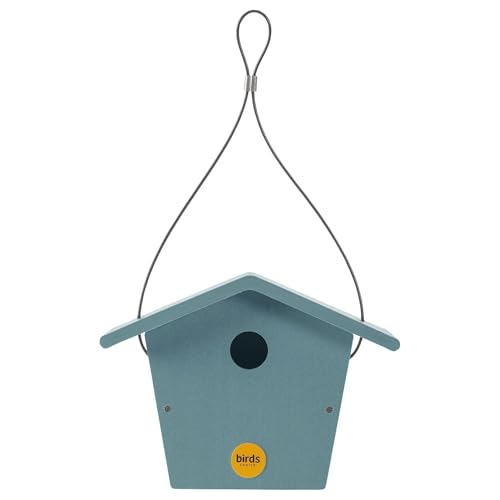
Birds Choice Recycled Plastic Bluebird House
Recycled plastic in a simple, well proportioned box, with the ventilation and floor drainage a nesting attempt needs. Non absorbent surfaces hose clean at the end of the season, a real advantage over wood where old nest material bonds to the grain. Function outranks looks here, which suits a working garden more than a formal one.
Pros
- Cleans out with a hose between seasons
- Non absorbent surfaces give mites less cover
- Nothing to sand, seal or repaint over its life
Cons
- Heats up under full afternoon sun
- Utilitarian appearance in an ornamental garden

Kettle Moraine Cedar Wren House
Cedar here is cut noticeably thicker than mass produced boxes use, and that wall thickness buffers the cavity against cold snaps and hot afternoons alike. Screws rather than staples hold it together, so a panel can be replaced years down the line instead of the whole box. Finish reads rustic rather than refined, which fits an informal garden.
Pros
- Thick walls flatten temperature swings inside
- Screwed construction can be repaired, not binned
- Cedar ages well with no treatment
Cons
- Rustic finish suits informal gardens only
- Heavier than thin walled cedar boxes

Gilbertson PVC Bluebird House
A PVC cylinder under a wooden roof, and that unusual shape is the whole point. House sparrows are reported to take to cylinders far less readily than bluebirds do, which addresses the biggest problem in many nest box trails. Light weight makes pole mounting simple, and the tube empties out in seconds at the end of the season.
Pros
- Reported to discourage house sparrows
- Empties and cleans in seconds
- Light enough for simple pole mounting
Cons
- No one buys this for the garden aesthetic
- Thin walls need shade in hot climates
How to choose
What makes a bird house work Four features separate a functional nest box from a garden ornament. Hole diameter sized to a real species comes first. Floor area next, since a cramped cavity limits brood size. Ventilation gaps under the roof and drilled drainage in the floor corners handle heat and rainwater. An opening panel finishes the list, because a box you cannot open is a box you will not clean. Wall thickness matters too, with thicker timber buffering temperature swings. Skip anything with a perch below the hole.
How entrance hole size picks your species Hole diameter is the most consequential number on any box. Roughly 28mm suits house wrens and chickadees. About 32mm fits titmice and nuthatches. Around 38mm serves bluebirds and tree swallows. Anything larger invites European starlings and house sparrows, both of which evict smaller birds and destroy eggs. Choose the diameter for species that genuinely live near you, and never enlarge a hole to make one box universal. Regional guidance from local birding groups beats a generic listing description.
Where should you mount a bird house? Most small cavity nesters want a box mounted between roughly one and three metres up. Posts beat tree trunks, because a smooth pole accepts a predator baffle and climbing animals cannot get purchase. Face the entrance away from prevailing wind and driving rain. Avoid pointing it into full afternoon sun, which cooks nestlings in summer. Spacing boxes of the same species well apart cuts territorial fighting, and bluebird trails commonly place boxes around 100 metres apart for that reason.
How to clean and protect a nest box Old nest material shelters mites and parasites and steals room the next pair needs. Clean the box out after the last brood fledges, wearing gloves and a mask, then rinse with plain water rather than detergents. Fit a metal hole guard if squirrels start chewing the entrance wider. A pole baffle below the box stops raccoons, cats and snakes reaching it at all. Check mounting screws each spring, since a wobbling box gets abandoned.
The lineup, side by side
| # | Model | Material | Best for | Score | Price |
|---|---|---|---|---|---|
| 1 | Nature’s Way Bird Products Cedar Bluebird House | Inland red cedar | Best overall | 9.4 | Check price |
| 2 | JCs Wildlife Recycled Poly Bluebird House | Recycled poly lumber | Best for wet climates | 9.2 | Check price |
| 3 | Woodlink Audubon Going Green Wren House | Recycled plastic composite | Best value | 9.0 | Check price |
| 4 | Coveside Conservation Bluebird House | Solid pine or cedar | Best for monitoring nests | 8.8 | Check price |
| 5 | Birds Choice Recycled Plastic Bluebird House | Recycled plastic | Best low maintenance option | 8.6 | Check price |
| 6 | Kettle Moraine Cedar Wren House | Thick cut cedar | Best handmade cedar | 8.3 | Check price |
| 7 | Gilbertson PVC Bluebird House | PVC tube with wood roof | Best for deterring sparrows | 8.0 | Check price |
Good to know
What size entrance hole do I need for a bird house?
Species decides it. Around 28mm suits wrens and chickadees, about 32mm suits titmice and nuthatches, and roughly 38mm suits bluebirds and tree swallows. Larger openings let in starlings and house sparrows, which take over boxes and destroy existing nests.
Should a bird house have a perch below the hole?
No. Cavity nesting birds cling to the wood and never need one. A perch simply gives predators and competing birds a grip while they reach inside. Boxes sold with decorative perches are the clearest sign a design was drawn for looks rather than nesting.
When should I put up a bird house?
Late winter into very early spring is ideal, ahead of birds prospecting for sites. Boxes hung later still get used for second broods, and many become winter roosts once the season ends. Putting one up late rarely counts as wasted effort.
Should I paint or stain a bird house?
Leave the interior completely bare. Finish only the outside if you want to, using a light coloured water based product, and keep it away from the entrance hole edges. Untreated cedar and recycled poly need no finish at all and last for years.
Where should I mount the box?
On a smooth metal or wooden post fitted with a predator baffle, roughly one to three metres above ground, facing away from prevailing weather. Mounting straight onto a tree trunk makes life easy for raccoons, cats and rat snakes, which is why nest box schemes avoid it.
Why is nothing nesting in my bird house?
Common causes are a hole sized for the wrong species, placement in a busy or exposed spot, nearby competition already holding territory, and hanging the box after nesting began. Moving it in autumn ready for the following spring usually solves the problem.
Do I need to add nesting material to a bird house?
No. Birds carry in their own material and are particular about it. A small layer of clean wood shavings suits boxes intended for certain woodpeckers, but wrens, bluebirds and chickadees want an empty, clean cavity to build in themselves.
How do I stop squirrels chewing the entrance hole?
Fit a metal hole guard plate over the entrance so chewing cannot widen it. A pole mounted baffle below the box tackles the larger problem of squirrels reaching it, and the same baffle blocks raccoons and cats climbing the post.
Cedar vs recycled plastic bird houses: which lasts longer?
Recycled poly and plastic outlast cedar comfortably, since neither rots, warps nor feeds insects. Cedar breathes better and stays cooler in direct sun, and its natural oils resist decay for years untreated. Wet or coastal gardens favour poly, while hot exposed sites favour thick cedar.
How many bird houses can I put in one garden?
One box per species territory is the usual limit, because most cavity nesters defend the area around a nest. Boxes for different species can sit closer together than two identical ones. Bluebird trails typically space matching boxes around 100 metres apart to prevent fighting.
The verdict
Nature’s Way Bird Products Cedar Bluebird House is the box to hang first, since it follows the published dimensions that decide whether birds move in and it opens easily for the annual clean out. Wet or coastal gardens get more years from the JCs Wildlife recycled poly version. Anyone starting small should hang the Woodlink Audubon Going Green Wren House, because wrens adopt boxes faster than almost any other backyard species.
Sierra Daniels
Sierra's background is in landscape design and nursery retail. She focuses on lawn and garden equipment, outdoor furniture and gear durability, weighing published specs against how materials actually hold up outside.