Bird Health Supplies That Travel Well With Your Pet
Prevue Pet Products Travel Bird Cage takes the top spot for its latching door and low fixed perch. Wingabago’s Deluxe Bird Carrier is the better soft sided option for airports and long walks. A Lixit Quick Lock Bird Water Bottle ends the spilled dish problem outright.
Moving a budgie or cockatiel safely comes down to three purchases. Containment comes first, which the Prevue Pet Products Travel Bird Cage handles with a latching door and a low perch. Longer walks favour the Wingabago Deluxe Bird Carrier, and a Lixit Quick Lock Bird Water Bottle prevents a soaked, chilled arrival.
Priorities invert the moment a bird leaves the house. Room to fly is a benefit at home and a hazard in a moving car, where a startled bird can strike the bars. We compared door security, ventilation area, perch position, water delivery and carry weight across seven items. Anything beyond routine transport, including sedation or moving an unwell bird, belongs with an avian vet.
The shortlist, ranked

Prevue Pet Products Travel Bird Cage
Compact wire cage with a latching door, a perch mounted low and a tray that slides out from the base. Restricted floor space is the point, because a bird cannot build up speed inside it when a car brakes hard. Folding handle and pull out tray make vet visits and overnight stays simpler than improvising with a cardboard box.
Pros
- Small footprint prevents flight injuries in transit
- Slide out tray cleans in seconds
- Latch holds against a working beak
Cons
- Open wire lets draughts through in a car
- Not built for long term daily living

Wingabago Deluxe Bird Carrier
Built for birds from the start rather than adapted from a cat carrier, with mesh on several sides and a fitted interior perch. Fabric walls absorb road vibration that a rigid cage passes straight through. Carrying it across an airport or onto a train beats hauling a wire cage by its handle.
Pros
- Designed around bird needs, not adapted
- Soft walls damp road vibration
- Comfortable to carry over real distance
Cons
- Fabric holds odours after repeated use
- Offers less impact protection than wire

A and E Cage Company Acrylic Travel Bird Carrier
Rigid clear panels with drilled ventilation holes let you check the bird without opening a door. Solid walls block the draughts an open wire cage invites, which counts on a cold journey. Owners report nervous birds settle sooner once they can see where they are, and the smooth interior wipes down in one pass.
Pros
- Solid panels stop draughts reaching the bird
- Visual checks need no door opening
- Smooth acrylic wipes clean quickly
Cons
- Warms up fast in direct sunlight
- Heavier to carry than a fabric case

Lixit Quick Lock Bird Water Bottle
Ball valve sipper that locks onto cage bars and releases water only when a bird works the tip. Nothing sloshes out over bumps, so the bird arrives dry rather than chilled. Training has to happen before the trip, and owners keep the familiar dish alongside for a week or two until they see confident drinking from the valve.
Pros
- Removes spillage on rough roads
- Keeps water free of seed and droppings
- Clear body shows the level at a glance
Cons
- Bird must learn the valve well in advance
- Tip can block and needs checking daily

The Aviator Bird Harness and Leash
Figure of eight harness with an attached leash for supervised time outside the carrier. Losing a bird is the worst outcome of any journey, and this is the item that prevents it. Fitting takes weeks of gradual training, and a bird forced into the loops in one session usually refuses it thereafter.
Pros
- Prevents a bird flying off during a stop
- Sizes cover small birds through large parrots
- Allows real enrichment away from the cage
Cons
- Training runs over weeks, not days
- No substitute for a carrier while in transit

Nekton-Biotic Bird Probiotic Supplement
Powdered probiotic sprinkled over soft food to support gut flora through a change of routine. New water, unfamiliar surroundings and disrupted feeding times commonly unsettle digestion, which is when it applies. Droppings that stay abnormal past a day or two call for an avian vet rather than more supplement.
Pros
- Targets a genuine travel related problem
- Doses scale down to small companion birds
- Sealed powder travels without refrigeration
Cons
- Not a treatment for any illness
- Only works on food the bird will actually eat
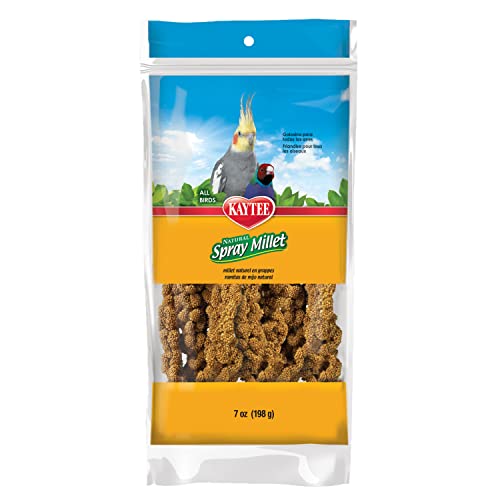
Kaytee Spray Millet Bird Treat
Millet sprays stay palatable enough that a stressed bird often eats them after refusing everything else. Clip one inside the carrier and a nervous bird gets a task instead of an empty perch. Keep it rare at home so it still carries weight on a journey.
Pros
- Accepted by nearly every small bird
- Gives a stressed bird something familiar
- Stores dry for months at a time
Cons
- A treat rather than balanced nutrition
- Loses its pull if offered daily at home
How to pick the right one
What size carrier is safe in a moving car? Instinct says give a bird room, and in transit that instinct is wrong. A large cage lets a startled bird take flight and strike the bars, while a tall one turns a slip into a real fall. Keep the bird close to a low, firmly fixed perch so hard braking produces a stumble instead of an injury. Strip out swinging toys and heavy ceramic dishes, which become projectiles at speed.
How to solve water before the day of travel An open dish empties within minutes of setting off, and a soaked bird loses heat quickly. A sipper bottle fixes that, but only for a bird that already knows how to use one. Introduce the bottle at home a week or two ahead and leave the familiar dish in place. Remove the dish only after watching the bird drink from the valve. On short runs, many owners skip the bottle and offer water at stops alongside cucumber or melon in the carrier.
Temperature, draughts and where the carrier rides Birds handle a narrow temperature band and react badly to moving air. Air conditioning blowing across a wire cage is a problem even on a short drive. Drape a light breathable cloth over part of the carrier to break the draught while leaving mesh exposed. Belt it in place away from vents and direct sun, and never leave a bird in a parked vehicle. Rigid solid sided carriers cope better with cold, mesh sided ones better with heat.
Flying with a bird: paperwork and planning ahead Airlines set their own rules on carrier dimensions, cabin access and accepted species. Most that carry birds want a certificate of veterinary inspection issued inside a fixed window before departure. Crossing state or national borders can add permits and species restrictions on top. None of this can be sorted at the check in desk, so confirm requirements weeks out. Locate the nearest avian vet to your destination before you need one, and photograph your bird alongside any leg band or microchip number.
The lineup, side by side
| # | Model | Type | Best for | Score | Price |
|---|---|---|---|---|---|
| 1 | Prevue Pet Products Travel Bird Cage | Wire travel cage with tray | Best overall | 9.4 | Check price |
| 2 | Wingabago Deluxe Bird Carrier | Soft sided carrier | Best soft sided carrier | 9.2 | Check price |
| 3 | A and E Cage Company Acrylic Travel Bird Carrier | Rigid acrylic carrier | Best visibility | 9.0 | Check price |
| 4 | Lixit Quick Lock Bird Water Bottle | Sipper bottle with ball valve | Best travel water source | 8.8 | Check price |
| 5 | The Aviator Bird Harness and Leash | Figure of eight harness with leash | Best for outdoor safety | 8.6 | Check price |
| 6 | Nekton-Biotic Bird Probiotic Supplement | Powder for soft food | Best digestive support | 8.3 | Check price |
| 7 | Kaytee Spray Millet Bird Treat | Natural millet spray | Best budget appetite aid | 8.0 | Check price |
Good to know
Can I use my bird’s normal cage for travel?
No. A full sized cage gives a startled bird room to fly into the bars and height to fall from. Use a properly sized carrier with a low secure perch, then set the normal cage up at the destination if you are staying more than a night.
How do I keep a bird calm during a car journey?
Cover part of the carrier with a light breathable cloth to cut visual stimulation while airflow continues. Belt it so it cannot slide or tip, hold the cabin temperature steady, and keep music low. Familiar items such as a favourite perch or a millet spray help, and most birds settle inside twenty minutes.
Can I give a bird water from a dish while driving?
Not while the vehicle is moving. It spills, soaks the bird and chills it. Use a sipper bottle the bird already knows, or pull over and offer a dish while stationary. Cucumber and melon supply useful moisture on shorter trips.
Do you need a health certificate to fly with a bird?
Frequently yes. Most airlines that accept birds require a certificate of veterinary inspection issued within a set window before departure, and border crossings can add permits or species restrictions. Rules vary by airline and destination, so confirm them directly and early.
Should a bird be sedated for travel?
That call belongs to an avian vet, and for most healthy birds it is neither necessary nor advisable. Sedation carries real risk in small species. Preparation, a correctly sized carrier and a calm environment address the problem more safely. Never give a bird human medication.
How do I get a bird used to a carrier?
Start days or weeks ahead. Park the carrier beside the cage with the door open and a favourite treat inside so the bird explores it by choice. Progress to closing the door briefly, then short trips around the house, then a short drive. Carriers only ever seen on vet days stay associated with stress.
What should go in a bird travel kit?
Carrier, familiar perch, sipper bottle plus a spare dish, a portion of the normal food, millet or another accepted treat, paper liners, a breathable cover and cleaning wipes. Add contact details for your own vet and an avian vet near the destination, plus a photograph and any band or microchip number.
Which signs of travel stress should I watch for?
Rapid open mouthed breathing, prolonged fluffing, refusal to eat or drink for hours, and silence in a normally vocal bird. Minor stress fades once the environment steadies. Laboured breathing, droppings that stay abnormal past a day, or lethargy on the carrier floor warrant a call to an avian vet.
Is a soft carrier or a hard carrier better for birds?
Soft sided cases carry comfortably and absorb road vibration, which suits airports and long walks. Rigid acrylic blocks draughts and protects better in an impact, which suits cold weather driving. Households that travel both ways often keep one of each.
How long can a bird stay in a travel carrier?
Short journeys of a few hours are routine for a settled bird with water available. Beyond that, break the trip so the bird can eat properly and stretch in a secure indoor space. Overnight stays call for the normal cage set up at the destination.
Our take
Prevue Pet Products Travel Bird Cage is the sensible core purchase for anyone moving a small bird regularly, since a low perch and a tight footprint prevent the injuries a full sized cage invites. Choose the Wingabago Deluxe Bird Carrier instead if you will carry the bird any real distance. Get a Lixit Quick Lock Bird Water Bottle into the cage weeks before the journey, not on the morning of it.
Olivia Hartley
Olivia spent several years working at an animal shelter and a pet-supply retailer before joining the editorial team. She researches pet gear with an emphasis on safety, comfort and the fine print that owners often miss.

