Bike Lights Bright Enough to Trust After Dark
The NiteRider Lumina 1200 Boost is the strongest all-around front light, offering enough output for unlit roads without the bulk of trail-specific systems. The Garmin Varia RCT715 suits riders who want rear radar and automatic incident recording, while the Bontrager Flare RT fits anyone who wants reliable rear visibility at a lower cost.
The NiteRider Lumina 1200 Boost stands out because its 1200 lumen boost mode lights unlit roads and trail sections well beyond what a typical commuter light provides. Its main limitation is runtime, since that brightest setting drains the battery far faster than a lower mode.
We compared published lumen output, beam patterns, battery runtime and mounting hardware across each listing rather than running our own road tests.
The shortlist, ranked
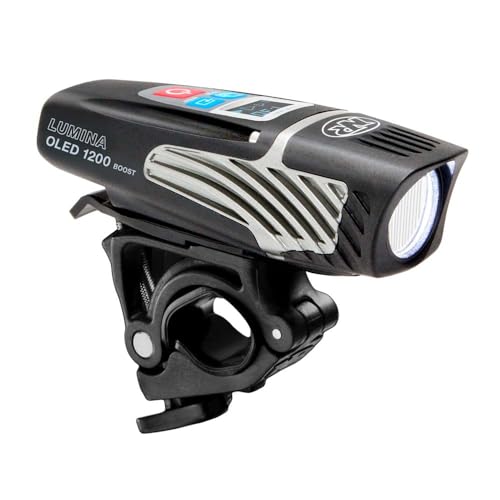
NiteRider Lumina 1200 Boost
This front light outputs up to 1200 lumens on its highest boost setting, enough to light unlit roads and trail sections without a dedicated helmet light. A polycarbonate lens and aircraft-grade aluminum housing hold up to drops and vibration better than plastic-bodied lights. Side visibility windows let drivers see the light from an angle, not just head-on.
Pros
- 1200 lumen boost mode lights unlit roads and trails
- Aluminum housing resists drops better than plastic lights
- Side visibility windows add safety beyond a straight-ahead beam
Cons
- Runtime drops sharply on the highest boost setting
- Micro USB charging port is older than USB-C rivals
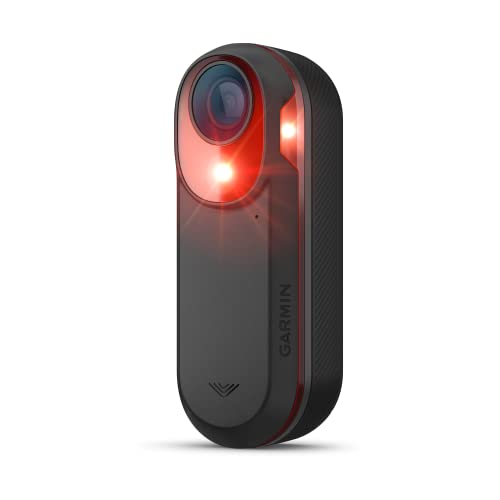
Garmin Varia RCT715
Garmin pairs this taillight with radar that detects approaching vehicles from roughly 140 yards back, relaying alerts to a compatible bike computer or phone. A built in camera automatically records footage when the radar flags a close pass, useful for documenting incidents. The light itself adjusts brightness based on ambient conditions without manual input.
Pros
- Radar alerts riders to approaching vehicles before they are visible
- Built in camera automatically saves footage of close passes
- Brightness adjusts automatically to ambient light conditions
Cons
- Needs a compatible Garmin or Varia app display to show radar alerts
- Shorter runtime than dedicated taillights without radar or camera

Cygolite Metro Plus 800
At 800 lumens, this front light covers most commuting and recreational riding without the premium cost of higher-output competitors. A USB-C port replaces the older micro USB connector found on some rivals, speeding up recharge times. Nine selectable modes range from a steady beam to a daytime flash visible from a distance.
Pros
- USB-C charging is faster than older micro USB lights
- 800 lumens covers most commuting and recreational needs
- Daytime flash mode improves visibility in bright conditions
Cons
- Lower max output than dedicated trail lights like the Lumina 1200
- Runtime on the brightest setting is short for long night rides

Knog Blinder 1300
Knog fits 1300 lumens into a notably compact housing, shorter and lighter than most lights in this output class. A die-cast aluminum body manages heat from the bright LED without the bulk of larger competitors. The light ships with both a handlebar mount and a GoPro-style mount for helmet use.
Pros
- 1300 lumen output in a smaller housing than most rivals
- Die-cast aluminum body manages heat from the bright LED
- Dual mount options support both handlebar and helmet use
Cons
- Short runtime at maximum output like most high-lumen lights
- Priced higher than similarly bright competitors

Light & Motion Urban 1000
This front light uses a wide, flood-style beam built for seeing and being seen in city traffic, rather than the narrow spot beam suited to dark trails. A side visibility strip widens the light’s angle of view for cross traffic at intersections. The sealed, submersible housing holds up to repeated wet commutes better than lights rated only for splash resistance.
Pros
- Wide flood beam suits city visibility better than narrow trail beams
- Side visibility strip helps cross traffic see the light at intersections
- Submersible housing handles repeated wet weather commuting
Cons
- Flood beam throws less distance than narrow spot-beam trail lights
- Costs more than basic commuter lights with similar output
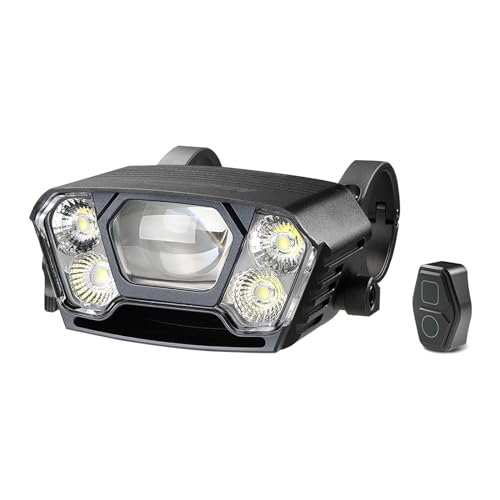
Magicshine Monteer 6700
At up to 6700 combined lumens across dual beam emitters, this light is built for singletrack riding in full darkness rather than road commuting. A separate battery pack connects by cable, keeping weight off the handlebar-mounted light head. Independent control over the wide flood and narrow spot beam lets riders balance peripheral vision with long-distance throw.
Pros
- 6700 lumen combined output suits full darkness singletrack riding
- External battery pack keeps weight off the handlebar mount
- Independent beam control balances peripheral and long-range light
Cons
- Far more light than needed for road riding or commuting
- Separate battery pack and cable add setup complexity
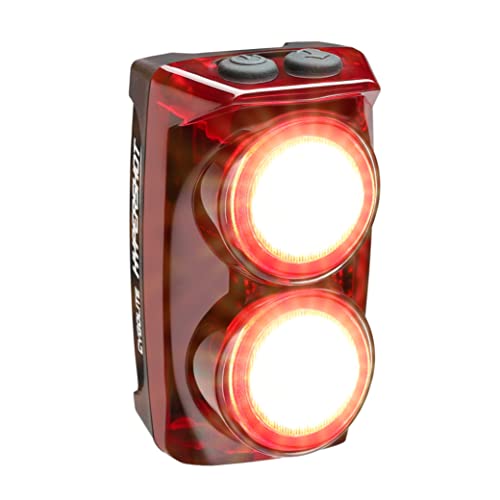
Bontrager Flare RT
This taillight uses ANT+ and Bluetooth connectivity to sync flash patterns with a compatible Garmin or Wahoo head unit, dimming automatically in daylight. A compact, lightweight body mounts easily to a seatpost or saddle rail without added hardware. Day Flash mode extends visibility to roughly 2 kilometers in bright conditions.
Pros
- Syncs with compatible head units to adjust brightness automatically
- Compact, lightweight design mounts without extra hardware
- Day Flash mode stays visible even in bright daylight
Cons
- Lower max output than dedicated radar taillights like the Varia RCT715
- Head unit sync features require a compatible separate display
What matters most
What to look for in a bike light Lumen output sets the baseline, but raw brightness matters less than beam pattern for most riding. Runtime on the brightest setting often runs short, as seen across every high-output light here, so riders should plan around a lower mode for anything beyond an hour. Mounting hardware decides how quickly a light moves between bikes or disappears for security, and connectivity features, like the Garmin Varia’s radar link, add functions beyond simple illumination.
Front lights: beam pattern and output A narrow spot beam, like the one on the Magicshine Monteer 6700, throws light far down a dark trail but leaves little peripheral coverage. A wide flood beam, used on the Light & Motion Urban 1000, spreads light sideways for city visibility at intersections and crosswalks. Road and gravel riders without streetlights usually want something between the two, which is where the NiteRider Lumina 1200 Boost and Knog Blinder 1300 both land.
Rear lights and rider visibility A basic rear light like the Bontrager Flare RT covers the fundamentals, flashing brightly enough to be seen in daylight and dimming automatically at night when paired with a compatible head unit. The Garmin Varia RCT715 goes further, adding radar that warns a rider of approaching traffic before it is visible and a camera that records close passes automatically. Riders who commute on roads with fast traffic gain the most from that added layer of awareness.
Battery life and charging Most front lights here use an internal battery charged over USB-C, running out quickly on their brightest setting but lasting several hours on a lower mode. The Magicshine Monteer 6700 breaks from that pattern with an external battery pack, trading convenience for the extended runtime serious night riders need. Rear lights like the Bontrager Flare RT and Garmin Varia RCT715 typically last longer per charge since their lower output draws far less power.
Compared at a glance
| # | Model | Max Output | Best for | Score | Price |
|---|---|---|---|---|---|
| 1 | NiteRider Lumina 1200 Boost | 1200 lumens | Best Overall | 9.3 | Check price |
| 2 | Garmin Varia RCT715 | 65 lumens | Best Rear Light with Radar | 9.1 | Check price |
| 3 | Cygolite Metro Plus 800 | 800 lumens | Best Value Front Light | 8.8 | Check price |
| 4 | Knog Blinder 1300 | 1300 lumens | Best Compact High-Output | 8.7 | Check price |
| 5 | Light & Motion Urban 1000 | 1000 lumens | Best for Commuting | 8.6 | Check price |
| 6 | Magicshine Monteer 6700 | 6700 lumens (combined) | Best for Mountain Biking | 8.9 | Check price |
| 7 | Bontrager Flare RT | 90 lumens | Best Budget Rear Light | 8.3 | Check price |
Good to know
How many lumens does a bike light need for commuting?
Around 500 to 1000 lumens, the range covered by the Cygolite Metro Plus 800 and Light & Motion Urban 1000, is usually enough for lit city streets.
What is the difference between a spot and flood beam bike light?
A spot beam throws light farther in a narrow pattern, suited to dark trails. A flood beam spreads wider for city visibility, like the Light & Motion Urban 1000.
Do bike lights need to be waterproof?
For regular commuting, yes. Lights rated IP67 or similar, like the Light & Motion Urban 1000, handle repeated wet weather better than splash-resistant lights.
How does a radar bike light work?
The Garmin Varia RCT715 uses radar to detect vehicles approaching from behind, sending an alert to a paired bike computer before the vehicle is visible to the rider.
Can a bike light run all night on a single charge?
Only on lower brightness settings. Even high-capacity lights like the Magicshine Monteer 6700 last only a couple of hours at maximum output.
Is a daytime running light worth using on a bike?
Yes, for visibility. A daytime flash mode, included on the Bontrager Flare RT and Cygolite Metro Plus 800, stays visible in bright sunlight better than a steady beam.
How bright a light do mountain bikers need for night trail riding?
Significantly brighter than road riding. The Magicshine Monteer 6700’s combined output targets the near total darkness found on singletrack trails.
What mount type works best for a bike light?
A quick-release handlebar clamp, used on the NiteRider Lumina 1200 Boost, allows fast removal for charging or security without extra tools.
Does a bike light need both a front and rear unit?
Yes, for road and night riding. A front light helps with visibility and seeing the road, while a rear light like the Bontrager Flare RT alerts traffic approaching from behind.
Our pick
The NiteRider Lumina 1200 Boost earns the top recommendation for most riders, since its 1200 lumen output handles both lit streets and unlit roads without needing a separate trail light. Riders who commute on busy roads and want extra safety awareness should add the Garmin Varia RCT715 instead of a basic taillight, since its radar and camera catch what a mirror cannot. Anyone on a tighter budget who just needs reliable rear visibility should skip the radar system and pick the Bontrager Flare RT.
Sierra Daniels
Sierra's background is in landscape design and nursery retail. She focuses on lawn and garden equipment, outdoor furniture and gear durability, weighing published specs against how materials actually hold up outside.