Fishing Reels Anglers Actually Trust on the Water
The Shimano Stradic FL leads this list as an all-around spinning reel built for smooth, sealed drag performance. The Penn Battle III suits saltwater anglers needing corrosion resistance, while the Abu Garcia Revo SX stands out as a precise baitcasting option.
The Shimano Stradic FL tops this list for most anglers, pairing Hagane gear construction with a sealed drag that holds up across conditions. It suits freshwater and light saltwater use, though its price sits above mid-range competitors on this list.
We compared gear ratio, bearing count, max drag rating, and body material across spinning and baitcasting reels. Owner feedback on corrosion resistance, smoothness, and long-term durability filled gaps the spec sheets leave out. Target species and water type change which reel actually fits.
The shortlist, ranked

Shimano Stradic FL
Shimano’s Hagane gear technology keeps the Stradic’s internals meshing smoothly even under heavy drag pressure. A lightweight magnesium body cuts rotational mass without sacrificing stiffness. The reel costs more than mid-range alternatives on this list.
Pros
- Hagane gear construction holds up well under sustained drag pressure
- Lightweight magnesium body reduces fatigue during long casting sessions
- Smooth, sealed drag system performs consistently across conditions
Cons
- Costs more than most other spinning reels on this list
- Replacement parts and service cost more than budget brands

Penn Battle III
Penn built the Battle III with a full metal body rather than mixing in composite panels, which holds up better against saltwater corrosion and impact. Stainless steel bearings resist rust longer than standard bearings in spray and salt air. That metal body adds weight compared to graphite-bodied spinning reels.
Pros
- Full metal body resists corrosion and impact in saltwater use
- Stainless steel bearings hold up against salt spray exposure
- Sealed drag system stays smooth after repeated saltwater trips
Cons
- Heavier than graphite-bodied spinning reels of similar size
- Extra weight shows up during long days of repeated casting
Daiwa BG
Daiwa’s digigear design cuts tooth-engagement noise and wear better than typical stamped gears at this price. An aluminum body and spool add durability without reaching premium pricing. The reel runs a bit heavier than ultralight finesse models built for smaller fish.
Pros
- Digigear construction improves gear durability at a mid-range price
- Aluminum body and spool resist flex under heavy drag loads
- High max drag rating suits larger inshore and freshwater species
Cons
- Heavier than ultralight finesse reels built for small fish
- Gear ratio runs lower than fast-retrieve reels on this list
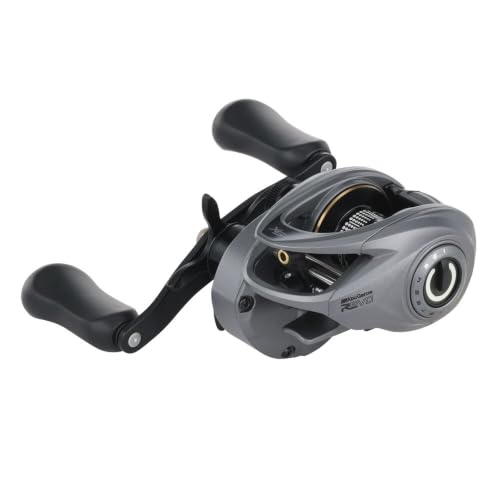
Abu Garcia Revo SX
Abu Garcia tunes the Revo SX’s magnetic brake for consistent casting distance without constant thumb adjustment. Nine stainless bearings keep retrieval smooth across a wide range of lure weights. The fast 7.3:1 gear ratio favors reaction baits over slow, deep presentations.
Pros
- Magnetic braking system reduces backlash without constant adjustment
- Fast 7.3:1 gear ratio suits reaction baits and topwater lures
- Nine stainless bearings keep retrieval smooth under load
Cons
- Fast gear ratio is less ideal for slow, deep presentations
- Baitcasting reels have a learning curve for new anglers

KastKing Royale Legend
KastKing packs ten plus one bearings into a budget-priced reel, more than several pricier competitors include. A carbon fiber drag washer keeps performance reasonably smooth for casual anglers. Long-term durability trails established premium brands under heavy daily use.
Pros
- High bearing count for a reel at this price point
- Carbon fiber drag washer performs smoothly for recreational fishing
- Low cost makes it an easy entry point for new anglers
Cons
- Long-term durability trails established premium brands
- Internal components feel less refined under sustained heavy use

Pflueger President
Pflueger keeps the President’s rotor lightweight, which helps anglers feel subtle bites during finesse presentations. A sealed carbon drag system stays smooth even as moisture works into the reel over a season. The reel runs smaller and lighter than reels built for heavier offshore species.
Pros
- Lightweight rotor design improves bite detection on finesse rigs
- Sealed carbon drag resists performance drop from moisture over time
- Smooth retrieve feels refined for a reel at this price
Cons
- Lighter build is not meant for heavy offshore species
- Smaller line capacity than reels sized for bigger fish

Lew’s Mach Crush
Lew’s centrifugal brake system forgives casting mistakes better than pure magnetic systems while anglers are still learning baitcasters. The fast 7.5:1 ratio picks up line quickly after a missed hookset. New baitcaster users still need some practice before backlash disappears entirely.
Pros
- Centrifugal braking system forgives casting mistakes for new users
- Fast gear ratio picks up slack line quickly
- Lower price than premium baitcasting reels with similar features
Cons
- Still requires some practice to avoid backlash as a first baitcaster
- Centrifugal brakes need manual adjustment as conditions change
What matters most
What gear ratio and bearings actually do Gear ratio determines how much line a reel retrieves per handle turn, with higher numbers suiting fast-moving lures. Bearing count and quality affect how smooth the retrieve feels, though quality matters more than raw count. Max drag rating sets the ceiling for how hard a fish can pull before line slips.
Spinning reels vs baitcasting reels Spinning reels forgive casting mistakes better, making them the easier starting point for most anglers. Baitcasting reels offer more casting accuracy and line control once an angler learns to manage the spool. Target species and lure weight both influence which style performs better on a given day.
Best for saltwater and corrosion resistance Saltwater fishing demands sealed drag systems and corrosion-resistant bearings to survive repeated spray exposure. Full metal bodies, like the Penn Battle III uses, outlast graphite-composite builds in that environment. Rinsing any reel with fresh water after a saltwater trip extends its lifespan regardless of build quality.
Best for finesse presentations and light tackle Finesse fishing rewards a lightweight reel that transmits subtle bites through the rod blank. Smaller spinning reels in the 1000 to 2500 size range suit this style better than heavier saltwater models. A smooth, sensitive drag matters more here than raw max drag strength.
How they stack up
| # | Model | Gear ratio | Best for | Score | Price |
|---|---|---|---|---|---|
| 1 | Shimano Stradic FL | 6.0:1 | Best overall spinning reel | 9.4 | Check price |
| 2 | Penn Battle III | 5 stainless steel + 1 | Best for saltwater durability | 9.1 | Check price |
| 3 | Daiwa BG | 5.6:1, size 4000 | Best value spinning reel | 9.0 | Check price |
| 4 | Abu Garcia Revo SX | 7.3:1 | Best baitcasting reel for accuracy | 9.0 | Check price |
| 5 | KastKing Royale Legend | 5.2:1 | Best budget spinning reel | 8.6 | Check price |
| 6 | Pflueger President | 6.2:1 | Best for finesse and light tackle | 8.8 | Check price |
| 7 | Lew’s Mach Crush | 7.5:1 | Best baitcasting reel for beginners | 8.7 | Check price |
Common questions
What gear ratio is best for fishing?
A gear ratio around 6.0:1 to 6.5:1 suits most general-purpose fishing. Faster ratios above 7.0:1 favor reaction baits, while slower ratios help with deep, slow presentations.
Is a spinning reel or baitcasting reel better for beginners?
Spinning reels are generally easier for beginners since they resist backlash. Baitcasting reels offer more control once an angler learns to manage spool speed.
How many bearings does a good fishing reel need?
Bearing quality matters more than raw count, though 6 to 10 bearings is common on quality reels. A smooth retrieve depends on bearing placement, not just quantity.
What is max drag on a fishing reel?
Max drag measures the maximum pressure a reel’s drag system can apply before line slips. Higher max drag ratings suit larger, harder-fighting fish species.
Do I need a saltwater-rated reel for fishing from a pier?
Yes, spray and humidity near saltwater still cause corrosion even without full submersion. A sealed drag system and corrosion-resistant bearings hold up better in that environment.
How often should I clean a fishing reel?
A light rinse with fresh water after each saltwater trip prevents salt buildup. A deeper cleaning and relube once or twice a season keeps internals running smoothly.
What size spinning reel should I use for bass fishing?
A 2500 to 3000 size spinning reel covers most bass fishing situations. Larger sizes suit heavier line and bigger lures better than smaller finesse setups.
Why does my baitcasting reel backlash?
Backlash happens when the spool spins faster than the line leaves it, often during a cast. Adjusting the brake system and practicing thumb control reduces this over time.
Can one reel handle both freshwater and saltwater fishing?
Reels rated for saltwater generally handle freshwater fine too. The reverse is less true, since freshwater-only reels often lack adequate corrosion protection.
What is the difference between ball bearings and roller bearings in a reel?
Ball bearings reduce friction for a smoother retrieve throughout the reel. Roller bearings, often found only in the anti-reverse mechanism, specifically prevent the handle from spinning backward.
The bottom line
The Shimano Stradic FL earns the top spot for most anglers, combining smooth drag performance with gear durability that holds up over seasons. Anglers fishing saltwater piers or jetties regularly should choose the Penn Battle III instead, since its full metal body resists corrosion the Stradic’s lighter construction was not built to handle.
Sierra Daniels
Sierra's background is in landscape design and nursery retail. She focuses on lawn and garden equipment, outdoor furniture and gear durability, weighing published specs against how materials actually hold up outside.
You might also need

Boat Storage Organizers That Actually Stay Put on the Water

What Makes a Pair of Fishing Waders Actually Keep You Dry?

Compact but Tough: Top Heavy Duty Hose Reels for Small Gardens
