Seven Beginner Strategy Games That Teach Real Decisions
Catan opens the genre well since trading resources teaches negotiation within one round. Families new to tabletop strategy often start with Ticket to Ride for its visual map. Anyone short on time should try Azul, a full game finishing in under 45 minutes.
Dense rulebooks make many new players quit before their first game ends. Catan sidesteps that problem by teaching trading and building within a single round while keeping long-term strategy intact. Mixed-age groups often find Ticket to Ride’s visual map easier to follow on a first attempt. Short on time, Azul wraps up a complete game in under 45 minutes.
Playtime, player count and how fast a game explains its own rules often decide whether a newcomer sticks with the hobby. We compared rules complexity, session length, core mechanics and owner feedback across seven current strategy games built for beginners.
The shortlist, ranked

Catan
Trading resources with other players teaches negotiation within a single round for most newcomers. A hexagonal board reshuffles its layout every game, so repeat sessions never feel identical. New players often grasp Catan’s core loop in under fifteen minutes despite its long-term depth.
Pros
- Trading mechanic teaches negotiation naturally
- Randomized board layout keeps replays varied
- Wide range of expansions extends the base game
Cons
- Sessions can stretch past an hour with cautious traders
- Trading slows down when players hesitate to negotiate

Ticket to Ride
Collecting color-matched cards to claim train routes gives first-time players a rule set they can follow within a few turns. Games run shorter than Catan, fitting neatly into a family game night. Parents playing alongside kids cite the illustrated map as easy to explain without reading a full rulebook.
Pros
- Card-matching rules are quick to pick up
- Shorter playtime suits family game nights
- Illustrated map appeals to younger players
Cons
- Less direct player interaction than trading-based games
- Blocked routes can frustrate players new to the game
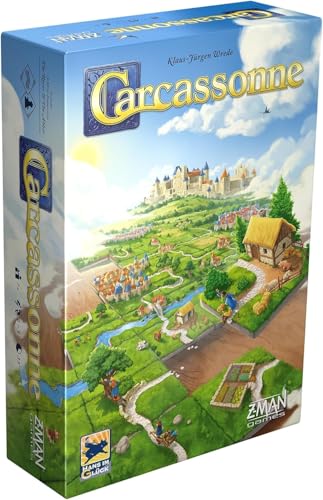
Carcassonne
One tile placed per turn keeps each decision manageable for someone learning strategic thinking for the first time. Meeples placed on roads and cities score points gradually, teaching area control without overwhelming a new player. Expansions let the base game grow once a group wants more depth.
Pros
- One-tile-per-turn structure keeps decisions simple
- Family-friendly session length
- Expansions add depth for later play
Cons
- Scoring rules take a game or two to click
- Limited direct interaction between players
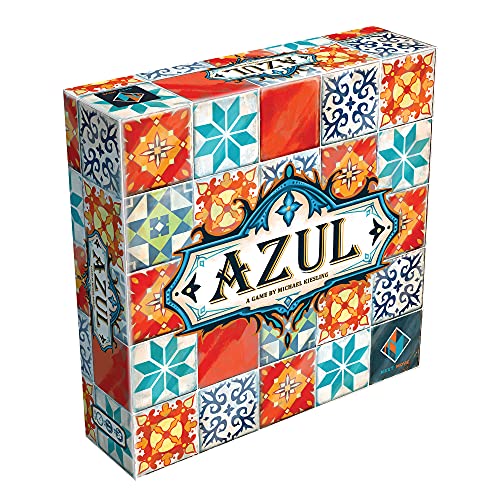
Azul
Drafting colored tiles to complete a pattern finishes well under an hour, ideal for a group wanting a full game on a weeknight. Turns move quickly since each pick affects only a small part of the board. Even non-gamers at the table often enjoy handling the tactile tiles.
Pros
- Fast turns keep the pace moving
- Simple drafting rules are quick to learn
- Tactile components appeal to casual players
Cons
- Thinner theme than adventure-style games
- Scoring math takes a round to get comfortable with

Splendor
Collecting gems to purchase development cards introduces engine-building ideas without the overhead of a full worker-placement game. Turns stay short, keeping downtime between decisions to a minimum. Players moving from simple card games toward deeper strategy often treat Splendor as a comfortable next step.
Pros
- Introduces engine building in a compact format
- Short turns limit downtime
- Compact box travels easily
Cons
- Interaction is limited mostly to card competition
- Sessions can feel similar to each other over time
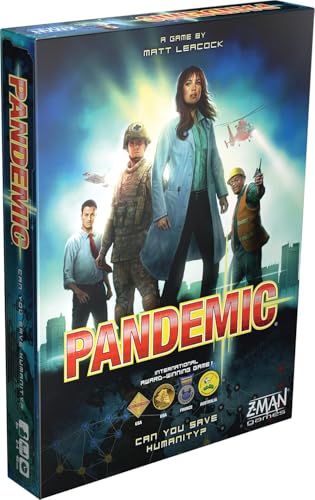
Pandemic
Every player works together against the game itself, removing the head-to-head pressure that intimidates some newcomers. Role cards give each player a distinct ability, teaching team-based planning early. Groups wanting to learn strategy without anyone losing individually often start here.
Pros
- Cooperative format removes head-to-head pressure
- Distinct roles teach team coordination
- Adjustable difficulty suits new groups
Cons
- A dominant player can steer group decisions
- Losing as a full team can feel deflating

Kingdomino
Domino-shaped tiles drafted to build a small kingdom keep rules light enough for eight-year-olds to grasp immediately. A full game wraps up in around twenty minutes, short enough to replay right away. Families with younger kids often name it their first successful strategy game.
Pros
- Very short playtime suits young attention spans
- Extremely simple core rules
- Quick enough to replay multiple times in one session
Cons
- Strategic depth is lighter than other games here
- Less appealing to experienced strategy gamers
Before you buy
What makes a strategy game beginner-friendly? A short rulebook, a clear turn order and forgiving early mistakes matter more to a beginner than a high strategic ceiling. Games that explain their core loop in the first round, like Catan or Ticket to Ride, keep new players engaged instead of lost. Added complexity can wait until the base rules feel comfortable, usually through an expansion.
How to choose a strategy game by group size Two-player groups do well with games like Splendor or Carcassonne that stay engaging without a full table. Four to six players get more from Catan’s trading or Ticket to Ride’s route competition, both of which scale naturally with more people. Check a box’s stated player range before buying if your group size changes week to week.
Competitive vs cooperative: which fits your group? Catan and Azul pit players against each other, a format that suits groups comfortable with some rivalry. Pandemic puts everyone on the same team against the game itself, which eases pressure for players who dislike direct competition. Mixed groups with different comfort levels often start cooperative before trying competitive titles.
Best playtime for a regular game night Kingdomino and Azul fit into a single evening alongside other activities, each finishing in under 45 minutes. Catan can run past an hour once players start negotiating trades seriously. Randomized boards or tile draws, found in most games here, keep repeat sessions from feeling identical.
The lineup, side by side
| # | Model | Players | Best for | Score | Price |
|---|---|---|---|---|---|
| 1 | Catan | 3 to 4, expandable to 6 | Best overall | 9.4 | Check price |
| 2 | Ticket to Ride | 2 to 5 | Best for families | 9.1 | Check price |
| 3 | Carcassonne | 2 to 5 | Best for simple rules | 8.8 | Check price |
| 4 | Azul | 2 to 4 | Best quick session | 8.6 | Check price |
| 5 | Splendor | 2 to 4 | Best for building strategic depth | 8.4 | Check price |
| 6 | Pandemic | 2 to 4 | Best cooperative strategy | 8.2 | Check price |
| 7 | Kingdomino | 2 to 4 | Best for the youngest beginners | 8.0 | Check price |
Good to know
What is the easiest strategy board game to learn?
Kingdomino and Ticket to Ride both explain their core rules within a few minutes, making them common first picks for people new to strategy games.
Is Catan good for beginners?
Yes. Despite its reputation for depth, trading and building resources are simple to teach, and new players usually grasp the basics in the first round.
Which strategy games work best for two players?
Splendor and Carcassonne both play well at two, with Splendor’s compact card format and Carcassonne’s flexible tile count adapting cleanly to a smaller table.
Are cooperative board games easier for beginners than competitive ones?
Often, yes. Pandemic removes head-to-head competition, so new players can focus on learning mechanics instead of the pressure of losing individually.
How long does an average game of Catan take?
A typical game runs 60 to 90 minutes among experienced players, though a first session with beginners explaining rules can stretch closer to two hours.
What age can kids start playing strategy board games?
Kingdomino and Carcassonne are built for ages 7 and up, while more involved titles like Catan and Splendor suit ages 10 and older.
Do strategy games need expansions to stay interesting?
Not right away. Base games like Catan, Ticket to Ride and Carcassonne hold up on their own, though expansions add variety once a group has played many sessions.
Ticket to Ride vs Catan: what is the real difference?
Ticket to Ride centers on collecting cards to claim train routes with less direct interaction, while Catan involves active trading and negotiation on a shared board.
Our take
Catan remains the strongest starting point for groups ready to learn trading and long-term planning together. Ticket to Ride works better for families or mixed-age groups on a first playthrough. Anyone short on time should keep Azul or Kingdomino nearby for a faster session.
Rachel Simmons
Rachel previously worked in child-product retail and brings a practical, detail-first eye to gear reviews, focusing on safety standards, ease of use and the fine print that matters most for new caregivers.