Beginner Board Games Kids Actually Want To Replay
Hasbro Candy Land suits preschoolers first, since it needs only color matching, no reading or counting. Mattel UNO becomes the natural step once kids manage a hand of cards and want light strategy. Hasbro Connect 4 adds planning-ahead thinking for kids ready to think a move ahead.
Hasbro Candy Land tops this list for the youngest players, since matching card colors to board spaces is the whole rule set a three-year-old needs. Mattel UNO follows as kids age into hand management and simple strategy. Hasbro Connect 4 and Pressman Sequence for Kids round out picks for slightly older beginners ready for pattern recognition and planning ahead.
A rule set that takes ten minutes to explain loses a young child before the first turn. Printed age ranges are a starting point, not a guarantee, since attention span varies more than a number on a box. We compared minimum age, average playtime, rule complexity and the specific skill each game builds, then weighed which titles held attention across a mixed-age group.
The top picks, ranked

Hasbro Candy Land
Draw a card, match its color to the next space, and move there, a rule a three-year-old grasps after one round. Reading and counting play no part, which puts a preschooler and an older sibling on equal footing. A full game wraps up in fifteen to twenty minutes, short enough for an early attention span.
Pros
- Needs no reading or counting
- Rules explain in under a minute
- Short playtime matches short attention spans
Cons
- Offers little challenge past age six
- Outcome depends entirely on the draw

Mattel UNO Card Game
Matching numbers and colors while holding a hand of cards teaches light strategy without complicated scoring. Skip, reverse and draw-two cards throw in enough unpredictability to keep repeat games fresh. A deck packs small for travel and costs less than most board games with comparable replay value.
Pros
- Fits in a bag for travel
- Scales from two players up to ten
- Adds strategy without heavy rules
Cons
- Depends on reliable number recognition
- Younger players often need help holding cards

Hasbro Connect 4
Dropping discs into a vertical grid to line up four in a row teaches basic planning several moves out. Wins and blocked moves show up visually, so cause and effect click fast for a young player. Rounds finish in minutes, which softens a loss and makes a rematch an easy sell.
Pros
- Visual grid makes strategy easy to see
- Fast rounds encourage rematches
- Needs only two players for a full game
Cons
- Caps out at two players per game
- Younger kids often need blocking hints

Pressman Sequence for Kids
Matching animal cards to a board while building a line of five builds pattern recognition alongside early strategy. Artwork replaces numbers and letters, so a child who cannot read yet still plays unaided. A team option lets an adult pair with a younger child against older siblings for a fairer match.
Pros
- Playable by kids who cannot read yet
- Team mode evens out mixed-age groups
- Animal theme holds younger attention
Cons
- Board setup takes a few minutes
- Offers less variety than card-based games

Hasbro Chutes and Ladders
Climbing ladders and sliding down chutes teaches basic counting alongside an early lesson in consequences. A spinner replaces dice, cutting out a counting step that trips up the youngest players. It ranks among the least expensive family games while still holding a preschooler’s attention for a full round.
Pros
- Spinner simplifies counting for toddlers
- Builds an early consequence lesson
- Priced below most family games
Cons
- Outcome depends entirely on the spin
- Older siblings may find it repetitive

Hasbro Guess Who
Asking yes-or-no questions to narrow down a hidden character builds early deductive reasoning in a format kids pick up fast. Flipping down eliminated tiles gives a clear visual sense of progress. A round runs short enough for several rematches in one sitting.
Pros
- Builds early deductive reasoning
- Tile flipping shows clear progress
- Quick rounds allow multiple rematches
Cons
- Limited to two players per board
- Younger kids may need help forming questions
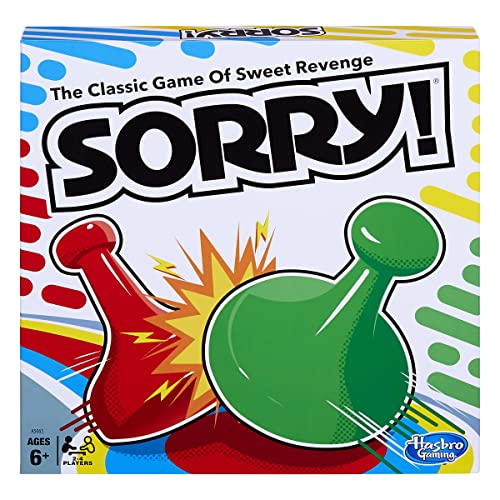
Hasbro Sorry!
Sorry! seats a full four players, useful once grandparents or extra cousins join game night. Card-based movement adds light strategy around blocking opponents and sending them back to start. Rules take longer to explain than Candy Land but still sit within a beginner’s reach.
Pros
- Seats a full four-player family game
- Adds light strategy over pure luck
- Familiar format many parents already know
Cons
- Runs longer than most entries here
- Being sent back to start upsets younger kids
How to choose
What makes a game work for true beginners A true beginner game explains itself in under two minutes, since a long setup loses a young child before play starts. Hasbro Candy Land and Hasbro Chutes and Ladders skip reading and counting entirely, which suits the youngest players. Past age five or six, a touch of strategy keeps repeat play from feeling stale. Rules that fit on the inside of the box lid are usually a good sign.
Matching game type to the skill you want to build Color and pattern games like Hasbro Candy Land and Pressman Sequence for Kids build early recognition skills. Hasbro Connect 4 and Mattel UNO introduce planning ahead and hand management once a child is ready. Hasbro Guess Who teaches question-asking logic, a skill that carries well past game night. Pick the game by the skill first, and the fun follows.
Keeping a mixed-age household on fair footing Team play, like pairing an adult with a younger child in Pressman Sequence for Kids, balances a mismatched group. Luck-heavy games such as Hasbro Chutes and Ladders naturally level the field since skill matters less. Save Hasbro Sorry! for groups where every player is at least six. Rotating which game leads game night keeps every age invested.
How playtime length matches attention span Games under twenty minutes suit preschoolers and early elementary kids best, since attention drops fast after that mark. Hasbro Sorry! runs thirty to forty-five minutes, better suited to kids already used to a full sitting. Starting with shorter games like Hasbro Connect 4 builds the patience longer games later require. A short win keeps a young player asking for one more round.
How they stack up
| # | Model | Minimum age | Best for | Score | Price |
|---|---|---|---|---|---|
| 1 | Hasbro Candy Land | 3 years | Best overall | 9.4 | Check price |
| 2 | Mattel UNO Card Game | 7 years | Best value | 9.1 | Check price |
| 3 | Hasbro Connect 4 | 6 years | Best for planning-ahead skills | 8.9 | Check price |
| 4 | Pressman Sequence for Kids | 4 years | Best for pattern recognition | 8.6 | Check price |
| 5 | Hasbro Chutes and Ladders | 3 years | Best budget | 8.3 | Check price |
| 6 | Hasbro Guess Who | 6 years | Best for deduction skills | 8.1 | Check price |
| 7 | Hasbro Sorry! | 6 years | Best for larger family groups | 8.0 | Check price |
Questions worth asking
What is the best first board game for a three-year-old?
Hasbro Candy Land tops most recommendations, since it needs only color matching and no reading or counting. Hasbro Chutes and Ladders comes in close behind, adding basic counting through its spinner.
Are card games or board games better for young kids?
Board games like Hasbro Candy Land suit the youngest players best, since there is no hand of cards to manage. Card games like Mattel UNO work once a child can hold and sort several cards comfortably.
How long should a beginner family game take to play?
Fifteen to twenty minutes suits preschoolers and early elementary kids, holding attention through a full round. Save thirty-plus minute games such as Hasbro Sorry! for when kids are used to longer sessions.
What skills do beginner family games actually teach?
Depending on the title, kids practice color matching, counting, turn-taking, basic strategy or deductive reasoning. Matching the game to the skill you want gives game night a purpose beyond entertainment.
Is UNO too advanced for a five-year-old?
It can be, since Mattel UNO expects reliable number recognition and hand management. Most guidance puts UNO around age seven, with younger kids needing help sorting and reading cards.
Which games work best for a mixed-age family group?
Luck-heavy titles like Hasbro Candy Land or Hasbro Chutes and Ladders level the field between ages. Team-based Pressman Sequence for Kids also works well, pairing a younger child with an adult partner.
Do board games actually beat screen time for family night?
Board games build turn-taking, patience and face-to-face interaction that passive screen time skips. They also teach specific skills, like planning ahead in Hasbro Connect 4, inside a low-pressure setting.
How many players do beginner family games usually support?
Most fit two to four players, though Mattel UNO scales up to ten with an extra deck. That makes it a solid pick for gatherings with cousins and friends.
Candy Land vs Chutes and Ladders, which is the better first game?
Hasbro Candy Land needs zero counting, making it the simpler pick for a brand-new three-year-old player. Hasbro Chutes and Ladders adds a light counting step through its spinner, useful once a child is ready for that leap.
The bottom line
Hasbro Candy Land remains the easiest true first game, teaching turn-taking and color matching without a single reading requirement. Mattel UNO is the natural next step once a child can manage a hand of cards and wants more strategy. Families that need a game to seat four players and last for years should add Hasbro Connect 4 and Hasbro Sorry! to the shelf.
Rachel Simmons
Rachel previously worked in child-product retail and brings a practical, detail-first eye to gear reviews, focusing on safety standards, ease of use and the fine print that matters most for new caregivers.


