Which Strategy Game Actually Teaches Kids to Plan?
ThinkFun Gravity Maze builds logic and spatial planning through sixty leveled marble-run challenges. Catan Junior introduces trading and forward planning to kids as young as six. ThinkFun Rush Hour sharpens sequential problem solving through graded sliding-block puzzles for solo play.
Matching a game to a child’s age matters more than the box art. ThinkFun Gravity Maze builds logic and planning through leveled marble-run puzzles, Catan Junior brings real trading strategy to players as young as six, and ThinkFun Rush Hour gives solo puzzlers a quiet brain-building option.
A game pitched above a child’s level frustrates, and one pitched below it gets ignored within a week. We compared these seven titles on age fit, the specific thinking skills each one builds, replay value and how quickly kids grasp the rules, using product details and what parents report.
The shortlist, ranked

ThinkFun Gravity Maze
Kids place towers to guide a marble from start to target, solving progressively harder challenge cards along the way. Planning, spatial reasoning and cause-and-effect thinking develop quietly through play. Sixty leveled challenges and single-player format let a child grow with the game over months.
Pros
- Sixty levels grow with the child’s skill
- Builds planning and spatial reasoning
- Works well for quiet independent play
Cons
- Small marbles and towers need careful storage
- No group play mode included

Catan Junior
A pirate-themed board distills the famous strategy game into rules young children can follow, teaching resource gathering, trading and forward planning. Turns run simpler and quicker than the original, keeping attention spans engaged. It works as a gentle first step into real strategic thinking for the whole family.
Pros
- Real strategy simplified for young kids
- Pirate theme holds attention through the game
- Serves as a strong gateway to bigger games
Cons
- An adult usually needs to guide first plays
- Younger siblings may find sessions long

ThinkFun Rush Hour
Kids maneuver a jammed grid of toy cars to free the red one, working through cards ranging from beginner to expert. Sequential planning and problem solving sharpen one move at a time. Graded difficulty keeps the challenge rewarding as skills improve over repeated play.
Pros
- Graded cards run from easy to expert
- Excellent for solo focus time
- Compact size travels well
Cons
- Offers only one puzzle type
- Small cars are easy to misplace
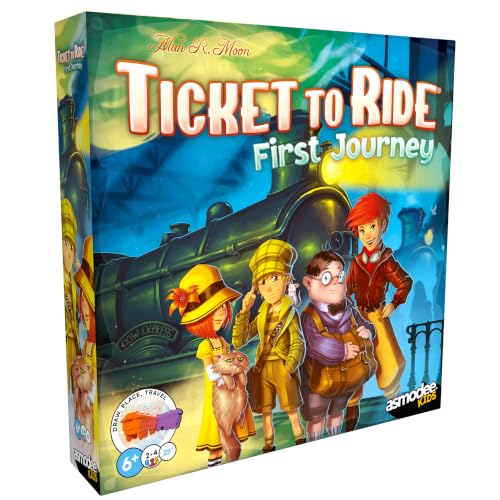
Ticket to Ride First Journey
Players claim train routes across a colorful map to complete tickets, teaching planning and route strategy without heavy rules. Games run short enough to suit young attention spans. It shines as an approachable strategy option the whole family can enjoy together.
Pros
- Simple rules that kids pick up fast
- Short games suit young attention spans
- Encourages planning several moves ahead
Cons
- Less depth than the adult version
- Needs at least two players to work

Blokus
Players place geometric pieces that must touch only at corners, forcing constant spatial planning and blocking of opponents. Rules take a minute to learn, yet the strategy underneath runs deep. Fast games that scale to four players make it easy to bring out again and again.
Pros
- Learns in a minute, deep to master
- Fast games with strong replay value
- Gives a solid spatial-thinking workout
Cons
- Abstract theme feels less exciting to some kids
- Plays best with three or four players
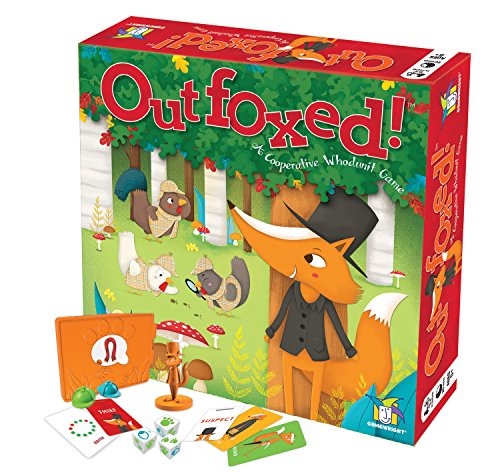
Gamewright Outfoxed!
A cooperative whodunit has kids gather clues together to deduce which fox took the pie before it escapes. Playing as a team teaches deduction and reasoning without the sting of losing. It works as a friendly introduction to logical thinking for the youngest strategists.
Pros
- Cooperative play avoids meltdowns over losing
- Teaches deduction and logical reasoning
- Suits the youngest players well
Cons
- Offers less challenge for older kids
- Has a shorter replay ceiling than others here

Jax Sequence for Kids
Animal artwork replaces the classic card-and-board format so pre-readers can play, matching cards to build rows while blocking opponents. Planning and light strategy develop through short, breezy rounds. As an affordable, easy-to-learn option, it works as a solid first strategy game for little ones.
Pros
- Simple enough for pre-readers to follow
- Quick rounds hold short attention spans
- Costs less than most strategy games here
Cons
- Strategy runs light for older kids
- Involves some luck of the draw
Side by side
| # | Model | Age range | Best for | Score | Price |
|---|---|---|---|---|---|
| 1 | ThinkFun Gravity Maze | 8 and up | Best overall | 9.4 | Check price |
| 2 | Catan Junior | 6 and up | Best for younger kids | 9.1 | Check price |
| 3 | ThinkFun Rush Hour | 8 and up | Best solo brain teaser | 8.9 | Check price |
| 4 | Ticket to Ride First Journey | 6 and up | Best for family game night | 8.7 | Check price |
| 5 | Blokus | 7 and up | Best value | 8.5 | Check price |
| 6 | Gamewright Outfoxed! | 5 and up | Best cooperative game | 8.3 | Check price |
| 7 | Jax Sequence for Kids | 3 and up | Best budget pick | 8.0 | Check price |
How to pick the right one
How do you match a strategy game to your child’s age? Age ratings exist for good reason, since a game beyond a child’s reading or attention level leads to frustration, while one below it gets ignored. Start near the listed age, and favor simpler turns and shorter play times for younger kids. Complexity can always increase later as skills and patience grow.
Which thinking skills does each type of game build? Strategy games are not interchangeable in what they teach. Some sharpen spatial reasoning, others build trading and resource planning, and still others focus on deduction or sequencing. Rotating a few different games exposes a child to more than one kind of thinking, rather than repeating the same skill.
Solo or group play: which suits your child? Single-player puzzle games suit quiet, independent focus time and travel especially well. Board games teach kids to plan against others and handle both winning and losing. Cooperative games offer a gentler middle ground for younger children, since the group succeeds or struggles together without a lone loser.
Which games keep kids coming back? Leveled challenge cards, changing setups or deep decisions that never play out the same way twice keep a strategy game interesting after many plays. A game with sixty graded puzzles or high strategic variety earns its shelf space far longer than one a child solves once and sets aside.
Common questions
What age can kids start playing strategy games?
Simple strategy games work from around age three or four with animal-matching and pattern designs, while richer trading and logic games suit ages six and up. Match the game to attention span and reading level, then step up as those grow.
Are strategy games good for a child’s development?
Yes, strategy games build planning, logical reasoning, spatial awareness and patience, while group games add turn-taking and coping with winning or losing. Kids see them as fun rather than schoolwork, so these skills develop naturally through play.
What is a good first strategy game for a young child?
For pre-readers, an animal-themed matching game like Sequence for Kids or a cooperative deduction game like Outfoxed! eases them in. Around age six, Catan Junior and Ticket to Ride First Journey introduce real strategy with kid-friendly rules.
Are single-player logic games worth buying?
Very much so. Games like Gravity Maze and Rush Hour give kids quiet, independent focus time and build sequential problem solving through leveled challenges. They also travel well, since no second player is needed.
What is the difference between cooperative and competitive games?
In competitive games, players compete for the win, which teaches handling both success and defeat. In cooperative games, everyone works as a team toward a shared goal, which suits younger or more sensitive children who find losing discouraging.
How do you keep a strategy game from frustrating your child?
Start below or at the recommended age, teach with a practice round, and let early plays run relaxed rather than strictly by the rules. Leveled games help too, since you can begin with the easiest challenges and build confidence from there.
Which games grow with a child over time?
Games with graded challenge cards, such as Gravity Maze and Rush Hour, and deep strategy titles like Blokus keep offering new challenges for years. Look for many difficulty levels or high strategic variety so the game does not get solved and shelved.
Can strategy games be played by the whole family?
Absolutely. Titles like Catan Junior, Ticket to Ride First Journey and Blokus suit mixed ages, so parents and children can play together. Cooperative games in particular let the family team up rather than compete against each other.
Board game vs app-based game, which builds better thinking skills?
A physical board game builds face-to-face negotiation, turn-taking and fine motor skills that a screen-based app cannot replicate. Apps can offer more replay variety, but a shared table experience teaches social strategy that a solo screen session skips entirely.
Our take
ThinkFun Gravity Maze stands as the best all-round choice, growing with a child through sixty leveled logic challenges. Catan Junior brings real strategy to family game night with younger players, while Rush Hour suits quiet solo brain-building. Match any of these to a child’s age and preferred play style.
Rachel Simmons
Rachel previously worked in child-product retail and brings a practical, detail-first eye to gear reviews, focusing on safety standards, ease of use and the fine print that matters most for new caregivers.


