8 Basketball Hoops That Handle Real Backyard Play
Goalrilla GS54 leads on rigidity, since a concrete-set steel pole keeps rebounds honest off tempered glass. Silverback NXT 54 reaches similar in-ground stability through a quicker anchor system. Lifetime 90584 skips digging entirely, riding a fillable base that rolls aside when the driveway is needed.
Goalrilla GS54 is the hoop to install when the driveway is yours and rebound quality matters. Silverback NXT 54 reaches most of that stability with a far shorter build. Renters and shared driveways are better served by the Lifetime 90584 and its rolling weighted base.
Comparing hoops is awkward because two boards labelled 54 inches can behave nothing alike once pole thickness and overhang differ. We compared published backboard dimensions and materials, pole construction, adjustment mechanisms and footing requirements. Owner feedback filled the rest: how much a board shakes on a hard rim contact, how long assembly actually runs, and what survives a few winters outdoors.
Our top picks

Goalrilla GS54 In-Ground Basketball Hoop
Anchored in a poured concrete footing, this pole barely flexes when a shot rattles the rim. Tempered glass sends the ball back live and predictable, which is why banks behave like they do indoors. Payment for that comes in labour: dig the hole, pour concrete, wait out the cure.
Pros
- Almost no backboard shake on hard contact
- Tempered glass returns a live, repeatable bounce
- Built for permanent outdoor exposure
Cons
- Footing must be dug and concreted before play
- Position is fixed once the concrete sets
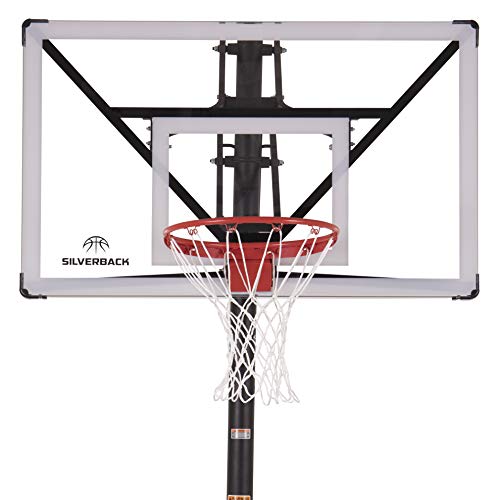
Silverback NXT 54 In-Ground Basketball Hoop
Silverback ships the backboard pre-assembled and bolts the pole to a ground anchor, cutting hours off a typical in-ground build. Two people can handle the lift without hiring help. Rigidity lands below the heaviest steel poles but far above anything sitting on a fillable base.
Pros
- Anchor system shortens the build considerably
- Backboard arrives largely put together
- Holds steady where portable bases wobble
Cons
- Concrete and curing time are still required
- Flexes more than the thickest in-ground poles

Lifetime 90584 Portable Basketball Hoop
Renters, shared driveways and anyone unwilling to commit concrete land here. Sand or water fills the base, and the whole unit tilts back on wheels to clear a parking space. Expect visible shake when a shot hits iron, which is what portability costs.
Pros
- Needs no digging or permanent fixing
- Wheels let it clear the driveway in minutes
- Full size play without touching the ground
Cons
- Pole and board move on hard rim contact
- Underfilled bases tip during aggressive play

Spalding NBA The Beast Portable Basketball Hoop
Glass on a portable frame is rare, and that is the whole argument for The Beast. A heavier base and reinforced multi-section pole hold the board steadier than typical fillable hoops. Weight cuts both ways, since moving it across a driveway takes real effort.
Pros
- Glass rebound in a hoop you can still relocate
- Extra base mass reduces sway under play
- Regulation width backboard for proper bank angles
Cons
- Awkward to reposition once filled
- Assembly runs long and needs two people

Spalding Momentous EZ Assembly Portable Basketball Hoop
Assembly time is the usual complaint about portable hoops, and Spalding engineered the Momentous around fixing it. Sections arrive joined, hardware count drops, and a tool-free lever changes rim height between players. Acrylic keeps weight down while giving up some of the liveliness glass provides.
Pros
- Goes together far quicker than most portables
- Rim height changes without tools for mixed ages
- Light enough for one adult to reposition
Cons
- Acrylic returns a duller bounce than glass
- Not built for hanging on the rim

SKLZ Pro Mini Hoop
Dorm rooms and bedrooms are the natural home for this over-the-door bracket. A spring breakaway rim absorbs dunk attempts that snap rigid plastic imitations. A foam mini ball comes in the box, and nothing needs drilling or a screwdriver.
Pros
- Spring rim tolerates repeated dunking
- Hooks over a door in seconds
- Turns a hallway into playable space
Cons
- Door frame absorbs every impact
- Mini scale builds no real shooting form
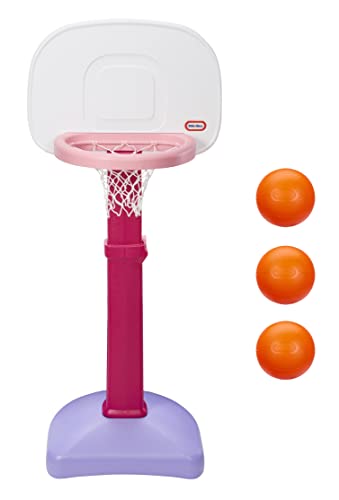
Little Tikes TotSports Easy Score Basketball Set
Scaled for two to five year olds, this plastic set drops the rim low enough that a toddler actually scores. Sand fills the base for stability, yet the whole thing stays light enough to carry between lawn and playroom. Height steps up as the child grows.
Pros
- Rim height suits toddlers making real baskets
- Adjusts upward across several growth years
- Light enough to move indoors when it rains
Cons
- Outgrown by about age six
- Plastic fades and grows brittle in permanent sun
The lineup, side by side
| # | Model | Backboard | Best for | Score | Price |
|---|---|---|---|---|---|
| 1 | Goalrilla GS54 In-Ground Basketball Hoop | 54 inch tempered glass | Best overall | 9.4 | Check price |
| 2 | Silverback NXT 54 In-Ground Basketball Hoop | 54 inch backboard | Best easier in-ground install | 9.2 | Check price |
| 3 | Lifetime 90584 Portable Basketball Hoop | Impact resistant polycarbonate | Best value portable | 9.0 | Check price |
| 4 | Spalding NBA The Beast Portable Basketball Hoop | Large tempered glass backboard | Best portable for serious play | 8.8 | Check price |
| 5 | Spalding Momentous EZ Assembly Portable Basketball Hoop | Acrylic backboard | Best for quick setup | 8.6 | Check price |
| 6 | SKLZ Pro Mini Hoop | Over the door bracket | Best indoor mini hoop | 8.3 | Check price |
| 7 | Little Tikes TotSports Easy Score Basketball Set | Toddler and preschool | Best for toddlers | 8.0 | Check price |
Before you buy
Which type of basketball hoop should you buy? Three mounting types cover almost every driveway. Concrete-set in-ground poles shake least and rebound most accurately, but installation is permanent and involves a dug footing. Portable hoops trade that stability for freedom, sitting on a base you fill with sand or water and roll aside for parking. Wall and roof mounts free the ground completely, though every shot sends load into your framing or masonry. Confirm what you are bolting into before that option goes on the shortlist.
What backboard size and material work best outdoors? Regulation width is 72 inches, 60 inches suits committed driveway play, and 54 inches covers most families comfortably. Below 48 inches, bank shots stop working properly. Tempered glass rebounds liveliest and is what gyms install. Acrylic weighs less and bounces duller. Polycarbonate shrugs off impact best but feels deadest of the three. Given a choice between extra width and better material, material wins for shooting practice.
How pole thickness and base weight control shake Two numbers predict wobble: pole gauge and overhang, the distance the board sits forward of the pole. Thicker single-piece poles stay stiffer than bolted multi-section ones. Longer overhang also keeps drivers from colliding with the pole under the basket. On portable models, base capacity is the specification to read. Sand packs more mass into the same volume than water does, and it will not freeze solid in January.
Choosing a hoop for kids or a tight driveway Growing players need adjustment, typically between roughly seven and a half and ten feet. Crank and screw-jack mechanisms move smoothly for years; tool-free lift handles are faster but stiffen with weather. Toddlers do better on a scaled plastic set than on a lowered full size rim. Where space is scarce, an over-the-door mini hoop or a wall mount removes the base footprint entirely. Budget your weekend honestly too, since full size builds routinely take several hours plus a multi-day concrete cure.
Questions worth asking
Is an in-ground or portable basketball hoop better?
In-ground wins on stability, rebound and lifespan, so it fits owners planning a permanent setup. Portable wins on flexibility for renters, shared driveways and anyone who needs the space back. Accept more movement during play as the trade.
What size backboard do I need for a home hoop?
Most families settle at 54 inches, which fits a standard driveway and still allows honest bank shots. Move to 60 inches for competitive shooting and 72 inches for full regulation. Boards under 48 inches cramp anything past casual shooting.
Is a glass backboard worth it for a driveway hoop?
For anyone practising jump shots, yes. Tempered glass returns energy consistently, which is why arenas use it. Acrylic and polycarbonate cost less and resist cracking, but the ball comes off both noticeably deader.
Should I fill a portable hoop base with sand or water?
Sand adds more weight per gallon and never freezes, making it the better fill in most climates. Water drains easily, which helps if the hoop moves often. Either way, fill to the marked line, since underfilling causes nearly every tipping incident.
How long does installing a basketball hoop take?
Portable models generally need a few hours and two people. In-ground builds add digging, concrete and several days of curing before the backboard goes on, so plan across a week even though hands-on work is shorter.
Can a basketball hoop stay outside through winter?
In-ground hoops are designed for exactly that. Portable hoops fare better with sand in the base, and owners often lower the backboard before storms to cut wind load. Wipe the rim and check hardware each spring.
What hoop height should kids play at?
Lower the rim so children can shoot with proper form instead of heaving from the chest. Many families begin near seven or eight feet, then raise the rim in stages toward ten as strength develops.
Do wall mounted hoops damage the building?
Every rebound transfers force into the structure, so mounting must reach framing or solid masonry rather than sheathing or siding. Read the bracket specification carefully. Where the wall build-up is unknown, in-ground or portable sidesteps the risk.
How much space do you need around a driveway hoop?
Aim for a clear apron of about 15 to 20 feet in front of the rim for shooting and layups, plus room behind the pole for the overhang. Check overhead clearance for wires and branches before the pole goes up.
Our take
Rigidity separates the Goalrilla GS54 from everything else here, and its glass board rewards anyone serious about shooting. Silverback NXT 54 gives up little while asking far less of your weekend. When concrete is not an option, the Lifetime 90584 still delivers full size play that rolls out of the way.
Derek Holt
Derek has a background coaching recreational and amateur athletes and has worked the sales floor at specialty fitness retailers. He focuses on equipment durability, ergonomics and realistic use cases rather than marketing claims.


