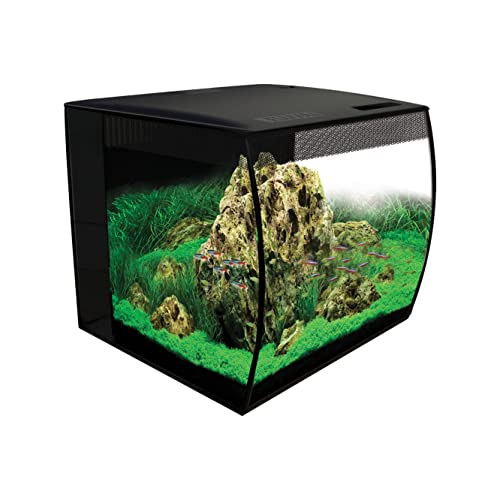
Aquarium Stands Rated for Glass, Acrylic and Bowfront Tanks
Aqueon Forge Metal Aquarium Stand is the safest default, carrying load through a welded steel frame and ignoring spills entirely. Aquatic Fundamentals Wood Aquarium Stand hides canisters and buckets behind doors. VIVOSUN Aquarium Stand covers small and mid size tanks for less.
Aqueon Forge Metal Aquarium Stand suits most aquarists, because welded steel carries load through the corners where a rimmed tank needs support. Choose Aquatic Fundamentals Wood Aquarium Stand when filters and buckets should stay out of sight. VIVOSUN covers smaller tanks without much outlay.
Stands are the one aquarium purchase where a mistake breaks glass rather than disappointing you. A filled 55 gallon setup lands around 600 pounds, and a flexing top concentrates that load unevenly. We compared stated capacities, frame materials and joinery, matching footprints and moisture resistant finishes, then weighed owner reports on levelling, assembly and swelling around spills.
Our top picks

Aqueon Forge Metal Aquarium Stand
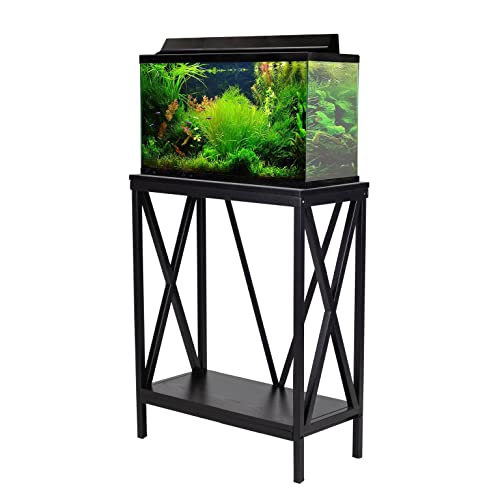
Welded steel tube under a powder coated finish is the most rigid construction here, with no bolted joints to loosen. Open sides leave a canister filter or a sump reachable without crouching under a door. Water spilled during a change does nothing to steel.
Pros
- Welded joints resist racking
- Equipment stays easy to reach
- Powder coated steel ignores spills
Cons
- Filters and buckets remain visible
- Industrial styling suits some rooms only
Aquatic Fundamentals Wood Aquarium Stand
Doors close over canister filters, test kits, food and a spare bucket, which changes how a tank reads in a living room. Interior height clears most canister filters. Engineered wood forms the panels, so wiping spills promptly matters more than it does with steel.
Pros
- Conceals filters and supplies completely
- Interior height clears canister filters
- Laminate finish suits living spaces
Cons
- Engineered wood swells if left wet
- Assembly takes time and square corners
Aqueon Aquarium Wood Stand
An internal timber frame carries the load rather than the panels alone, which is what a 75 gallon tank requires. Doors open onto a generous equipment bay. Footprints match Aqueon tank sizes exactly, removing the overhang question.
Pros
- Internal framing carries heavy tanks
- Equipment bay swallows a canister and buckets
- Footprints match Aqueon tanks exactly
Cons
- Awkward to move once assembled
- Costs more than an equivalent metal frame

VIVOSUN Aquarium Stand
Steel tube and a painted finish cover small and mid size tanks, with a lower shelf for supplies. Bolted assembly goes together in under an hour. Rigidity falls short of welded frames, though it holds comfortably within its stated capacity.
Pros
- Metal construction without a premium outlay
- Lower shelf holds nets and conditioner
- Bolt together assembly is quick
Cons
- Bolted joints flex more than welds
- No sizes for very large tanks

Yaheetech Aquarium Stand
A slim two tier frame suits nano and mid size tanks in flats and bedrooms where floor area is scarce. Adjustable feet let you correct a slightly uneven floor before the tank goes on. Owners report the powder coat survives splashes provided drips are wiped rather than left standing.
Pros
- Small footprint for tight rooms
- Levelling feet correct uneven floors
- Powder coat resists splash marks
Cons
- Not rated for large heavy tanks
- Open design leaves gear on show

Fluval FLEX Aquarium Stand
Dimensions follow the curved FLEX tank profile exactly, which removes any guesswork about overhang or support. The enclosed interior holds the equipment a FLEX still needs, such as a heater and conditioner. It only makes sense alongside the matching aquarium.
Pros
- Footprint matches the tank precisely
- Styling coordinates with FLEX glass
- Enclosed interior keeps supplies tidy
Cons
- Fits one tank family only
- Engineered wood needs spill care
Tangkula Aquarium Stand
A metal frame, a storage shelf and flat pack assembly cover the basics for a first freshwater setup. Load capacity sits at the modest end, so check it against your filled tank weight before ordering. Owners report the painted finish marks easily during assembly.
Pros
- Lowest outlay in this roundup
- Assembles in well under an hour
- Lower shelf holds maintenance supplies
Cons
- Modest stated load capacity
- Painted finish scratches easily
The lineup, side by side
| # | Model | Frame | Best for | Score | Price |
|---|---|---|---|---|---|
| 1 | Aqueon Forge Metal Aquarium Stand | Welded powder coated steel | Best overall | 9.4 | Check price |
| 2 | Aquatic Fundamentals Wood Aquarium Stand | Engineered wood cabinet | Best for hiding equipment | 9.2 | Check price |
| 3 | Aqueon Aquarium Wood Stand | Reinforced internal wood frame | Best for larger tanks | 9.0 | Check price |
| 4 | VIVOSUN Aquarium Stand | Steel tube with painted finish | Best value | 8.8 | Check price |
| 5 | Yaheetech Aquarium Stand | Powder coated metal | Best for small rooms | 8.6 | Check price |
| 6 | Fluval FLEX Aquarium Stand | Engineered wood cabinet | Best matched footprint | 8.3 | Check price |
| 7 | Tangkula Aquarium Stand | Metal with shelf | Best budget | 8.0 | Check price |
What to look for
How much does a filled aquarium actually weigh? Water alone runs about 8.3 pounds per gallon, before substrate, rock and the glass itself. A 55 gallon setup commonly reaches 600 pounds, and a 75 gallon approaches 850. Compare that figure against the stand’s published capacity with margin left over. Any stand sold without a stated capacity deserves suspicion rather than optimism.
Why support has to reach the tank rim Rimmed glass tanks transfer load through their outer edges, so the stand top must carry the whole perimeter. A tank overhanging even slightly concentrates stress exactly where glass fails. Rimless tanks need a completely flat surface plus a foam mat, since one high spot becomes a pressure point on the base pane.
Metal or wood aquarium stand: which suits your room? Welded steel gives the most rigidity per pound and shrugs off water, at the cost of visible equipment. Wood cabinets hide filters and buckets and look at home in a lounge, but joints are vulnerable to moisture. If you choose wood, seal or edge band any raw board and wipe spills before they soak in.
Levelling, flooring and choosing a location Level the stand before the tank goes on, checking front to back and side to side. Even a small tilt shows in the water line and loads the glass unevenly. Consider the floor as well, since a large tank concentrates weight over a small area. Place it near a socket, away from sunlight and radiators, and accept that it cannot move once filled.
Good to know
How much does a filled 55 gallon aquarium weigh?
Around 600 pounds once substrate and hardscape are added, since water alone contributes roughly 8.3 pounds per gallon. A 75 gallon setup can approach 850 pounds.
Can I put an aquarium on ordinary furniture?
Only for very small tanks. Sideboards and desks rarely carry concentrated loads or support the full perimeter, so a purpose built stand is safer past a few gallons.
Does the stand have to match the tank size exactly?
The footprint should match or slightly exceed the tank base. Overhang at the corners is the dangerous case, because a rimmed tank carries its load through those edges.
Do I need a foam mat under the tank?
Rimless tanks generally do, to spread load across the base pane. Rimmed tanks usually do not, though a thin mat compensates for a marginally uneven top.
Metal or wood aquarium stand, which is better?
Metal is more rigid for its weight and immune to water. Wood hides equipment and suits living rooms. Either works when the load rating is honest and the top supports the rim.
How do I level an aquarium stand?
Use a spirit level across the top in both directions before filling, and shim under the feet as needed. Never attempt to level a stand once the tank holds water.
Can I build my own aquarium stand?
Many aquarists do, and a properly designed timber frame is more than strong enough. Vertical load bearing members at the corners, a flat top and bracing against racking are the parts that matter.
What happens if an aquarium stand gets wet?
Steel tolerates water indefinitely once wiped. Engineered wood swells permanently when moisture reaches the core, which is why sealing exposed edges pays off.
Is a stand needed for a 10 gallon tank?
A filled 10 gallon setup still exceeds 100 pounds. A rated stand or a solid, level piece of furniture with full perimeter support is the minimum.
Our take
Aqueon Forge Metal Aquarium Stand is the most dependable choice, because welded steel handles the load and ignores water entirely. Pick the Aquatic Fundamentals wood cabinet when hiding equipment matters more than absolute rigidity. Whichever you order, check the published capacity against your filled tank weight first.
Olivia Hartley
Olivia spent several years working at an animal shelter and a pet-supply retailer before joining the editorial team. She researches pet gear with an emphasis on safety, comfort and the fine print that owners often miss.