Indoor Aquarium Filters Compared for Noise and Flow Rate
Fluval 207 Performance Canister Filter is the quietest option for a display tank, since the pump hides inside the cabinet. AquaClear 50 Power Filter delivers adjustable flow and a large media basket for less. Aqueon QuietFlow LED PRO Aquarium Power Filter 20 keeps upkeep to a cartridge swap.
Fluval 207 Performance Canister Filter is our first recommendation for a tank in a room people actually sit in. AquaClear 50 Power Filter is the value choice when a canister feels like too much work. Aqueon QuietFlow LED PRO Aquarium Power Filter 20 suits anyone who wants filtration without a hobby attached.
Indoor filtration is harder than a flow figure suggests, because splash, hum and evaporation matter as much as turnover. A filter can clean water beautifully and still be intolerable beside a sofa. We compared media volume and type, published flow against realistic tank sizes, flow adjustment, and priming and servicing routines. Owner reports on hum, rattle and aging impellers carried real weight.
Before you buy
Which aquarium filter type is quietest indoors? Canisters win, because the pump sits enclosed in a cabinet away from the room. Submerged internal filters come next, since water absorbs sound before it reaches the air. Hang on back units are loudest, though the pump is rarely the culprit. Splash at the outfall causes most of it, which is why the same filter can sound different from week to week.
How to size a filter and soften the current Four to six turnovers per hour is the working guideline, so a 20 gallon tank wants somewhere around 100 gallons per hour. Ratings assume clean media and no head height, meaning real flow runs lower. Choosing a filter rated slightly above your tank gives headroom. Adjustable models such as the AquaClear 50 and Seachem Tidal 55 then let you dial the current back for bettas and shrimp.
Why media capacity beats headline flow Biological filtration lives on media surface area, so volume held matters more than gallons moved. Open basket filters let you pick your own media and preserve the bacteria colony by rinsing rather than replacing. Cartridge systems discard that colony at every change, which is why they fit lightly stocked tanks best. The Fluval 207 holds the most here, and the Aqueon QuietFlow 20 the least.
Best filter placement for bedrooms and wall to wall tanks Tanks pushed flat against a wall rule out hang on back units entirely, which is where the submerged Fluval U2 earns its place. In a bedroom, keeping the water level high shortens the splash drop and removes the most common complaint. A strip of foam under a hang on back housing kills transmitted vibration. Siting a canister on a foam mat rather than bare cabinet board does the same job.
The shortlist, ranked
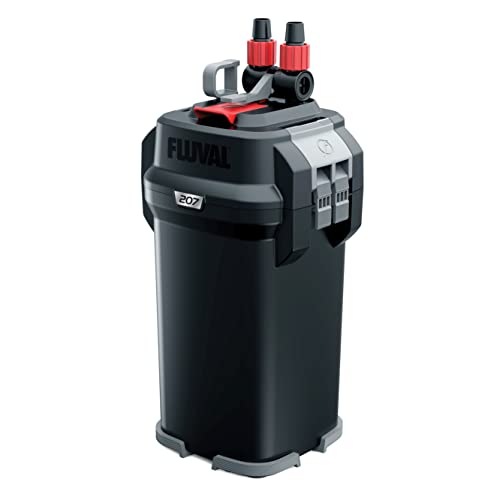
Fluval 207 Performance Canister Filter
Sitting inside the cabinet below the tank, a canister removes the pump from the room entirely, which is why it wins on noise. Stacked baskets hold a large volume of biological media, keeping water stable on tanks up to around 45 gallons. Setup takes longer and hoses need routing, the honest cost of that silence.
Pros
- Effectively silent in a furnished room
- Large biological media capacity
- Disappears completely inside the stand
Cons
- Longer setup with hose routing
- Servicing means pulling the whole canister out

AquaClear 50 Power Filter
An unusually deep basket for a hang on back unit takes foam, carbon and ceramic media together, replacing the monthly cartridge habit. Flow adjusts at the pump, which matters for bettas and other species that avoid current. Owners report years of service, with the impeller as the only part that typically needs replacing.
Pros
- Flow dials down for calm water species
- Basket depth allows a real media stack
- Long service life with cheap spare parts
Cons
- Hangs visibly on the back glass
- Needs a gap between tank and wall

Seachem Tidal 55 Power Filter
Seachem moved the pump inside the tank, so less vibration reaches the cabinet than with a housing mounted motor. A surface skimmer clears the oily film that forms on still water, and a maintenance indicator signals when flow has dropped. Depth behind the tank is the catch, since this unit is larger than most.
Pros
- Surface skimming keeps the top film clear
- In tank pump transmits less noise
- Indicator flags cleaning before flow suffers
Cons
- Bulky behind the aquarium
- Skimmer needs resetting after water changes
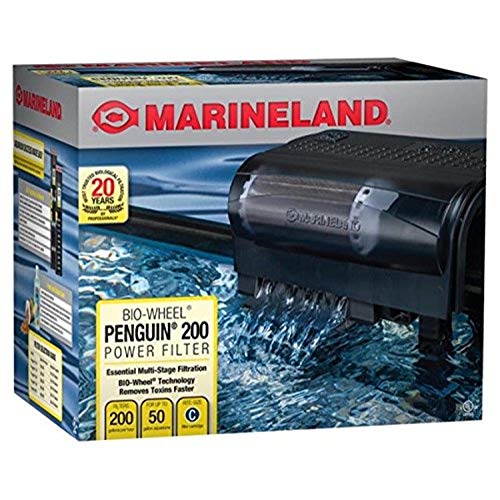
Marineland Penguin 200 BIO-Wheel Power Filter
A rotating wheel lifts bacteria into the air on every turn, supporting a dense colony inside a compact housing. Stability improves noticeably in tanks stocked on the heavy side. That same wheel is the noisy part, since a dirty bearing squeaks or stalls, so a rinse every few weeks keeps it quiet indoors.
Pros
- Strong biological filtration for its size
- Copes with heavier stocking levels
- Installs and primes without fuss
Cons
- Bio wheel squeaks once the bearing fouls
- Cartridge replacements are an ongoing cost

Aqueon QuietFlow LED PRO Aquarium Power Filter 20
Aimed at people who want a clean tank rather than a hobby, this unit uses a drop in cartridge and an LED that lights when the media needs changing. An internal pump keeps housing noise low for a hang on back design. Fixed media is the trade, since nothing about the mix can be customised.
Pros
- Maintenance is a single cartridge swap
- Quiet for a hang on back unit
- Indicator removes the guesswork
Cons
- Cartridges must be bought repeatedly
- Media type cannot be changed
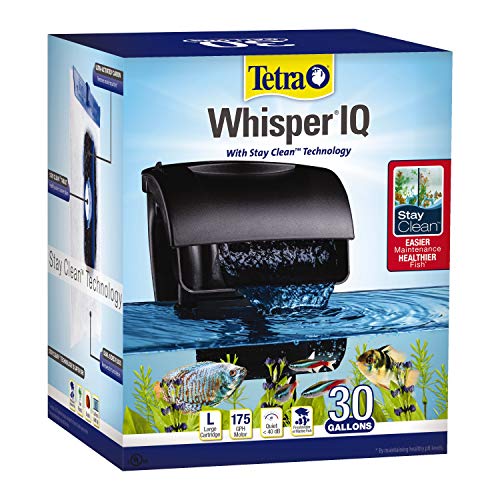
Tetra Whisper IQ Power Filter 30
Tetra built a sound shield into this model to cut the buzz that makes inexpensive filters unpleasant in a bedroom. Self priming means it restarts on its own after a power cut, which matters when nobody is home. Flow is fixed, so bettas and other still water species need the outlet baffled.
Pros
- Genuinely quiet for the outlay
- Restarts itself after a power interruption
- Cartridge changes take seconds
Cons
- No flow adjustment on the unit
- Cartridge only media system
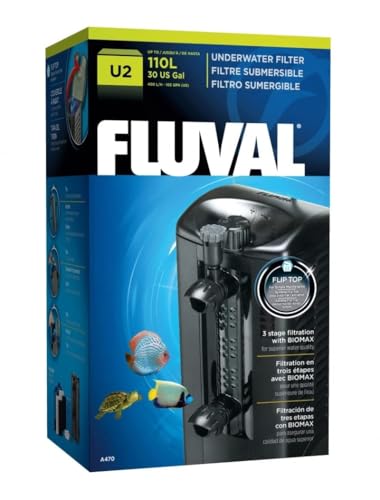
Fluval U2 Underwater Filter
Mounting inside the tank suits aquariums pushed flat against a wall, where nothing can hang off the back glass. Water absorbs most of the pump noise before it reaches the room. Three outlet positions direct flow along the surface, across the mid level or downward, at the cost of a visible filter in the display.
Pros
- Works where no gap exists behind the tank
- Submerged pump keeps noise in the water
- Outlet direction adapts to the stocking
Cons
- Visible inside the aquarium
- Smaller media capacity than external units
Side by side
| # | Model | Tank size | Best for | Score | Price |
|---|---|---|---|---|---|
| 1 | Fluval 207 Performance Canister Filter | Up to about 45 gallons | Best overall | 9.4 | Check price |
| 2 | AquaClear 50 Power Filter | 20 to 50 gallons | Best value | 9.2 | Check price |
| 3 | Seachem Tidal 55 Power Filter | Up to about 55 gallons | Best hang on back design | 9.0 | Check price |
| 4 | Marineland Penguin 200 BIO-Wheel Power Filter | Up to about 50 gallons | Best biological filtration | 8.8 | Check price |
| 5 | Aqueon QuietFlow LED PRO Aquarium Power Filter 20 | Up to about 20 gallons | Best budget | 8.6 | Check price |
| 6 | Tetra Whisper IQ Power Filter 30 | Up to about 30 gallons | Best low noise on a budget | 8.3 | Check price |
| 7 | Fluval U2 Underwater Filter | Up to about 30 gallons | Best fully submerged option | 8.0 | Check price |
Common questions
What size filter do I need for my aquarium?
Target four to six times the tank volume in turnover per hour, so a 30 gallon tank wants roughly 120 to 180 gallons per hour. Buying slightly oversized and reducing the flow beats running a filter at its limit.
Which type of aquarium filter is quietest?
Canisters, since the pump sits in a closed cabinet. Submerged internal filters follow, because water damps the sound. Hang on back units are the loudest, mostly from splash rather than the motor.
How often should filter media be changed?
Rinse mechanical foam every few weeks in old tank water and replace it only once it falls apart. Biological media should almost never be replaced wholesale. Cartridge filters follow the manufacturer schedule, staggered where possible.
Can I turn the filter off at night to reduce noise?
No. Ammonia processing bacteria need constant oxygenated flow and start dying within hours. Raise the water level, add foam under the housing, or switch to a quieter filter type instead.
Do I need a filter for a betta tank?
Yes, with gentle flow. Bettas avoid strong current, so pick an adjustable model such as the AquaClear 50 or Seachem Tidal 55, or baffle the outlet with a piece of sponge.
Why is my hang on back filter rattling?
Almost always the impeller. Unplug the filter, pull the impeller, and clean the shaft and housing while checking for a cracked blade. Replacement impellers are inexpensive and are the usual wearing part.
Should I run carbon in the filter all the time?
Not necessarily. Carbon strips odors, tannins and medication residues, then exhausts after a few weeks. Many aquarists run it only when needed and use the space for extra biological media otherwise.
Why should I never rinse filter media in tap water?
Chlorine kills the bacteria doing the actual filtration, and that is how a settled tank develops an ammonia spike right after a thorough clean. Rinse in water siphoned out during a change instead.
How long does a new aquarium filter take to establish?
Four to six weeks to build a full bacterial colony, which is why tanks are cycled before fish go in. Moving media across from an established filter shortcuts most of that wait.
The verdict
Fluval 207 Performance Canister Filter is the one we would put on a living room tank, because it hides in the cabinet, holds plenty of biological media and adds almost nothing to the room. AquaClear 50 Power Filter offers adjustable flow and a deep basket for far less effort and outlay. Aqueon QuietFlow LED PRO 20 keeps maintenance down to changing a cartridge when the light says so.
Olivia Hartley
Olivia spent several years working at an animal shelter and a pet-supply retailer before joining the editorial team. She researches pet gear with an emphasis on safety, comfort and the fine print that owners often miss.