8 Aquarium Decorations That Give Fish Places to Hide
Fluval Bonsai Spider Wood does the most work in a typical tank, adding structure, sight breaks and biofilm surface at once. Marina Naturals Red Gorgonia Silk Plant is the safe choice around trailing fins. GloFish Aquarium Plant Multi Pack fills a bare tank cheaply.
Fluval Bonsai Spider Wood is the decoration most tanks benefit from first, since branching wood breaks sightlines, shelters shy fish and grows biofilm they graze. Long or delicate fins point toward Marina Naturals Red Gorgonia Silk Plant instead. GloFish Aquarium Plant Multi Pack adds instant cover for very little.
Appearance says almost nothing about whether a piece is good for the fish. Some materials shift hardness or pH, and others hide molded edges sharp enough to tear fins weeks after installation. We compared listed materials and coatings, the usable cover each item creates, and how easily each lifts out for scrubbing. Owner reports on staining, floating and algae buildup completed the picture.
The shortlist, ranked
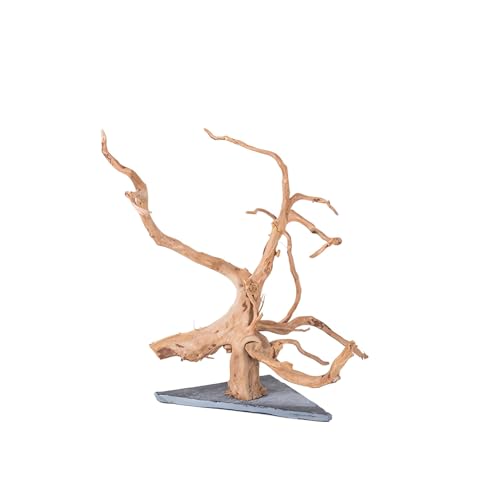
Fluval Bonsai Spider Wood
Branching arms create shade, hiding spots and anchor points for moss or anubias, which is why spider wood is a staple in planted layouts. Real wood also grows the light biofilm shrimp and small fish pick at. Owners report it floats until fully saturated, so weighting or soaking comes first.
Pros
- Creates natural cover and sight breaks
- Ideal surface for tying plants onto
- Every piece has a different branch structure
Cons
- Floats until fully waterlogged
- Tannins tint the water at first

Marina Naturals Red Gorgonia Silk Plant
Silk fronds sway convincingly and give way when a fish swims through, unlike stiff plastic that catches trailing fins. A weighted base holds position in moderate flow without needing to be buried. This is the plant to choose after watching a betta come away from plastic with a split fin.
Pros
- Fronds are safe around delicate fins
- Movement in the current looks realistic
- Base stays put without burying
Cons
- Collects algae faster than plastic
- Color fades under strong lighting

GloFish Aquarium Plant Multi Pack
Several plants at different heights arrive in one pack, which is the cheapest route from a bare tank to a planted look. Colors fluoresce under blue lighting for themed setups and read normally under white. Plastic is smooth but stiffer than silk, so short finned community fish suit it best.
Pros
- Several plants in a single purchase
- Scrubs completely clean without damage
- Bright effect under blue lighting
Cons
- Stiffer than silk near delicate fins
- Looks less natural in daylight

Penn-Plax Deco-Replicas Natural Sandstone Cave
Shy species change behavior once a reliable escape route exists, spending more time in the open rather than less. Several openings keep this cave from becoming a trap, and the sandstone texture blends with most substrates. Resin construction leaves hardness and pH untouched.
Pros
- Genuinely useful shelter for shy fish
- Several exits prevent trapping
- Texture and color match natural substrate
Cons
- Heavy enough to need careful placement
- Interior needs occasional siphoning

Blue Ribbon Exotic Environments Sunken Sailboat
For anyone who wants an obvious centerpiece rather than a naturalistic scape, the sailboat delivers, with hull sections open enough to swim through. Finish is aquarium safe and holds its color under tank lighting. Owners report it is the ornament children ask about, which counts in a family tank.
Pros
- Carries the look of the whole tank
- Hull gaps add function, not just detail
- Color stays stable over time
Cons
- Detailed crevices trap debris
- Takes up meaningful floor space

Zoo Med Floating Betta Log
Bettas rest near the surface where they gulp air, and this floating log puts a hollow retreat exactly there. Inside, it works as both a hide and a bubble nest site. Owners report their fish use it far more than any cave sitting on the substrate.
Pros
- Matches natural betta behavior
- Doubles as a bubble nest site
- Consumes no floor space
Cons
- Useful only to surface dwelling species
- Drifts under strong filter flow

SLSON Aquarium Betta Bed Leaf Hammock
A soft leaf on a suction cup gives a betta a resting spot near the air without a constant swim upward. Very little else improves a small tank for so little outlay. Placement takes trial and error, since the cup needs a clean patch of glass to hold reliably.
Pros
- Lowest cost improvement in this group
- Encourages natural resting behavior
- Takes up almost no space
Cons
- Suction cup loses grip over time
- Suits a narrow range of species
How they stack up
| # | Model | Material | Best for | Score | Price |
|---|---|---|---|---|---|
| 1 | Fluval Bonsai Spider Wood | Natural spider wood | Best overall | 9.4 | Check price |
| 2 | Marina Naturals Red Gorgonia Silk Plant | Silk fronds on a weighted base | Best for long finned fish | 9.2 | Check price |
| 3 | GloFish Aquarium Plant Multi Pack | Molded plastic | Best value | 9.0 | Check price |
| 4 | Penn-Plax Deco-Replicas Natural Sandstone Cave | Aquarium safe resin | Best hiding place | 8.8 | Check price |
| 5 | Blue Ribbon Exotic Environments Sunken Sailboat | Non toxic resin | Best themed ornament | 8.6 | Check price |
| 6 | Zoo Med Floating Betta Log | Buoyant resin | Best for bettas | 8.3 | Check price |
| 7 | SLSON Aquarium Betta Bed Leaf Hammock | Soft plastic leaf | Best budget pick | 8.0 | Check price |
How to choose
How to tell if a decoration is aquarium safe Anything entering a tank should be sold as aquarium safe, which in practice means non toxic resin, silk, aquarium grade plastic, or genuinely inert stone and wood. Painted craft items, untreated shells and unknown rocks can leach metals or drive up hardness. For an unfamiliar stone, a drop of vinegar settles it: fizzing means carbonate, and carbonate pushes hardness and pH upward over weeks.
Matching decorations to your fish, not your taste Bettas, guppies and fancy goldfish need silk or smooth surfaces, because stiff plastic edges split fins. Shy bottom dwellers want caves with more than one exit so they cannot be cornered. Active mid water swimmers need open lanes, which means a tank crammed with ornaments actually shrinks the space they use. Pick for the species already in the tank, then choose among what is left.
Which decorations are easiest to keep clean? Every piece collects detritus, and heavily detailed ornaments collect the most. Smooth resin caves and plastic plants rinse in seconds. Silk needs swishing rather than scrubbing, and textured wood should keep some biofilm for grazers. Avoid sealed hollow cavities that hold water and waste you cannot reach. Soap and household cleaner never belong on aquarium decor, since residue is nearly impossible to rinse away.
Driftwood, tannins and the settling in period Fresh wood floats until saturated, which can take days or several weeks depending on density. Spider wood sits at the lighter end, so weighting it down early saves frustration. Tannins leach out at the same time and stain water a tea color, harmless and often preferred by soft water species. Repeated water changes and activated carbon clear the tint faster for anyone who wants bright water.
Frequently asked questions
Are all aquarium decorations safe for fish?
Only those sold specifically for aquarium use. Craft ornaments, painted figurines and unknown rocks can leach paint, metals or minerals, so stay with tank products and rinse everything in plain water first.
How many decorations should a tank have?
Balance cover against open water. Leaving at least half the floor area clear keeps active fish moving, while shy species want at least one shelter each.
Do decorations change aquarium water chemistry?
Some do. Natural wood releases tannins and slightly lowers pH, while limestone and coral based rock raise hardness. Resin and silk are inert and leave parameters alone.
How do I clean aquarium decorations properly?
Take them out and scrub under warm running water with a brush kept only for tank use. Never use soap. Stubborn algae usually gives way to a soak in old tank water and a gentle scrub.
Why does my new driftwood float?
It has not absorbed enough water. Soak it in a bucket for one to three weeks, changing the water regularly, or hold it down with a stone until it stays submerged unaided.
Are plastic plants bad for bettas?
Stiff plastic with sharp molded edges tears betta fins. Silk and soft plastics are safer, and running a piece of tights fabric over a plant shows immediately whether it snags.
Do fish actually use caves and hides?
Yes, particularly loaches, plecos, catfish and cichlids. Adding shelter usually makes shy fish more visible over time, because they venture out knowing a retreat exists.
Can I boil decorations to sterilize them?
Boiling suits natural wood and solid stone. It warps resin and plastic and destroys silk, so those materials want a rinse and scrub in hot water instead.
Silk or plastic plants: which should I buy?
Silk for long finned species, plastic for short finned community fish and stronger flow. Plastic also scrubs clean more aggressively, which matters in tanks prone to algae.
Our pick
Fluval Bonsai Spider Wood does more for a tank than any single ornament, adding structure, shelter and a surface for plants and biofilm. Pair it with Marina Naturals Red Gorgonia Silk Plant when long finned fish are involved. Add the Penn-Plax sandstone cave once shy bottom dwellers need a retreat they can count on.
Olivia Hartley
Olivia spent several years working at an animal shelter and a pet-supply retailer before joining the editorial team. She researches pet gear with an emphasis on safety, comfort and the fine print that owners often miss.


