Acoustic Panels for Home Studios, Booths, and Theater Rooms
Auralex Studiofoam Wedgies suit a single studio or booth and mount with adhesive. Primacoustic London 8 treats a full room in one kit. GIK Acoustics 244 adds bass control foam can’t reach. Match panel type to room size and whether bass buildup is a problem.
Auralex Studiofoam Wedgies top this list for a single home studio or vocal booth, since the wedges stick on with adhesive and skip drilling entirely. Mid and high frequency echo drops fast once they’re up, but bass buildup barely moves. Boomy corners still need a dedicated trap like the GIK 244 running alongside the foam, not swapped in for it.
NRC ratings, panel thickness, and mounting hardware turn a simple purchase into a research project fast. Manufacturer specs, owner feedback on listings, and real setups like podcast booths, home theaters, and full studio builds shaped how these seven products got sorted below.
What we recommend

Auralex Studiofoam Wedgies 2 Inch 12-Pack
Auralex cuts these 12 by 12 inch wedges from the same foam family used in its professional kits. Twelve panels cover about 12 square feet, enough for first-reflection points in a small booth or bedroom studio. Angled wedges scatter high-frequency reflections instead of absorbing them flat.
Pros
- Lightweight panels go up without power tools
- Wedge profile handles mid and high frequencies well
- Charcoal finish blends into most studio walls
Cons
- Foam does little for bass frequencies below roughly 250Hz
- Adhesive can pull paint or drywall paper on removal

Primacoustic London 8 Room Kit
This kit bundles broadband panels, scatter blocks, and control columns sized for a small to mid sized room. Panels use 2 inch rigid fiberglass wrapped in paintable fabric, which absorbs more broadly than open-cell foam. Impaling clips keep every panel flush against the wall.
Pros
- Covers an entire room in one purchase
- Fabric wrap looks more finished than exposed foam
- Broadband absorption reaches lower than thin foam
Cons
- Clips need to anchor into studs or solid drywall
- Kit sizing can leave gaps in larger rooms
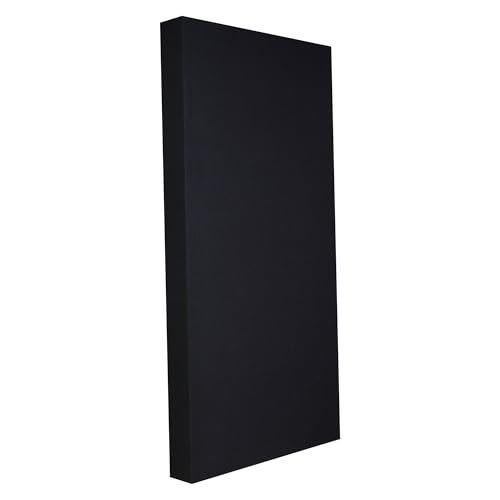
GIK Acoustics 244 Bass Trap
GIK builds the 244 as a 4 inch thick fiberglass bass trap for corners where low frequency energy piles up. A fabric-wrapped frame ships with square or beveled edge options. Two to four units per corner is the typical setup owners report for tighter, less boomy low end.
Pros
- Extends absorption down into bass frequencies foam can’t reach
- Fabric wrap comes in multiple colors
- Framed edges resist dents better than raw foam
Cons
- Bulkier footprint takes up more wall or corner space
- Heavier per panel than any foam alternative here
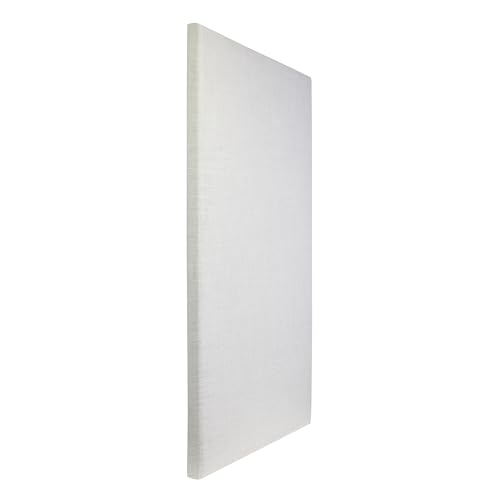
ATS Acoustics 2 Inch Fabric Wrapped Panel
ATS wraps rigid fiberglass boards in acoustically transparent fabric, sold individually or in multi packs. A 2 inch depth balances absorption against a slimmer wall profile than deeper bass traps. Several fabric colors let buyers match studio or office decor.
Pros
- Fabric finish suits offices and home theaters, not just studios
- Rigid core absorbs mid frequencies better than foam
- Several fabric colors available
Cons
- Mounting hardware is often sold separately
- Higher cost per panel than foam wedges
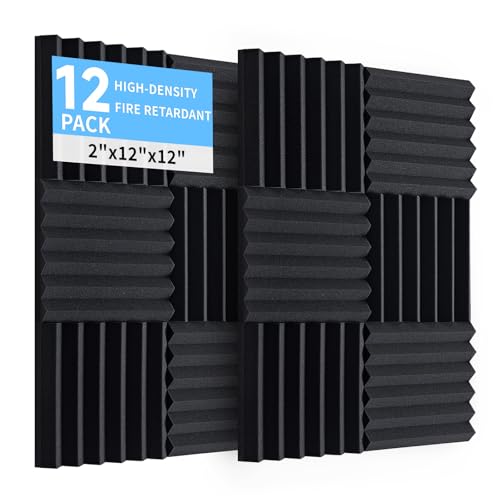
Foamily Acoustic Foam Wedge Panels 12-Pack
Foamily targets buyers treating one room on a tight budget with 12 by 12 inch wedges sold in packs of 12. Foam measures 2 inches thick and ships compressed, so panels need a day or two to fully expand. Coverage lands on the same first-reflection points as pricier foam at a lower per-panel cost.
Pros
- Lower cost per square foot than name-brand foam kits
- Simple wedge shape suits small rooms and closets
- Compressed shipping keeps the box small
Cons
- Foam feels softer and less dense than premium studio foam
- No fire-retardant certification listed on the packaging

Auralex T-Fusor 2×2 Diffusor
This 2 by 2 foot molded panel scatters reflections instead of absorbing them outright. Home theaters and larger studios benefit most, since heavy absorption alone can leave a room sounding dead. Direct wall mounting pairs it easily with absorptive foam or fiberglass elsewhere in the room.
Pros
- Keeps a room from sounding overly damped
- Works well paired with absorptive panels elsewhere
- Molded design holds its shape over time
Cons
- Does little on its own to control bass buildup
- Costs more per square foot than flat foam panels

JBER Acoustic Foam Panels 12-Pack
JBER sizes this 12 pack for a closet booth or small podcast corner. Foam measures 12 by 12 by 1 inch, thinner than most studio-grade panels. That thinner profile trades some low-mid absorption for cheaper, easier full-wall coverage.
Pros
- Thin profile fits tight booth spaces without eating floor room
- Affordable enough to cover four walls in one order
- Comes in multiple color options
Cons
- 1 inch thickness absorbs less than 2in or 4in panels
- Better at taming echo than at any real bass control
Before you buy
What to look for in acoustic treatment NRC rating, thickness, and mounting method decide what a panel actually fixes. Noise reduction coefficient measures how much sound a panel absorbs instead of reflecting back into the room. A 1 inch foam wedge mostly tames high frequencies like sibilance and cymbal ring. Stepping up to 2 or 4 inches reaches further into the mid and low-mid range, which is why bass traps run thicker than standard wall panels.
Foam wedges vs fabric-wrapped fiberglass panels Foam wedge panels stay lighter, cheaper, and mount with basic adhesive, making them the default for a first studio or booth. Fabric-wrapped fiberglass uses a denser core that absorbs more broadly, including some low-mid range foam skips over. Renters who can’t drill into walls should lean toward adhesive-mounted foam, since fiberglass kits often rely on clips anchored into studs.
Best setup for a home studio, podcast booth, or home theater A home studio does best with foam or fiberglass at first-reflection points plus a couple of corner bass traps. A podcast booth is usually small enough that thin, budget foam covering all four walls solves most echo complaints. Home theaters need a lighter touch, since over-absorbing a room built for movies and music can flatten dialogue, which is where a diffusor like the T-Fusor helps.
Do you need a bass trap or diffusor too? Foam and thin fiberglass handle echo and slap-back but leave low frequency buildup in corners largely untreated. Boomy or muddy bass in a small home studio usually points to a dedicated bass trap rather than more wall panels. Living room theaters on a tight budget can cut early reflections with thick rugs, heavy curtains, and a loaded bookshelf before any panel purchase.
Compared at a glance
| # | Model | Panel size | Best for | Score | Price |
|---|---|---|---|---|---|
| 1 | Auralex Studiofoam Wedgies 2 Inch 12-Pack | 12 x 12 x 2 inches | Best overall | 9.4 | Check price |
| 2 | Primacoustic London 8 Room Kit | 2in rigid fiberglass, fabric wrapped | Best for full room treatment | 9.1 | Check price |
| 3 | GIK Acoustics 244 Bass Trap | 4 inches | Best for bass control | 8.8 | Check price |
| 4 | ATS Acoustics 2 Inch Fabric Wrapped Panel | 2 inches | Best for a professional fabric-wrapped finish | 8.5 | Check price |
| 5 | Foamily Acoustic Foam Wedge Panels 12-Pack | 12 x 12 x 2 inches | Best budget | 8.2 | Check price |
| 6 | Auralex T-Fusor 2×2 Diffusor | 24 x 24 inches | Best for home theater diffusion | 8.1 | Check price |
| 7 | JBER Acoustic Foam Panels 12-Pack | 12 x 12 x 1 inch | Best for a podcast booth on a budget | 8.0 | Check price |
Common questions
How many acoustic panels do I need for a small room?
Most small studios or booths start with panels covering first-reflection points on the side walls and ceiling, roughly 10 to 15 percent of total wall area, then add more if echo remains noticeable.
What is NRC rating and why does it matter for acoustic panels?
NRC measures the fraction of sound a panel absorbs rather than reflects, on a scale up to 1.0. Higher NRC panels, usually thicker ones, cut more reflected sound at a given frequency range.
Foam panels vs fabric-wrapped fiberglass panels, which absorbs sound better?
Fabric-wrapped fiberglass panels generally absorb a wider frequency range than open-cell foam of the same thickness, though foam remains adequate for taming high-frequency echo in a small room.
Can acoustic panels stop sound from traveling to a neighboring room?
No. Acoustic panels manage reflections inside a room. They don’t add mass or seal gaps, so they won’t meaningfully block sound transmission through walls or doors.
Is 2 inch or 4 inch foam better for a home studio?
2 inch foam suits first-reflection points and general echo control. 4 inch panels or dedicated bass traps fit corners where low frequency buildup is the main problem.
What are the best acoustic panels for a podcast booth?
Thin, budget-friendly foam like JBER or Foamily wedge panels usually covers a small booth’s walls affordably, since booths are more about killing close-range echo than deep bass control.
Are bass traps worth it for a home theater?
For rooms with noticeable boom or muddy dialogue, corner bass traps like the GIK 244 make a real difference. Casual viewing rooms without a bass complaint may not need them.
Can you mount acoustic panels without damaging walls?
Spray adhesive and double-sided tape used with foam panels can pull paint on removal. Hook-and-loop mounting squares or Command-style strips leave less residue for renters.
Do acoustic panels work for both music studios and podcast booths?
Yes, though the mix differs. Studios usually pair panels with a bass trap, while booths often get by with thin foam covering all four walls.
Is foam or fiberglass better value for a first-time buyer?
Foam wedges cost less per panel and need no special tools, making them the easier entry point, while fiberglass kits deliver broader absorption for a higher price.
Our pick
Auralex Studiofoam Wedgies remain the easiest entry point for a single room’s first reflections, since they mount with adhesive and skip drilling entirely. A full home studio or a bass-heavy room calls for the Primacoustic London 8 kit or GIK Acoustics 244 bass trap instead, since foam alone won’t tame low frequency buildup. Home theater owners who want to keep dialogue from sounding flat should add the T-Fusor diffusor rather than covering every wall in foam.
Marcus Chen
Marcus covered consumer electronics for enthusiast tech publications for six years before joining ChoiceCrest. He specializes in translating manufacturer spec sheets into plain-language buying advice, with a focus on audio, computing accessories and smart-home gear.
You might also need

Top Wireless Routers for Fast, Reliable Whole-Home Coverage

Which Smart Light Switch Fits Your Wiring and Smart Home Setup
7 Smart Ways to Organize Cables on a Home Office Desk
