35mm Film Stocks Compared by Speed, Grain and Color
Kodak Portra 400 ranks first for all round 35mm work, since ISO 400 covers indoor and outdoor light while grain stays fine. Gold 200 gives warmer daylight color for casual frames. For black and white, Ilford HP5 Plus 400 pushes to 1600 with shadow detail intact.
Kodak Portra 400 fits almost every 35mm shooter, since ISO 400 covers window light and open shade while grain stays tight enough for large scans. Its palette runs deliberately muted, so anyone chasing saturated color should load Ektar 100 or Gold 200 instead.
Two rolls at the same ISO can render skin, sky and shadow very differently, which makes the shelf confusing. We compared published datasheets for grain, exposure latitude and color balance, then weighed what owners report about scanning results and lab compatibility. Emulsions still in regular production ranked above discontinued ones.
Our top picks

Kodak Portra 400
Kodak built Portra 400 for wedding and editorial shooters who cannot control the light. Overexpose by a stop and shadow detail still reaches the scanner intact. Grain stays tight for a 400 speed emulsion, so a high resolution scan survives heavy cropping.
Pros
- Around two stops of overexposure latitude
- Skin tones scan neutral with little correction
- Fine grain for a 400 speed emulsion
Cons
- Muted palette reads flat beside consumer stocks
- Usually sold as single rolls or 5 packs

Kodak Gold 200
Decades in Kodak’s consumer line gave Gold 200 its warm signature, heavy on yellow and red. Late afternoon sun and autumn foliage benefit most from that bias. At ISO 200 a dim room needs flash, so this is a daylight roll first.
Pros
- Warm color arrives finished from any C-41 lab
- Stocked in 3 packs and 5 packs at most retailers
- Grain sits finer than typical ISO 400 consumer film
Cons
- ISO 200 struggles handheld indoors
- Open shade pushes skin tones toward yellow

Kodak UltraMax 400
Keep UltraMax 400 in a jacket pocket for frames you did not plan. Extra speed lets a compact reach 1/125 in shade, and a built in flash carries further than it does with ISO 200 film. Saturation runs ahead of accuracy, and grain shows across flat sky.
Pros
- Fast enough for overcast weather and indoor flash
- Common in 3 packs of 24 exposures
- Forgiving inside basic plastic point and shoots
Cons
- Grain shows across large areas of sky
- Fluorescent tubes push colors green

Ilford HP5 Plus 400
Street and documentary photographers made HP5 Plus the reference for grain structure. Rate it at 1600, extend development, and contrast climbs while shadow texture holds. Home processing in a daylight tank finishes in under half an hour once the chemistry is mixed.
Pros
- Usable anywhere from ISO 200 through 3200
- Works with nearly every common developer
- Grain reads as texture rather than digital noise
Cons
- Needs a black and white lab or a home kit
- Contrast looks flat until the scan is adjusted

CineStill 800T
Motion picture emulsion with the remjet backing removed lets any C-41 minilab run this roll. Balance sits at 3200K, so neon and sodium street lamps record without the orange cast daylight film produces. Stripping that backing also creates the red halation glow around bright points.
Pros
- Correct color under tungsten, neon and sodium light
- ISO 800 keeps night frames handheld
- An 85B filter adapts it to daylight
Cons
- Halation distracts in high contrast scenes
- Stock levels swing more than Kodak consumer film
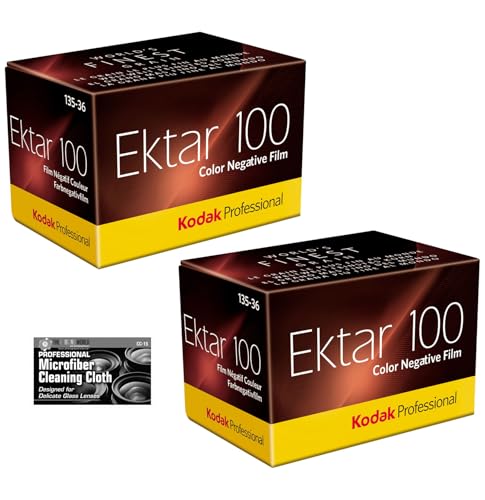
Kodak Ektar 100
Landscape and product work drove the design of Ektar 100, where grain should vanish entirely. Blues and greens arrive saturated, so bright light or a tripod pays off. Portrait shooters generally skip it, because skin renders ruddy without correction.
Pros
- Holds detail in very large enlargements
- Deep blues and greens suit scenery
- Scans resolve fine texture in foliage and rock
Cons
- ISO 100 demands bright light or a tripod
- Skin turns red without correction

Fujifilm Superia X-TRA 400
Greens and cyans define the Superia look, cooler than anything Kodak currently sells. A fourth color layer steadies mixed indoor lighting that drifts yellow on three layer emulsions. Supply tightened after Fujifilm trimmed its film catalogue, so packs appear and vanish.
Pros
- Cool, green leaning palette unavailable from Kodak
- Handles mixed household lighting well
- ISO 400 suits compacts with slow lenses
Cons
- Availability is inconsistent
- Coarser grain than Portra 400 at the same speed
How to pick the right one
What to look for in a roll of 35mm film Four attributes decide almost every roll: speed, grain, color balance and latitude. Speed prints on the box as ISO and sets how much light the emulsion needs. Grain grows as speed rises, which is why ISO 100 enlarges more cleanly than ISO 800. Latitude measures how much exposure error a stock forgives, and color negative forgives far more than slide film. Process code matters just as much. Anything marked C-41 goes to an ordinary minilab, while black and white usually needs a specialist or a home tank.
How film speed matches your camera and the light Older compacts read the DX code printed on the canister and cannot be overridden. Load ISO 400 in those bodies and shaded frames stay sharp. Manual cameras open up slower stocks, because a tripod or a fast lens covers the missing light. Bright sun at ISO 400 can push a basic shutter past its top speed, washing out highlights. Carry one ISO 100 or 200 roll for open daylight and a 400 or 800 roll for everything else. Half frame bodies change the math again, doubling frame count on the same canister.
Color negative vs black and white C-41 color rolls dominate because labs run them cheaply and return scans within days. Black and white asks more of you, then hands back control over contrast at the development stage. Rate HP5 Plus at 1600 and a dim bar becomes a usable frame, which no consumer color film manages. Lighting decides the rest of the argument. Fluorescent tubes and LED panels wreck color balance, yet a grayscale negative ignores them completely.
Which film suits portraits, landscapes and night streets Portrait work belongs to Portra 400, where highlights roll off gently and skin needs almost no correction. Travel shooters often pair Gold 200 for daylight with UltraMax 400 for interiors, since one roll rarely covers a full day. After dark the shortlist narrows to CineStill 800T, whose tungsten balance saves a heavy correction later. Landscapes run the opposite way, and Ektar 100 on a tripod resolves rock and foliage that ISO 400 grain smears. Anyone shooting concerts or gyms should push HP5 Plus rather than fight color under stage lights.
Compared at a glance
| # | Model | Type | Best for | Score | Price |
|---|---|---|---|---|---|
| 1 | Kodak Portra 400 | Color negative, C-41 | Best overall | 9.4 | Check price |
| 2 | Kodak Gold 200 | Color negative, C-41 | Best value | 9.2 | Check price |
| 3 | Kodak UltraMax 400 | Color negative, C-41 | Best budget | 9.0 | Check price |
| 4 | Ilford HP5 Plus 400 | Black and white negative | Best black and white | 8.8 | Check price |
| 5 | CineStill 800T | Color negative, C-41 | Best for night shooting | 8.6 | Check price |
| 6 | Kodak Ektar 100 | Color negative, C-41 | Best for landscapes | 8.3 | Check price |
| 7 | Fujifilm Superia X-TRA 400 | Color negative, C-41 | Best for point and shoot cameras | 8.0 | Check price |
Common questions
Which 35mm film is best for beginners?
Kodak Gold 200 and UltraMax 400 are the easiest starting points. Both process at any C-41 lab, forgive a stop of exposure error, and ship in multi roll packs. Save Portra 400 until you trust your camera’s meter.
What does the ISO number on a roll of film mean?
ISO measures light sensitivity. Doubling the number halves the light required, so ISO 400 works in half the light of ISO 200. Higher numbers bring more visible grain as the trade.
How many photos does one roll of 35mm film hold?
Most rolls carry 24 or 36 exposures. Careful loading often yields an extra frame or two at the start. Half frame cameras double those counts on the same canister.
Kodak Gold 200 vs UltraMax 400: which should you load?
Gold 200 wins on sunny days, with finer grain and warmer color. UltraMax 400 covers shade, interiors and flash work. Plenty of shooters keep both and choose by weather.
Is Kodak Portra 400 worth it for everyday shooting?
Yes, if you scan negatives and edit them afterwards. Portra rewards post processing with clean, correctable files. Anyone who wants finished color straight from the lab will prefer Gold 200.
Can you still shoot expired 35mm film?
Often yes. Color emulsions lose speed and gain a cast with age, so owners report better frames by overexposing roughly one stop per decade past the date. Cold stored rolls hold up far longer.
What is the best 35mm film for night photography?
CineStill 800T, because it is balanced for 3200K artificial light and rated at ISO 800. Streetlights and neon record close to their real color. Expect red halation rings around the brightest sources.
Can you push color film like you push black and white?
Only a little. HP5 Plus takes two or three stops with usable shadows, while color negative stretches about one stop before grain and contrast jump. Tell the lab before processing, since development time changes.
Does 35mm film survive airport security scanners?
CT scanners used for carry on bags can fog undeveloped rolls, and the risk rises with each pass. Ask for a hand inspection and keep film out of checked luggage. ISO 800 stocks such as CineStill 800T are the most vulnerable.
The verdict
Portra 400 earns the top spot because one roll handles portraits, travel and window light without a color cast to fight later. Shooters who want finished color straight from the lab, with no editing stage, should load Kodak Gold 200 instead. Anyone drawn to contrast and texture belongs on Ilford HP5 Plus 400 with a home development tank.
Marcus Chen
Marcus covered consumer electronics for enthusiast tech publications for six years before joining ChoiceCrest. He specializes in translating manufacturer spec sheets into plain-language buying advice, with a focus on audio, computing accessories and smart-home gear.


