30 by 20 Kitchen Sinks: Undermount to Farmhouse Picks
The Elkay Lustertone Classic ELUH3020 is the strongest all-around 30 by 20 kitchen sink, with an 18 gauge stainless bowl deep enough for stacked dishes. Buyers who want built-in cutting boards and racks should look at the Kraus KWU110-30 workstation sink, and apron-front fans will prefer the VIGO Camden VG15344.
The Elkay Lustertone Classic ELUH3020 stands out as the best 30 by 20 kitchen sink for most remodels, pairing a durable 18 gauge stainless bowl with a sound-dampening pad already applied at the factory. Its main limitation is a plain undermount design with no included accessories, which workstation-style sinks now build in as standard.
Sink dimensions vary slightly by brand even within the 30 by 20 size class, so we compared gauge thickness, bowl depth, basin material and any included accessories like cutting boards or bottom grids across current Amazon listings and verified owner feedback.
How to choose
What 30 by 20 actually means The 30 by 20 label refers to the sink’s outer footprint, not the usable basin size. Undermount models lose roughly half an inch to the mounting lip on each side, so the actual bowl often measures closer to 29 by 19 inches. Always compare the cutout dimensions listed by the manufacturer against your countertop template before ordering.
Stainless gauge and bowl depth Gauge numbers run backward: 16 gauge steel is thicker and quieter than 18 gauge. Bowl depth typically ranges from 9 to 10 inches at this size, with deeper basins hiding stacked dishes from view and reducing splash during rinsing. A thicker gauge also resists dents from dropped pots better over years of daily use.
Workstation and farmhouse styles Workstation sinks add integrated ledges that hold a cutting board, colander or drying rack above the basin, turning the sink into extra prep space. Farmhouse or apron-front sinks expose the front panel instead of tucking it under the counter, which changes the cabinet and countertop installation requirements. Both styles cost more than a plain undermount bowl of the same size.
Choosing a basin material Stainless steel resists chipping and handles hot pans directly, while granite composite sinks resist scratching and come in colors beyond steel. Granite composite needs occasional sealing in some finishes and weighs more, so confirm your cabinet support before installing one.
The shortlist, ranked

Elkay Lustertone Classic ELUH3020
This undermount single bowl sink measures 30 by 20 inches with a 10 inch depth, deep enough to hide stacked pots from view. An 18 gauge stainless body includes a factory-applied sound-dampening pad that cuts down on disposal and faucet noise. Elkay’s Lustertone finish resists water spotting better than a plain mirror polish.
Pros
- Sound-dampening pad reduces running water noise
- Deep basin hides stacked dishes
- Lustertone finish resists water spots
Cons
- No included accessories like a cutting board
- 18 gauge flexes slightly more than 16 gauge under heavy pots

Kraus KWU110-30
This workstation sink adds integrated ledges along the basin rim that hold a cutting board, colander or drying rack at counter height. The 16 gauge stainless body is thicker than standard undermount sinks, which cuts down on vibration noise. Kraus includes a stainless bottom grid and a hardwood cutting board with the sink.
Pros
- Integrated ledges turn the sink into prep space
- 16 gauge steel resists dents and noise
- Includes cutting board and bottom grid
Cons
- Costs more than a plain undermount sink
- Heavier, needs confirmed cabinet support

Ruvati Roma RVH8300
This undermount sink keeps a clean, low-profile look with tight corner radiuses that maximize usable bottom space. The 16 gauge stainless basin runs roughly 10 inches deep, comfortable for soaking full size baking sheets. A rear-positioned drain keeps more flat storage space under the sink’s front edge.
Pros
- Tight corners maximize usable basin space
- Rear drain frees up under-sink storage
- 16 gauge steel resists dents
Cons
- No included accessories
- Satin finish shows water spots if not dried

KOHLER Vault K-3821
This undermount sink uses Kohler’s SilentShield sound-dampening system, a layered coating under the bowl designed to quiet disposal and faucet noise more than a basic spray-on pad. The stainless basin has squared-off corners for more flat bottom space. Kohler backs it with a limited lifetime warranty against manufacturing defects.
Pros
- SilentShield system noticeably quiets noise
- Squared corners add usable bottom space
- Limited lifetime warranty from Kohler
Cons
- Priced above most sinks in this roundup
- No accessories included
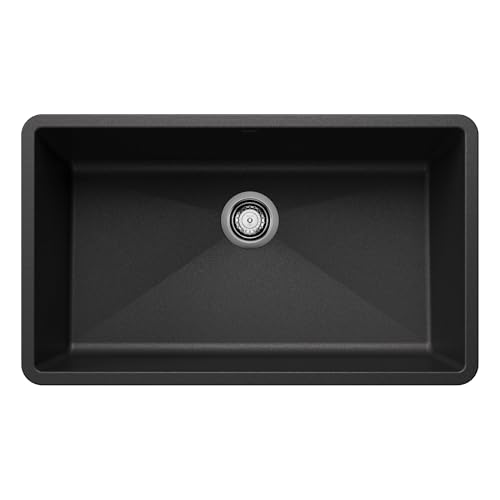
BLANCO Precis 400-U (440195)
This undermount sink uses Blanco’s Silgranit granite composite material instead of stainless steel, resisting scratches and staining better than steel over years of knife and pan contact. The matte finish hides water spots that show clearly on polished steel. It comes in several colors beyond the typical stainless look.
Pros
- Resists scratches better than stainless steel
- Matte finish hides water spots
- Available in colors beyond stainless
Cons
- Heavier, needs confirmed cabinet support
- Costs more than comparable stainless sinks

Zuhne Modena 30 Inch
This undermount sink offers the lowest cost of entry in this lineup while still using 16 gauge stainless steel. A single large basin skips the divider found on smaller double bowl sinks, leaving room for sheet pans. Zuhne includes basic mounting clips, though a bottom grid is sold separately.
Pros
- Lower cost than premium brands at the same gauge
- 16 gauge steel despite the budget price
- Large single basin fits sheet pans
Cons
- Bottom grid and cutting board sold separately
- Shorter warranty than premium competitors
VIGO Camden VG15344
This farmhouse sink exposes a flat stainless front panel instead of tucking the sink body under the counter, a look that needs a cabinet built or modified for apron-front installation. The 16 gauge basin holds a deep single bowl. VIGO includes a bottom grid and strainer with the sink.
Pros
- Exposed front panel suits farmhouse-style kitchens
- 16 gauge steel resists dents
- Includes bottom grid and strainer
Cons
- Needs a cabinet modified for apron-front mounting
- Not a drop-in replacement for a standard undermount cutout
Compared at a glance
| # | Model | Material | Best for | Score | Price |
|---|---|---|---|---|---|
| 1 | Elkay Lustertone Classic ELUH3020 | 18 gauge stainless steel | Best overall | 9.4 | Check price |
| 2 | Kraus KWU110-30 | 16 gauge stainless steel | Best workstation sink | 9.3 | Check price |
| 3 | Ruvati Roma RVH8300 | 16 gauge stainless steel | Best deep single bowl | 9.0 | Check price |
| 4 | KOHLER Vault K-3821 | Stainless steel | Best for noise reduction | 9.1 | Check price |
| 5 | BLANCO Precis 400-U (440195) | Silgranit granite composite | Best granite composite | 8.9 | Check price |
| 6 | Zuhne Modena 30 Inch | 16 gauge stainless steel | Best budget | 8.6 | Check price |
| 7 | VIGO Camden VG15344 | 16 gauge stainless steel | Best farmhouse style | 9.0 | Check price |
Questions worth asking
What does 30×20 mean for a kitchen sink?
It describes the sink’s overall length and width in inches before mounting. The usable bowl area is smaller once the mounting lip or rim is accounted for, usually by about half an inch per side on undermount models.
Is a 30×20 sink too big for a small kitchen?
It fits most standard 36 inch base cabinets, which is the typical cabinet width built around this sink size. Measure your existing cutout first if you are replacing an older, smaller sink.
What gauge stainless steel is best for a kitchen sink?
16 gauge is thicker and quieter than 18 gauge, though both hold up to daily use. 16 gauge costs more and suits buyers who prioritize minimal flex and noise over price.
Can a 30×20 sink be single bowl or double bowl?
Single bowl is more common at this size because dividing the basin leaves each side cramped. Double bowl sinks usually need at least 32 to 33 inches of width to keep both sides usable.
Do workstation sinks need special accessories?
Most ship with at least one accessory, such as a cutting board or bottom grid, sized to rest on the built-in ledges. Replacement accessories are sold separately if the included ones wear out.
Is granite composite or stainless steel better for a kitchen sink?
Granite composite resists scratches and comes in more colors, while stainless resists chipping and handles direct heat from hot pans. Either holds up well with normal care.
How deep should a kitchen sink basin be?
Most 30×20 sinks run 9 to 10 inches deep, which hides dishes and reduces splashing. Shallower basins under 8 inches suit buyers who find deep bowls hard to reach the bottom of.
Does an apron-front sink fit standard cabinets?
No, apron-front and farmhouse sinks need a cabinet built or modified for an exposed front panel. Confirm cabinet compatibility before buying one as a drop-in replacement.
What is a sound-dampening pad on a sink?
It is a sprayed-on coating applied to the underside of the bowl that absorbs vibration from running water and garbage disposal use. Thicker gauge steel reduces noise further on its own.
Our pick
The Elkay Lustertone Classic ELUH3020 is the easiest recommendation for a straightforward 30 by 20 undermount replacement, backed by a sound-dampening coating and durable 18 gauge steel. Buyers who want extra prep space should choose the Kraus KWU110-30 workstation sink instead, and anyone remodeling with exposed cabinetry should look at the VIGO Camden VG15344 apron-front model.
Dana Whitfield
Dana spent eight years buying and merchandising for a regional kitchenware retailer before moving into editorial work. She has handled thousands of SKUs across cookware, small appliances and kitchen organization, and focuses on the practical differences that matter once a product is actually in daily use.