Kitchen Herb Pots That Keep Basil and Mint Thriving Indoors
Click and Grow’s Smart Garden 3 leads this list with automated lighting and watering that removes most of the guesswork from growing herbs indoors. AeroGarden’s Harvest suits a kitchen that wants a wider variety growing at once. T4U’s ceramic set works well for soil-based growing with visible drainage.
Click and Grow’s Smart Garden 3 is the best overall pick for indoor herb growing, since its built-in light and self-watering reservoir keep basil and mint alive through weeks without direct attention. It costs more than a basic ceramic pot, so anyone who wants simple soil-based growing on a sunny sill should pick T4U’s ceramic set instead.
Kitchen herb pots split mainly into hydroponic kits with built-in lighting and watering, and traditional soil pots that rely on a sunny window. We compared watering method, drainage, counter footprint and how many herb varieties each option supports.
The shortlist, ranked

Click and Grow Smart Garden 3
Click and Grow runs this kit on a built-in LED grow light and a water reservoir that releases moisture to the roots gradually. Three plant pods fit in the base, each holding a different herb variety at once. A kitchen without strong window light still grows herbs reliably since the unit supplies its own.
Pros
- Grows herbs without relying on window light
- Self-watering reservoir reduces daily maintenance
- Compact footprint suits a kitchen counter
Cons
- Higher upfront cost than a soil-based pot
- Replacement plant pods add an ongoing cost

AeroGarden Harvest
AeroGarden fits more growing pods into this unit than Click and Grow’s compact kit, suiting a kitchen that wants basil, thyme and chives growing side by side. A larger water bowl extends the time between refills compared to smaller hydroponic kits. The grow light sits on an adjustable arm that raises as plants grow taller.
Pros
- More pods support a wider herb variety at once
- Adjustable light arm accommodates taller growth
- Refill alerts reduce the chance of a dry reservoir
Cons
- Larger footprint takes up more counter space
- Higher energy use than a simple window pot

T4U Ceramic Herb Pot Set with Drainage Trays
T4U pairs each ceramic pot in this set with its own drainage tray, letting excess water escape rather than pooling around herb roots. The glazed finish suits a kitchen windowsill better than unfinished terracotta, since it resists water staining on wood surfaces. Multiple pots in the set allow several herb varieties in separate containers.
Pros
- Drainage trays prevent water pooling on surfaces
- Glazed finish resists staining better than raw terracotta
- Separate pots keep herb varieties from competing for root space
Cons
- Relies on a sunny window rather than built-in lighting
- Ceramic pots are heavier to move than plastic alternatives

Mkono Hanging Ceramic Herb Planters
Mkono hangs these ceramic planters from a cord rather than setting them on a sill, freeing up counter or window ledge space in a small kitchen. Each planter holds one herb, suiting a gardener who wants a few varieties rather than a full collection. The compact size limits root space compared to a standard pot.
Pros
- Hanging design frees up counter and sill space
- Compact size suits small kitchens
- Ceramic material resists moisture damage
Cons
- Limited root space compared to standard pots
- Requires a secure mounting point near a window

Boskke Modern Ceramic Plant Pot
Boskke shapes this pot with a rounded, minimalist profile designed more for modern kitchen decor than for maximizing root space. A single drainage hole in the base lets excess water drain into a separate saucer. The understated design blends into a kitchen counter better than a brightly patterned pot.
Pros
- Minimalist design matches modern kitchen decor
- Single drainage hole prevents waterlogged soil
- Works well as a standalone counter accent
Cons
- Saucer sold separately for drainage
- Smaller size than dedicated herb-growing sets
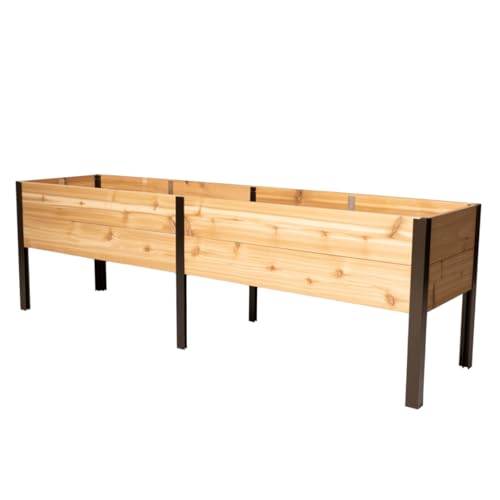
Gardener’s Supply Company Self-Watering Herb Planter
Gardener’s Supply Company builds a water reservoir into the base of this planter, wicking moisture up to the soil without daily watering. It still relies on soil rather than hydroponic nutrients, suiting a gardener who wants lower maintenance without switching growing methods entirely. A water-level indicator shows when the reservoir needs a refill.
Pros
- Reservoir reduces watering frequency without going hydroponic
- Water-level gauge avoids guessing when to refill
- Still uses familiar potting soil
Cons
- Still depends on adequate window light
- Reservoir needs occasional cleaning to avoid algae buildup
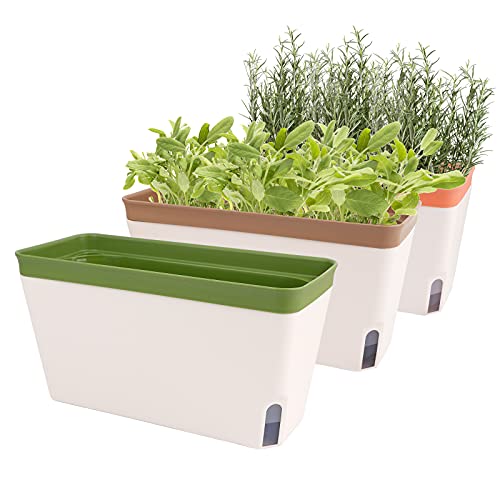
Bonviee Self-Watering Ceramic Herb Pot Set
Bonviee brings a self-watering reservoir to a ceramic pot set at a lower price than Gardener’s Supply Company’s planter. Smaller individual pots suit a windowsill with limited space better than one larger self-watering planter. The set includes multiple pots, letting different herbs grow in separate containers rather than one shared pot.
Pros
- Lower price than premium self-watering planters
- Multiple pots separate different herb varieties
- Reservoir reduces watering frequency
Cons
- Smaller individual reservoirs need more frequent refilling
- Still depends on window light for growth
Compared at a glance
| # | Model | Growing method | Best for | Score | Price |
|---|---|---|---|---|---|
| 1 | Click and Grow Smart Garden 3 | Hydroponic with LED light | Best overall | 9.0 | Check price |
| 2 | AeroGarden Harvest | Hydroponic with LED light | Best for growing a wider herb variety at once | 8.8 | Check price |
| 3 | T4U Ceramic Herb Pot Set with Drainage Trays | Glazed ceramic | Best classic soil-based set | 8.5 | Check price |
| 4 | Mkono Hanging Ceramic Herb Planters | Hanging, cord included | Best for a small windowsill or hanging display | 8.1 | Check price |
| 5 | Boskke Modern Ceramic Plant Pot | Ceramic | Best for minimalist kitchen decor | 8.0 | Check price |
| 6 | Gardener’s Supply Company Self-Watering Herb Planter | Soil-based, self-watering reservoir | Best self-watering soil option | 8.6 | Check price |
| 7 | Bonviee Self-Watering Ceramic Herb Pot Set | Soil-based, self-watering reservoir | Best budget self-watering option | 8.2 | Check price |
What matters most
Hydroponic Kits Versus Soil-Based Pots Click and Grow’s and AeroGarden’s kits grow herbs hydroponically with built-in lighting, which works in a kitchen with little window light. T4U’s and Boskke’s ceramic pots rely on soil and a sunny window instead, costing less upfront but needing more natural light to thrive.
How Many Herb Varieties Fit at Once AeroGarden’s Harvest holds six pods, more than Click and Grow’s three, suiting a kitchen that wants a wider herb rotation. Separate ceramic pots, like T4U’s set or Bonviee’s, also allow several varieties, each kept in its own container rather than sharing root space.
Self-Watering Versus Manual Watering Gardener’s Supply Company’s and Bonviee’s planters use a reservoir that wicks moisture up to the soil, cutting down on daily watering without switching to hydroponics. T4U’s and Boskke’s pots rely on manual watering checked against visible drainage trays or saucers.
Fitting Pots to a Small Kitchen Mkono’s hanging planters free up counter space in a tight kitchen, while Boskke’s compact single pot works as a standalone accent rather than a full herb collection. Larger kits like AeroGarden’s need more dedicated counter space than a small kitchen may have to spare.
Questions worth asking
Do hydroponic herb kits need direct sunlight?
No, kits like Click and Grow’s and AeroGarden’s supply their own LED light, so they work on a counter away from a window.
How often does a self-watering herb planter need refilling?
It depends on reservoir size. Larger planters like Gardener’s Supply Company’s need less frequent refilling than smaller individual pots like Bonviee’s.
Can ceramic herb pots be used without a drainage tray?
A drainage tray or saucer, like the one included with T4U’s set, is recommended to prevent water pooling on a windowsill or counter.
How many herbs can grow in one hydroponic kit?
Capacity depends on the model. Click and Grow’s Smart Garden 3 holds three plant pods, while AeroGarden’s Harvest holds six.
Do hanging herb planters limit plant growth?
Mkono’s hanging planters hold less soil than a standard pot, which can limit root space for herbs that grow large, like rosemary.
Is a self-watering planter better for beginners?
Self-watering options like Gardener’s Supply Company’s and Bonviee’s reduce the risk of forgetting to water, which helps a beginner avoid drying out young herb plants.
What is the main downside of a hydroponic herb kit?
Cost is the main tradeoff. Hydroponic kits like Click and Grow’s and AeroGarden’s cost more upfront than a basic ceramic pot and need replacement plant pods over time.
Can soil-based herb pots sit in a kitchen with limited window light?
Soil-based pots like T4U’s and Boskke’s depend on a sunny window, so a kitchen with weak natural light may grow herbs more slowly or unevenly.
Do self-watering reservoirs need cleaning?
Yes, reservoirs in planters like Gardener’s Supply Company’s can develop algae over time and benefit from an occasional rinse.
The bottom line
Click and Grow’s Smart Garden 3 is the strongest overall pick for a kitchen without much natural light, since its built-in grow light and self-watering reservoir keep herbs alive with minimal attention. A gardener who prefers familiar soil-based growing on a sunny sill should choose T4U’s ceramic set instead, since a hydroponic kit adds cost and complexity that a bright window makes unnecessary.
Dana Whitfield
Dana spent eight years buying and merchandising for a regional kitchenware retailer before moving into editorial work. She has handled thousands of SKUs across cookware, small appliances and kitchen organization, and focuses on the practical differences that matter once a product is actually in daily use.


