The 3/4 Inch Cutting Boards Least Likely to Warp
For most kitchens, the John Boos Chop-N-Slice Maple leads, pairing edge grain maple with a shape that stores upright. Cooking in a humid room? The Teakhaus Edge Grain board resists moisture best, while the Greener Chef Bamboo board covers everyday prep cheaply.
Most kitchens should start with the John Boos Chop-N-Slice Maple, the three quarter inch board worth buying. Cooking somewhere humid? The Teakhaus Edge Grain board holds up better. Everyday prep on a tight budget suits the Greener Chef Organic Bamboo.
Thickness is a genuine trade rather than a case of more being better. Boards under half an inch warp and slide, while boards over an inch and a half tire your arm and crowd the sink. Three quarter inch boards land in the middle: thick enough to stay flat if the wood is well dried, light enough for daily use. We compared grain orientation, wood species, dimensions and owner reports on warping over time.
What to look for
Why three quarter inch is a sensible thickness Thin boards under half an inch flex, slide and warp within a season, especially once one side gets wet. Boards over an inch and a half stay flat but weigh enough that many people leave them out and wash them badly. Three quarter inch boards stay put during chopping yet lift, rinse and store upright easily, which suits most home kitchens.
Edge grain versus end grain Edge grain boards show the long sides of the fibres, cost less to make and suit everyday use, though they gather visible knife marks. End grain presents the fibre ends, so the knife slips between them and the surface partly closes again. That means less scarring and gentler treatment of edges, at the cost of more weight, more money and more frequent oiling.
Wood species and knife edges Hard maple is the traditional choice for good reason, durable enough to last decades yet soft enough to spare edges. Walnut is softer still and kindest to expensive knives. Teak resists water best thanks to natural oils. Bamboo is the hardest of these and dulls edges fastest, which makes it a better second board than a main one.
Keeping a thin board flat Warping happens when one face absorbs moisture and the other does not. Never soak a wooden board or put it in a dishwasher, and dry both faces after washing rather than leaving it flat on a wet counter. Oil monthly with food-grade mineral oil across every surface, then store the board upright so air reaches both sides.
What we recommend

John Boos Chop-N-Slice Maple Cutting Board
Over a century of butcher-block making sits behind the Chop-N-Slice line, applied here to a thinner, more manageable board. Hard maple is dense enough to resist scoring yet soft enough to spare knife edges. A three quarter inch profile stands upright in a cabinet where a full butcher block will not.
Pros
- Balances hardness with knife friendliness
- Stores upright to save space
- Long-established build quality
Cons
- Needs regular oiling to stay sealed
- This model has no juice groove

Teakhaus Edge Grain Cutting Board
Natural oils and silica make teak far more resistant to moisture and warping than maple or walnut, exactly what a thinner board wants. That means less frequent oiling and steadier behaviour in humid kitchens. Silica does dull knives marginally faster, the trade for that stability.
Pros
- Naturally water resistant and stable
- Needs oiling less often
- Warm golden grain looks the part
Cons
- Silica dulls knives slightly faster
- Heavier than maple at the same size
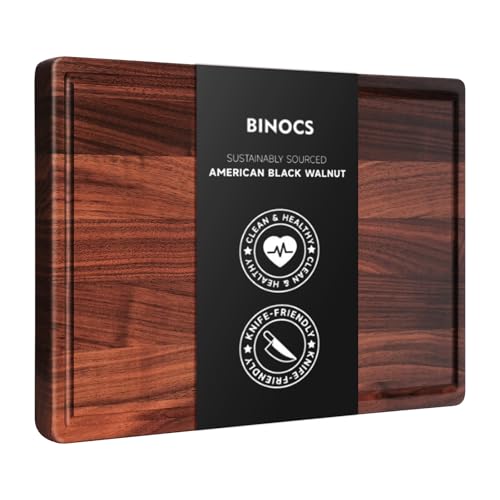
Virginia Boys Kitchens Walnut Cutting Board
Softer than maple, black walnut takes knife marks more readily and returns the favour by treating edges gently. That trade usually pays off for anyone running expensive Japanese knives. Virginia Boys finishes these with food-safe oil, and the dark grain hides beetroot and berry stains better than pale woods.
Pros
- Very gentle on knife edges
- Dark grain hides staining
- Doubles as a serving board
Cons
- Shows knife marks sooner than maple
- Softer surface dents under heavy chopping

Ironwood Gourmet Charleston End Grain Acacia Board
End grain lets the knife pass between wood fibres rather than across them, so the surface closes back up and scars far less over years. Acacia is dense and naturally water resistant, and Ironwood keeps the price below premium end grain blocks. It weighs more than the edge grain boards here despite similar thickness.
Pros
- End grain surface hides cut marks
- Dense, water-resistant acacia
- Good value for end grain construction
Cons
- Heavier than edge grain equivalents
- Needs more diligent oiling
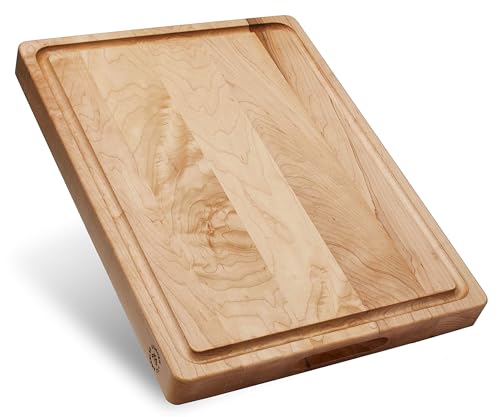
Sonder Los Angeles Maple Cutting Board
Generously sized, this board carries a juice groove on one face and a flat surface on the other, covering roast carving and vegetable prep both. Well-dried maple and eased edges make lifting a heavy loaded board comfortable. Owners report the larger footprint is what displaces smaller boards.
Pros
- Large surface suits real prep
- Reversible with a juice groove
- Eased edges ease lifting
Cons
- Takes considerable counter space
- Heavy when fully loaded

Greener Chef Organic Bamboo Cutting Board
Bamboo is technically a grass, and its density makes it hard wearing and cheap to produce. Far lighter than hardwood, this board is the easy pick for a second surface handling raw meat or garlic. Its hardness dulls edges faster than maple or walnut, so treat it as a workhorse, not a home for your best knife.
Pros
- Very affordable second board
- Light and easy to handle
- Resists moisture reasonably well
Cons
- Harder on knife edges than hardwood
- Glue lines can separate over years

OXO Good Grips Utility Cutting Board
Sometimes the right board is the one you can put in the dishwasher after cutting chicken. Non-slip edges, a juice groove and a wipe-clean surface skip the oiling and hand drying entirely. It scars more visibly than wood and needs replacing eventually, but for raw protein it is the sensible choice.
Pros
- Dishwasher safe for raw meat prep
- Non-slip edges stay put
- No maintenance routine
Cons
- Scars and discolours over time
- Less pleasant to cut on than wood
The lineup, side by side
| # | Model | Wood | Best for | Score | Price |
|---|---|---|---|---|---|
| 1 | John Boos Chop-N-Slice Maple Cutting Board | Northern hard rock maple | Best overall | 9.4 | Check price |
| 2 | Teakhaus Edge Grain Cutting Board | Sustainably grown teak | Best for moisture resistance | 9.2 | Check price |
| 3 | Virginia Boys Kitchens Walnut Cutting Board | American black walnut | Best for knife edges | 9.0 | Check price |
| 4 | Ironwood Gourmet Charleston End Grain Acacia Board | Acacia | Best end grain option | 8.8 | Check price |
| 5 | Sonder Los Angeles Maple Cutting Board | Hard maple | Best for large prep jobs | 8.6 | Check price |
| 6 | Greener Chef Organic Bamboo Cutting Board | Organic bamboo | Best value | 8.3 | Check price |
| 7 | OXO Good Grips Utility Cutting Board | Polypropylene | Best dishwasher safe option | 8.0 | Check price |
Questions worth asking
Is a three quarter inch cutting board thick enough?
For most home kitchens, yes. It resists warping when properly dried and oiled, stays put during chopping, and stays light enough to lift and wash comfortably.
Will a thin wooden cutting board warp?
It can if moisture reaches one face and not the other. Regular oiling, drying both sides after washing and storing the board upright prevents almost all warping.
Edge grain or end grain for a thin board?
Edge grain is the more common choice at this thickness, since end grain relies on more depth for stability. Both work, but edge grain boards are lighter and cheaper.
Which wood is best for a cutting board?
Hard maple is the standard for good reason. Walnut is gentler on knives, teak resists water best, and bamboo is the most affordable but the hardest on edges.
How often should I oil a cutting board?
Roughly monthly with food-grade mineral oil, or whenever the surface looks dry and pale after washing. Apply to all faces and edges, let it soak in, then wipe off the excess.
Can I put a wooden cutting board in the dishwasher?
No. Prolonged soaking and heat will split, warp and eventually ruin a wooden board. Use a plastic board if dishwasher cleaning is what you need.
How do I clean a cutting board after raw meat?
Wash with hot soapy water immediately, rinse and dry both sides. Many cooks keep a separate plastic board for raw protein so it can go through the dishwasher.
Do I need a juice groove on a cutting board?
Useful for carving roasts and cutting juicy fruit, less so for chopping vegetables since it shrinks usable surface. A reversible board with a groove on one side gives you both.
What is the best cutting board for expensive knives?
Walnut or end grain, since both keep edges sharper for longer. The Virginia Boys walnut board and Ironwood acacia end grain board both treat steel gently.
Our take
The John Boos Chop-N-Slice Maple suits the most kitchens, offering serious build quality in a size you will actually lift and wash properly. Pick the Teakhaus Edge Grain board for a humid kitchen, or the Virginia Boys walnut board to protect expensive edges. Keep a Greener Chef bamboo or an OXO plastic board alongside for raw meat.
Dana Whitfield
Dana spent eight years buying and merchandising for a regional kitchenware retailer before moving into editorial work. She has handled thousands of SKUs across cookware, small appliances and kitchen organization, and focuses on the practical differences that matter once a product is actually in daily use.