Why Do Some Baking Sheets Warp in the Oven and Others Don’t?
Baking sheets warp because metal expands unevenly when one part of the sheet heats up faster than another, usually because of a sudden temperature shock, thin gauge metal, or uneven oven heat. Thicker, heavier gauge sheets and certain metals resist this far better than thin, lightweight sheets, which is why two pans that look similar can behave very differently in the same oven.
The physics behind why metal warps at all
Metal expands when heated, and if one section of a baking sheet heats faster than another, typically the edges versus the center, the uneven expansion creates internal stress that the sheet relieves by bending or buckling. This is the same reason a sheet often warps the moment it goes from a cold fridge or counter into a hot oven, since that is the biggest, fastest temperature swing it experiences.
Why thin, lightweight baking sheets warp more easily
Thin metal has less mass to resist the stress caused by uneven heating, so a lightweight sheet bends more readily than a heavier one experiencing the same temperature difference. This is why cheaper, thinner baking sheets often develop a permanent warp after just a few uses, while a comparable heavy gauge sheet in the same oven stays flat.
How oven hot spots make the problem worse
Most home ovens heat unevenly, with hot spots near heating elements or the back wall, and a baking sheet placed across that uneven heat zone experiences exactly the kind of lopsided expansion that causes warping. Rotating pans partway through baking reduces this effect somewhat but does not eliminate it if the sheet itself is thin enough to be sensitive to it.
Does the warp go away after the pan cools
Sometimes, especially with aluminum sheets, which can pop back to roughly flat once they cool back down, a phenomenon often called oven safe flexing. Other times, especially after repeated heat cycles or with certain steel sheets, the warp becomes permanent because the metal has been stressed past the point where it springs back.
Why material choice matters more than most people assume
Heavy aluminized steel and thick aluminum sheets resist warping far better than thin aluminum or lightweight non stick sheets, mainly because of gauge thickness rather than the specific metal type. This is why commercial style half sheet pans, which are intentionally made heavier than typical consumer baking sheets, rarely warp even under repeated high heat use.
Why a sheet pan with a reinforced edge resists warping better
A flat sheet pan with no structural reinforcement along its rim bends more easily under uneven heat than one with a rolled lip or raised edge, since that extra formed metal around the perimeter adds rigidity the same way a reinforced border strengthens a flat piece of cardboard against bending.
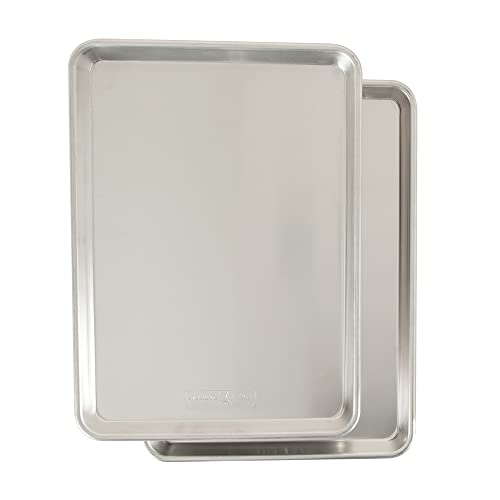
Nordic Ware Natural Aluminum Commercial Baker’s Half Sheet
A heavy gauge aluminum sheet pan built to commercial bakery specifications, frequently cited for resisting warping far better than typical lightweight consumer sheet pans.

USA Pan Bakeware Half Sheet Pan
An aluminized steel sheet pan with a corrugated surface designed to add rigidity and reduce warping compared to flat thin steel sheets.
Frequently asked questions
Will a warped baking sheet still cook food evenly?
Not reliably, since a warped sheet creates areas where batter or dough pools unevenly and other areas where it spreads thin, which can lead to uneven browning and baking time across the same batch.
Can a warped baking sheet be flattened back out?
Sometimes a mild warp in aluminum can be pressed flat by hand or with gentle pressure while the pan is still warm, but a sharply bent or steel sheet that has warped permanently usually cannot be reliably restored to perfectly flat.
Does preheating the baking sheet along with the oven prevent warping?
It can help somewhat, since gradual, even heating reduces the sudden temperature shock that triggers warping, though it will not fully prevent warping in a thin, low quality sheet exposed to a hot oven’s uneven heat zones.
Why does my baking sheet warp more on one side than the other?
This usually points to an oven hot spot or uneven rack positioning, where one side of the sheet is closer to a heating element or back wall and heats faster than the opposite side.
Is it safe to keep using a warped baking sheet?
Yes, a warped sheet is not inherently unsafe to use, it mainly causes uneven baking results and can wobble on the oven rack, which is more of a cooking quality issue than a safety one.
Does putting a cold baking sheet into a preheated oven cause more warping than a room temperature one?
Yes, the larger the temperature gap between the sheet and the oven at the moment it goes in, the more sudden and uneven the expansion, so a sheet straight from the fridge is more likely to warp than one that started at room temperature.
Do non stick coatings make a baking sheet more prone to warping?
Not directly, since the coating itself does not cause warping, though non stick sheets are sometimes made with thinner base metal to keep costs down, and that thinner gauge is the actual source of increased warping risk.
Why do commercial bakeries rarely deal with warped sheet pans?
Commercial pans are intentionally made from thicker, heavier gauge metal than most consumer sheets, which gives them far more resistance to the uneven expansion that causes warping, even under constant high heat use.
Does placing parchment paper on a baking sheet affect warping?
No, parchment paper has no meaningful effect on the metal’s heat expansion behavior, since warping is purely a function of the metal’s thickness and how evenly it heats, not what sits on top of it.
Can rinsing a hot baking sheet with cold water right after baking cause warping?
Yes, that kind of rapid temperature shock can stress the metal in a way similar to going from cold to hot too fast, and it is one of the more avoidable causes of warping since it happens from handling rather than the oven itself.
Is stainless steel more or less prone to warping than aluminum?
Stainless steel generally resists warping well due to its rigidity, but thin stainless sheets can still warp, and stainless also conducts heat less evenly than aluminum, which can create more localized hot spots that contribute to warping.
Does oven rack position affect how likely a sheet is to warp?
Yes, a center rack position typically exposes a sheet to more even heat than a rack placed very close to the top or bottom heating element, reducing the uneven expansion that leads to warping.
Why does a warped sheet sometimes make a loud popping sound in the oven?
That sound is the metal suddenly releasing built up stress as it buckles or snaps back into a different shape, which is a normal, if startling, part of the warping process rather than a sign of damage beyond the warp itself.
Does sheet size affect how likely it is to warp?
Yes, larger sheets have more surface area over which uneven heating can occur, which generally makes bigger sheets somewhat more prone to warping than smaller ones of the same thickness and material.
Does buying a pan specifically labeled warp resistant guarantee it will not warp?
Not entirely, since warp resistant labeling usually reflects thicker gauge metal and better construction that significantly reduces the chance of warping under normal use, but extreme temperature shocks or very high heat can still cause even a well built pan to flex.
Our take
Warping is a predictable response to uneven heat and thin metal, not a sign of a defective pan in most cases. A heavier gauge sheet costs more upfront but resists this far better over years of use than the thin, lightweight pans that warp within the first few bakes.
Dana Whitfield
Dana spent eight years buying and merchandising for a regional kitchenware retailer before moving into editorial work. She has handled thousands of SKUs across cookware, small appliances and kitchen organization, and focuses on the practical differences that matter once a product is actually in daily use.


