Top 18V Drills for Every Kind of DIY Job
The Milwaukee 2904-20 M18 Hammer Drill tops our list for its unmatched power and durability, ideal for heavy-duty tasks, but its weight might be overkill for light users.
An 18V drill is the backbone of any tool collection. It handles everything from simple shelf assembly to drilling through masonry. We compared seven top models to help you choose.
Our selection includes hammer drills, compact drivers, and brushless powerhouses. Each offers a different balance of power, weight, and features.
What we recommend

Milwaukee M18 2904-20 Hammer Drill
The Milwaukee 2904-20 is a brushless hammer drill that delivers exceptional torque. Its POWERSTATE motor and REDLINK PLUS intelligence provide optimized performance. Owners report it powers through concrete and thick lumber without bogging down.
Pros
- Outstanding power for tough jobs
- Durable construction
- Excellent battery life
Cons
- Heavy and bulky
- Pricey

DeWalt DCD791D2 Compact Brushless Drill
The DeWalt DCD791D2 is a compact brushless drill that offers a great balance of power and size. Its high-speed transmission delivers up to 1,900 RPM. Users like its comfortable grip and LED light. It comes with two batteries and a charger.
Pros
- Compact and lightweight
- Two-speed metal chuck
- Brushless motor for efficiency
Cons
- Not a hammer drill
- Batteries not included in some kits

Makita XFD131 18V LXT Drill Driver
Makita’s XFD131 is a brushless drill driver known for its efficient motor. The LXT technology extends runtime, and owners report drilling hundreds of holes per charge. It has a compact design and a built-in LED.
Pros
- Excellent battery efficiency
- Lightweight
- Durable build
Cons
- Chuck not metal
- Only one battery in kit
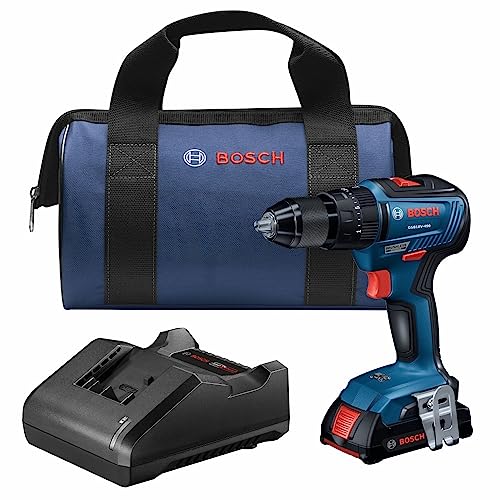
Bosch 18V EC Brushless Drill Driver
The Bosch 18V EC Brushless drill is one of the shortest in its class. Its 6.3 inch length fits into tight spaces. The KickBack Control feature enhances safety. Users appreciate the low vibration.
Pros
- Very compact
- KickBack Control
- Low vibration
Cons
- Less powerful than larger models
- Battery gauge not on drill

RIDGID R87044 18V Brushless Hammer Drill
RIDGID’s R87044 is a brushless hammer drill that offers great performance at a lower price. It features a 3-mode impact drill driver. The lifetime service agreement is a big plus. Owners report it handles masonry well.
Pros
- Lifetime warranty
- Good power for price
- Integrated LED
Cons
- Heavier than some
- Battery quality varies

PORTER-CABLE PCCK600LB 18V Drill Driver
The PORTER-CABLE PCCK600LB is an entry-level drill perfect for light tasks. It has a variable speed trigger and a 1/2 inch chuck. Users find it easy to handle. It comes with a battery and charger.
Pros
- Affordable
- Lightweight
- Simple to use
Cons
- Brushed motor
- Limited power

CRAFTSMAN CMED710 18V Brushless Drill
The CRAFTSMAN CMED710 is a versatile 1/2 inch drill driver. It features a brushless motor for extended runtime. The compact design fits well in hand. Owners like its easy bit change.
Pros
- Comfortable grip
- Good for beginners
- Reasonable price
Cons
- No hammer function
- LED not adjustable
How they compare
| # | Model | Voltage | Best for | Score | Price |
|---|---|---|---|---|---|
| 1 | Milwaukee M18 2904-20 Hammer Drill | 18V | Heavy-duty drilling and driving | 9.4 | Check price |
| 2 | DeWalt DCD791D2 Compact Brushless Drill | 18V | All-around versatility | 9.3 | Check price |
| 3 | Makita XFD131 18V LXT Drill Driver | 18V | Long battery life | 9.1 | Check price |
| 4 | Bosch 18V EC Brushless Drill Driver | 18V | Compact jobs | 8.9 | Check price |
| 5 | RIDGID R87044 18V Brushless Hammer Drill | 18V | Best value with warranty | 8.8 | Check price |
| 6 | PORTER-CABLE PCCK600LB 18V Drill Driver | 18V | Budget-friendly DIY | 8.4 | Check price |
| 7 | CRAFTSMAN CMED710 18V Brushless Drill | 18V | Everyday household tasks | 8.2 | Check price |
What matters most
Questions worth asking
What is the difference between 18V and 20V drills?
18V and 20V drills are often the same. 20V is a marketing term for the maximum voltage, while 18V is the nominal voltage. They are interchangeable in terms of performance.
Can an 18V drill drive screws into concrete?
A standard drill driver cannot. You need a hammer drill with masonry bits for concrete. Even then, for large holes, a rotary hammer is better.
How long does an 18V battery last?
Battery life depends on the amp-hour rating and usage. A 2Ah battery can last for dozens of screw drives, while a 5Ah lasts much longer. Heavy drilling drains faster.
What is torque and why does it matter?
Torque is rotational force. Higher torque means the drill can handle tougher materials without stalling. Measured in inch-pounds, look for at least 300 in-lbs for general use.
Are brushless drills worth the extra cost?
Yes, for frequent use. Brushless motors are more efficient, produce less heat, and have a longer lifespan. They also provide better runtime and power.
Can I use 18V batteries in other tools?
Yes, if they are from the same brand and compatible with the tool. Many brands have a battery platform that works across multiple tools like saws and lights.
What is the best chuck size?
1/2 inch is standard and accepts most bits. Some drills have 3/8 inch chucks, which limit bit size. A metal chuck is more durable than plastic.
Do I need a hammer drill for home projects?
Only if you plan to drill into brick, stone, or concrete. For wood and drywall, a standard drill is fine. If you might do masonry, a hammer drill adds versatility.
Our take
For most users, the DeWalt DCD791D2 is the best all-rounder. Its compact size, brushless motor, and reliable performance make it ideal for a wide range of tasks. If you need maximum power for heavy masonry, choose the Milwaukee 2904-20 despite its weight.
Jake Monroe
Jake worked as a residential contractor for over a decade before shifting to full-time writing. He evaluates power tools, hand tools and workshop gear through the lens of someone who has actually used them on job sites, not just read the box.