Why Do Work Boots Need a Break-In Period Before Long Shifts?
New work boots use stiff leather and dense midsole foam that have not yet molded to your foot’s shape, so a break-in period lets the leather flex points soften and crease naturally where your foot actually bends, and lets the foam and insole settle into the contours of your foot and stride, instead of fighting you the way they do straight out of the box.
Leather has to learn where your foot bends
Full grain and most work boot leather starts out stiff from tanning and finishing, and it has not yet developed the flex creases at the ball of the foot and ankle that let it move naturally with your stride. Walking in the boots gradually works those bend points soft, which is why a brand new boot can feel stiff across the toe box or ankle collar even in the correct size.
Midsole foam needs time to compress to your specific foot
PU and EVA midsoles are manufactured to a generic shape and firmness, and your body weight compresses that foam into a personalized footprint only through repeated wear. Early wears often feel firmer or less cushioned than the boot will feel after several weeks, since the foam has not yet taken the shape of your foot’s pressure points.
Insoles and lining fabric settle into your foot’s actual shape
The factory insole and interior lining are flat or lightly contoured, and friction points that cause early blisters, often at the heel or along the top of the foot, usually calm down once that lining compresses and smooths out where your foot actually presses against it during walking.
Skipping the break-in period on a 10 hour shift is where blisters come from
A short break-in period of comfortable walking at home lets you catch and fix fit problems, like a heel that lifts or a toe box that is too tight, before they turn into a blister or hot spot over a full, uninterrupted shift. Jumping straight from the box to a long shift removes your ability to notice and address those problems early.
How long a real break-in period actually takes
Most leather work boots need somewhere between one and two weeks of partial wear, an hour or two a day building up gradually, before the leather and footbed have adapted enough for a full shift. Boots with stiffer safety features, like a steel toe box or a shank for arch support, often take longer to feel natural than a soft toe boot of the same brand.
What a proper break-in period will not fix
Break-in softens materials and settles fit within a reasonable range, but it will not correct a boot that is genuinely the wrong size or width. If a boot is still painfully tight across the widest part of the foot or sliding at the heel after two weeks of gradual wear, that is a sizing issue, not something more wear will solve.
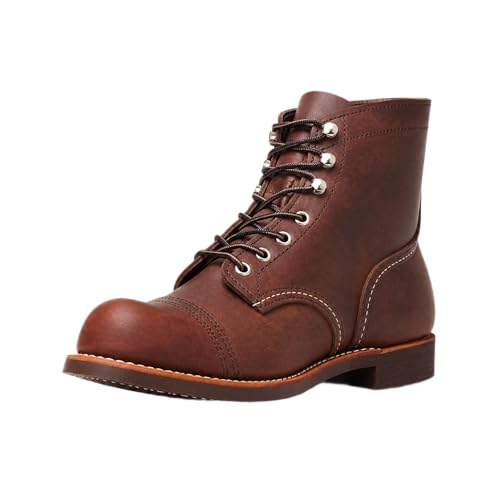
Red Wing Iron Ranger Work Boots
A well known full grain leather work boot known for a noticeably stiff break-in period before the leather softens to the foot.
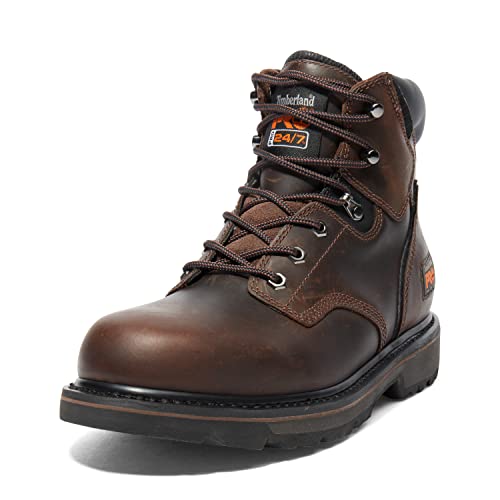
Timberland PRO Pit Boss Soft Toe Work Boots
A leather work boot with a more cushioned factory footbed that generally needs a shorter adjustment period than stiffer safety toe boots.
Common questions
How many days does it typically take to break in new work boots?
Most leather work boots need roughly one to two weeks of gradually increasing wear, starting with an hour or two a day, before the leather and footbed feel settled enough for a full shift without hot spots.
Can you speed up breaking in leather work boots?
Flexing the boots by hand at the ball of the foot, wearing thick socks during early short wears, and using a leather conditioner to soften stiff areas can all shorten the adjustment period somewhat, though there is no shortcut that replaces actual walking time.
Is it normal for new work boots to cause blisters during break-in?
Minor hot spots or mild rubbing during the first few short wears is common and usually resolves as the leather softens, but a blister that keeps recurring in the same spot after multiple wears is usually a sign of a fit problem rather than normal break-in.
Do steel toe work boots need a longer break-in period than soft toe boots?
Generally yes, since the rigid toe box and any internal shank add stiffness that takes longer to adapt to the shape of your foot compared to a flexible soft toe design in the same model.
Should you wear thick or thin socks during the break-in period?
Thicker work socks are usually better during break-in since they reduce friction against stiff, not yet softened leather and help you notice pressure points before they become blisters, while still giving a realistic fit check for how the boot will feel on shift.
Does leather conditioner actually help speed up break-in?
Yes, a leather conditioner applied to stiff flex areas like the vamp and ankle can soften the material faster than walking alone, though it should be used in moderation since over-conditioning can soften the leather too much and shorten the boot’s structural life.
Why do some work boots never fully break in no matter how long you wear them?
If a boot’s base size or width is wrong for your foot, no amount of wear will correct that, since break-in only softens materials and settles existing room, it does not create additional space that was not there to begin with.
Can you return work boots if they still hurt after the break-in period?
Many retailers and some boot brands offer a wear test return window specifically because break-in discomfort is expected, but policies vary, so checking the specific return terms before heavy wear is worth doing if you are unsure about fit.
Do work boots need to be broken in again after resoling?
A quality resole that keeps the original upper intact usually does not require a full break-in again, since the leather upper that molded to your foot stays the same, only the sole unit is replaced.
Is a tight fit on day one actually a good sign for leather boots?
A fit that is snug but not painful, with no heel slip and enough room to wiggle your toes, is generally the right starting point, since leather will stretch and mold slightly with wear, while a boot that already feels loose on day one will likely feel too loose later.
Do work boot insoles need breaking in separately from the boot itself?
Yes in effect, since factory insoles compress and conform to foot pressure over the same period as the leather, which is part of why swapping in an aftermarket insole on day one can change how the break-in feels.
How often should work boots be rotated if you wear them daily?
Owning two pairs and alternating days lets each pair fully dry out and lets the compressed midsole foam recover some of its cushioning overnight, which extends the useful life of both pairs compared to wearing one pair every single day.
Does weather affect how work boots break in?
Yes, leather softens faster in warm, humid conditions and stays stiffer longer in cold weather, so boots broken in during winter may feel like they need extra adjustment time compared to the same boots broken in during warmer months.
Can wearing new work boots straight to a physically demanding job cause injury, not just discomfort?
Yes, unaddressed blisters or hot spots can lead to altered walking gait to avoid pain, which increases strain on other parts of the foot, ankle, and lower back over a long shift, which is part of why a deliberate break-in period matters for safety, not just comfort.
Final word
The stiffness in a new work boot is not a defect, it is unworn material that has not yet learned the shape of your foot. Give it a short, deliberate break-in before a full shift, and treat any pain that does not improve after a couple weeks as a sizing problem rather than something more wear will cure.
Priya Nathan
Priya spent years in apparel buying and merchandising for a multi-brand retailer before moving into editorial work. She focuses on fit, fabric and construction quality across everyday wear, activewear and accessories, reading past marketing copy to the details that affect how a garment actually wears and holds up.


