Why Do Windshield Wipers Streak Even When They Look Fine?
Wiper blades streak even when they look physically fine because the rubber edge develops microscopic cracks, hardening, or a thin film of contamination that is invisible at a glance but disrupts the smooth contact needed to clear water evenly. A windshield coated in wax residue, road film, or silicone from certain cleaning products can also cause streaking with a perfectly good blade, since the problem is sometimes the glass surface, not the wiper.
Why rubber degrades before it looks damaged
Wiper rubber hardens and develops fine surface cracking from UV exposure and ozone over months, well before the blade shows visible chunks missing or an obviously torn edge. That hardened rubber cannot flex to maintain full contact with the curved windshield the way fresh rubber does.
The windshield surface can be the actual culprit
A film of wax, road grime, or silicone-based cleaning products, common in some all-in-one glass cleaners, creates a surface the wiper cannot evenly wet or clear, so water beads and streaks regardless of blade condition. This is why a blade swap sometimes does not fix persistent streaking.
Contact pressure and spring tension matter as much as the rubber
The wiper arm’s spring applies pressure along the blade, and if that tension has weakened or the arm is slightly bent, parts of the blade press less firmly against the glass, leaving thin uncleared strips even with healthy rubber.
Temperature swings accelerate the problem
Repeated cycles between hot sun exposure and cold temperatures speed up rubber hardening more than steady weather would, which is part of why streaking tends to show up more noticeably as blades age through a full change of seasons rather than staying consistent.
Why a quick rubbing alcohol wipe sometimes fixes streaking instantly
Wiping the blade edge with alcohol or a dedicated wiper cleaner removes the thin film of oxidized rubber and road residue sitting on the edge, which can restore clean contact temporarily even on a blade that is otherwise close to needing replacement, explaining why some streaking issues come and go.
When it’s actually a worn wiper motor or linkage, not the blade
In rarer cases, a wiper arm that does not sweep with even pressure across its whole arc due to a worn linkage pivot will streak at certain points of the sweep every time, a pattern that is consistent and localized rather than random, which points away from the blade itself.

Rain-X Latitude Wiper Blades
A widely sold beam-style blade line designed to maintain even pressure across the blade length in varied weather.
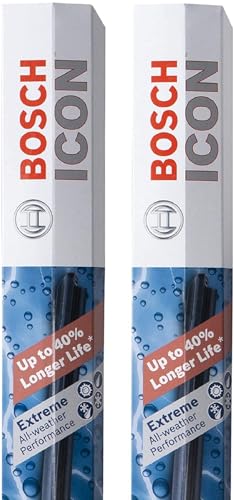
Bosch ICON Wiper Blades
A premium wiper blade line often recommended for longer-lasting rubber and consistent clearing in harsh sun or cold.
Frequently asked questions
How often should wiper blades actually be replaced?
Roughly every six to twelve months depending on climate and UV exposure, sooner in harsh sun or ice-scraping conditions.
Can cleaning the windshield glass fix streaking without replacing blades?
Sometimes yes, especially if a wax or silicone film is the real cause rather than the blade itself.
Does rubbing alcohol damage wiper blade rubber?
No, a light wipe with alcohol on a cloth is a common safe way to clean the edge, as long as it is not soaked directly into the rubber for long periods.
Why do new wiper blades sometimes streak for the first few uses?
A thin manufacturing coating or mold release residue on new rubber can cause brief streaking that clears up after a few wipe cycles.
Can winter ice scraping damage wiper blades even if done carefully?
Yes, using the wiper itself to help clear ice stresses the rubber edge and accelerates wear compared to using a proper ice scraper.
Do all wiper blades fit all cars the same way?
No, blade length and the attachment connector type vary by vehicle, which is why sizing by vehicle model matters when buying replacements.
Is it normal for one wiper to streak while the other doesn’t?
Yes, blades don’t always wear evenly, especially if one side gets more direct sun or the arm tension differs slightly.
Can washer fluid additives cause streaking?
Certain cheap fluids with heavy wax or silicone additives can leave a film that contributes to streaking.
Should I lift my wipers off the glass when the car is parked in extreme heat?
Some owners do this to reduce prolonged heat exposure on the rubber edge, though it is a minor factor compared to overall climate and UV exposure over months.
Do beam-style wiper blades last longer than traditional frame blades?
Not necessarily longer, but they tend to maintain even pressure better across the blade length, which can reduce streaking in cold or icy conditions specifically.
Can a scratched windshield cause streaking that looks like a bad wiper?
Yes, a scratch or pitting on the glass itself can create a line the wiper can never clear regardless of blade condition.
Does streaking always mean the whole blade needs replacing, or just a section?
Wiper blades are not typically meant to be partially replaced, since the rubber insert runs the full length, though some designs allow swapping just the rubber insert rather than the whole assembly.
Can direct sunlight through a windshield speed up wiper blade wear even when parked?
Yes, UV exposure through the glass still degrades the rubber sitting against it, even when the car is not moving.
Is streaking worse in winter or summer?
Both have their own causes, since ice and extreme cold stiffen rubber while summer heat and UV dry it out, so streaking can appear in either season for different reasons.
Do higher priced wiper blades actually streak less than budget ones?
Generally yes on average, since rubber compound quality and blade design affect how evenly pressure is distributed, though any blade will eventually streak as it ages regardless of price.
Can a wiper blade be too tight or loose on the arm, causing streaking?
Yes, an improperly seated or loose-fitting blade connector can cause uneven pressure across the blade, leading to streaking even with healthy rubber.
Does streaking happen more on the driver’s side or passenger’s side typically?
There is no universal rule, since it depends more on individual sun exposure and arm tension than on which side of the car it is.
Can silicone wiper blades resist streaking better than standard rubber ones?
Silicone blades tend to resist UV degradation and hardening somewhat better than standard rubber, which can delay streaking, though they are not immune to it over time.
Is it worth replacing wiper blades right before winter specifically?
Yes, fresh blades handle the first ice and snow of the season better than blades already partway through their wear cycle from the previous year.
Can a dirty wiper reservoir or nozzle contribute to streaking?
Indirectly, since a clogged nozzle can spray unevenly or too little fluid, leaving the wiper to drag across a drier surface than intended, which worsens streaking.
Does streaking indicate the wiper motor is failing?
Rarely, since streaking is almost always a blade or glass surface issue rather than a motor problem, which would more likely show up as slow, weak, or inconsistent sweep speed instead.
Can bird droppings or tree sap cause localized streaking?
Yes, dried residue stuck to the glass can create a spot the wiper cannot clear smoothly until it is manually cleaned off.
Should I replace both wiper blades at the same time even if only one streaks?
Many owners do this since both blades are usually close in age and condition, making it practical to replace them together rather than piecemeal.
Can extreme cold make a wiper blade streak even if it was fine in summer?
Yes, cold temperatures stiffen rubber temporarily, which can cause streaking in winter that disappears once the blade warms up or is replaced with a winter-rated blade.
Is there a way to test if streaking is caused by the blade or the glass?
Wiping a small section of the windshield with glass cleaner and testing just that spot, or swapping a blade temporarily between wipers, can help isolate whether the glass or the blade is the actual cause.
The bottom line
Streaking is almost always either hardened rubber that is further along than it looks, or a windshield surface that is dirtier than it appears, and the fastest diagnostic is to clean the glass and wipe the blade edge before assuming a full blade swap is needed. If that does not fix it, the blade itself is the honest answer.
Tony Russo
Tony trained as an automotive technician and spent years in service and parts retail before moving into writing. He focuses on garage tools, car care products and accessories from a hands-on maintenance perspective.