Why Does a Wine Fridge Need a Different Temperature Than a Regular Fridge?
A wine fridge runs warmer and more stable than a kitchen refrigerator because wine is best preserved and served somewhere around 45 to 65 degrees Fahrenheit depending on the type, while a standard refrigerator deliberately holds food closer to 35 to 38 degrees for food safety and cycles more aggressively to maintain that. Wine stored or served at standard refrigerator temperatures loses flavor and aroma, and the repeated cold cycling of a regular fridge can create vibration and temperature swings that affect wine over long term storage.
Why wine needs a warmer range than food
Depending on the type, wine is generally best stored and served somewhere in the 45 to 65 degree range, with whites and sparkling wines sitting cooler and reds warmer. A standard kitchen fridge’s 35 to 38 degree range is too cold for wine, numbing the aroma compounds and flavor perception that are part of what makes a wine taste the way it is meant to.
Why temperature stability matters more for wine than for food
Repeated expansion and contraction from fluctuating temperatures, common in a kitchen fridge that is opened frequently, can stress a cork’s seal over time and age wine unevenly. A dedicated wine fridge cycles less aggressively and holds a tighter, steadier temperature band than a food refrigerator needs to.
Why humidity control is part of the difference too
Wine fridges are often designed to maintain moderate humidity, roughly in the 50 to 70 percent range, to keep natural corks from drying out and shrinking. Standard refrigerators are deliberately kept low humidity instead, since that helps keep food from spoiling or developing mold.
Why vibration matters for long term storage
Kitchen fridge compressors and frequent door opening create vibration that, over years, can disturb sediment in aging wine and contribute to uneven development. Dedicated wine storage units are built specifically to minimize that vibration.
Dual zone units and why serving temperature differs from storage temperature
Many wine fridges are split into two separately controlled zones so reds and whites can each sit at their own ideal range at the same time, something a single-temperature kitchen fridge simply cannot offer.
What happens if you just put wine in a regular fridge for a short time
For brief chilling before serving, a day or two in a standard fridge is generally fine. The concerns about flavor dulling and long term degradation mainly apply to wine being stored for months or years rather than chilled briefly before drinking.

NewAir AW-281E Dual Zone Wine Cooler
A dual zone wine refrigerator that lets reds and whites be stored at two different target temperatures at once.
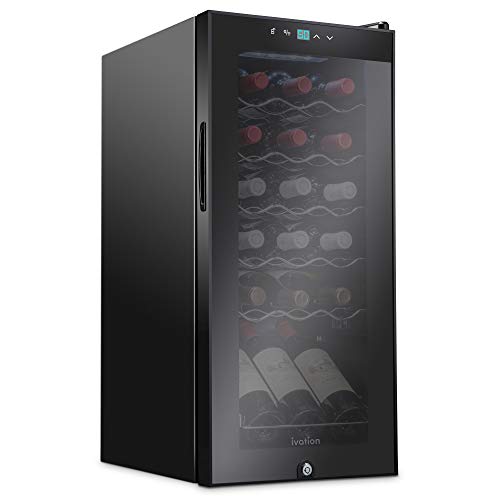
Ivation 18 Bottle Wine Cooler
A compact dual zone countertop wine fridge sized for smaller kitchens or apartments.
Questions worth asking
What is the ideal serving temperature for red wine?
Generally around 60 to 65 degrees, warmer than most people assume, since red wine served too cold mutes its aroma and tannin structure.
What is the ideal serving temperature for white wine?
Typically around 45 to 50 degrees, cooler than reds but still noticeably warmer than a standard refrigerator’s usual setting.
Can a regular refrigerator ruin wine if stored short term?
No, a few days to a couple of weeks in a regular fridge is generally fine for wine that is not intended for long aging. The bigger concerns apply to months or years of storage.
Why do wine fridges have UV-filtered or tinted glass doors?
Because prolonged light exposure, especially UV, can degrade certain wine compounds over time, something a dedicated wine fridge is designed to block in a way a standard food fridge door does not prioritize.
Does humidity really matter for wine with screw caps instead of cork?
Less so, since screw caps do not rely on a moist seal the way natural cork does. Humidity control matters most for bottles sealed with a traditional cork.
Is a dual zone wine fridge worth it over a single zone?
If you regularly store both reds and whites and want each held at its own ideal serving range at the same time, yes. Otherwise a single zone set to a middle range works fine for casual storage.
Can vibration from a compressor actually be noticed in the wine’s taste?
The effect is subtle and debated for shorter storage periods, but for wine aged many years, minimizing vibration is considered part of proper long term storage practice.
Do all wine fridges hold the same temperature range?
No, ranges vary by model and whether it is a dual zone unit, so checking a specific unit’s actual range against the wine types you plan to store matters.
Is it bad to store wine standing up instead of on its side?
For cork-sealed bottles stored long term, laying them on their side keeps the cork moist and prevents it from drying and shrinking. Standing up for short term storage is generally fine.
Why does my wine fridge run louder than my kitchen fridge?
Compressor based wine fridges, especially smaller countertop units, can be louder than a well-insulated full size refrigerator, though thermoelectric models run quieter at the cost of a smaller usable temperature drop.
Can a wine fridge double as general beverage storage?
Yes, many people use them for sodas, beer, or other drinks when not full of wine, since the temperature range still works fine for general chilling.
Does room temperature affect how well a wine fridge performs?
A wine fridge placed in a hot garage or a room with poor ventilation around its compressor vents can struggle to maintain its set range, so placement matters.
Why do some wine fridges need space behind them to vent?
Compressor based units release heat out the back or bottom, and blocking that airflow can make the unit run hotter and less efficiently, or shorten the compressor’s lifespan.
Is a thermoelectric wine cooler as effective as a compressor based one?
Thermoelectric units run quieter and vibrate less, but they have a smaller usable temperature drop below room temperature, making them better suited to moderate climates than very warm rooms.
Does sparkling wine need an even different temperature than still white wine?
Yes, sparkling wine is typically served slightly cooler than still white wine, often near the lower end of a wine fridge’s white wine range, to help preserve its carbonation.
Can storing wine too warm actually spoil it faster than storing it too cold?
Yes, temperatures that are too warm accelerate chemical reactions inside the wine, aging it faster than intended, while temperatures that are merely too cold mainly mute flavor rather than damage the wine outright.
Does a wine fridge need to be kept completely full to work properly?
No, it will maintain its set temperature range regardless of how many bottles are inside, though a fuller fridge can hold temperature more steadily during brief power interruptions due to added thermal mass.
Is it necessary to let wine adjust to room temperature after removing it from a wine fridge?
For reds served warmer than the fridge’s zone, a short rest at room temperature before pouring can help, whites and sparkling wines are usually served straight from the fridge without needing to warm up first.
Can placing a wine fridge next to a warm appliance like a stove affect its performance?
Yes, nearby heat sources can make the compressor work harder to maintain its set range, so placing a wine fridge away from ovens or direct sunlight helps it perform more efficiently.
Final word
The warmer, steadier, more humid environment a wine fridge targets is tuned specifically to how wine actually ages and tastes best, not an arbitrary spec difference from a kitchen fridge, which is built purely around food safety and has no reason to replicate those conditions.
Dana Whitfield
Dana spent eight years buying and merchandising for a regional kitchenware retailer before moving into editorial work. She has handled thousands of SKUs across cookware, small appliances and kitchen organization, and focuses on the practical differences that matter once a product is actually in daily use.
You might also need

Why Does a Toaster’s Bread Setting Change More Than Just Darkness?

Linen Napkins for a Table That Needs More Than Paper

Airy Abode Candle Wick Trimmer & Snuffer Set: Does the Color Choice Matter?
