Why Do Wheel Bearings Make Noise When Turning?
A worn wheel bearing often gets noticeably louder or quieter specifically when turning because steering shifts the vehicle’s weight distribution across the bearing, loading one side of the worn bearing races more heavily than the other, which changes how much the internal damage generates noise at that moment. A bearing that is humming on straight roads and shifts pitch or volume in a turn is a classic and fairly reliable symptom of this specific wear pattern.
What is inside a wheel bearing that can wear out
A wheel bearing contains a set of precision steel balls or rollers riding between two hardened metal races, all held in place with a small amount of grease and sealed against dirt and water. Over tens of thousands of miles, or sooner with water intrusion or a seal failure, the races and rolling elements develop microscopic pitting and wear, which is the physical source of the growling or humming noise.
Why turning specifically changes the sound
During a turn, the vehicle’s weight shifts and cornering forces load the outer wheel’s bearing more heavily while partially unloading the inner wheel’s bearing. If the worn bearing happens to be on the side being loaded more during a particular turn direction, the noise typically gets louder; if it is the side being unloaded, the noise can quieten slightly, which is why drivers often describe the sound as changing specifically with turn direction.
Why the noise also often changes with vehicle speed
A wheel bearing noise typically increases in pitch and volume as vehicle speed increases, since the bearing is simply rotating faster and generating more frequent contact with the worn spots. This speed-dependent behavior, separate from the turning behavior, is part of what distinguishes bearing noise from unrelated sources like wind or tire noise, which behave somewhat differently.
How to tell which side the noise is coming from
A reasonably reliable trick many technicians use is noting which turn direction makes the noise louder, since that often points to the bearing on the outside wheel of that turn being the worn one, though this is not foolproof and a proper diagnosis usually still involves a lift and manual wheel check for play and roughness.
What other symptoms often accompany the noise
Beyond the turning-related volume change, a worn bearing can produce a vibration felt through the steering wheel or floor, a clicking noise in ABS-equipped vehicles if the bearing’s sensor ring is damaged, and in advanced cases, noticeable play when the wheel is grabbed and rocked by hand with the car safely raised.
Why ignoring the noise eventually becomes a safety issue
A sufficiently worn bearing can eventually develop enough internal damage to seize or, in rare severe cases, allow excessive wheel play that affects steering and handling. While most bearing failures give considerable advance warning through noise, letting it go unaddressed for a very long time turns an inexpensive repair into a more serious and higher-risk failure.

Timken WE61512 Wheel Bearing and Hub Assembly
A commonly used sealed hub assembly covering a wide range of vehicle applications, representative of the kind of direct-fit replacement most shops install for this repair.
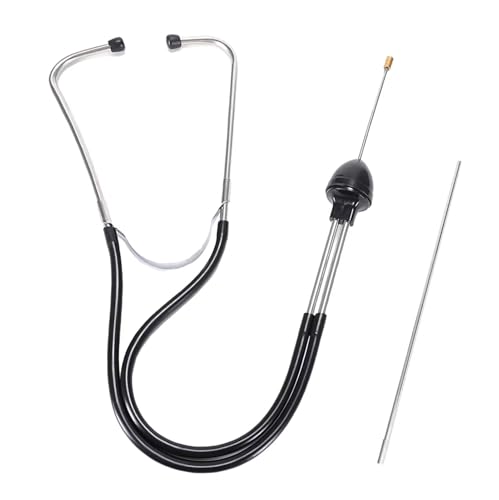
Stethoscope-Style Mechanic’s Listening Tool
A simple handheld diagnostic tool technicians use to pinpoint exactly which bearing or component is generating a specific noise by listening directly at suspect points.
Frequently asked questions
Can a wheel bearing be repaired, or does it need full replacement?
Modern wheel bearings are almost always sealed, non-serviceable units, so a worn bearing is replaced as a complete hub assembly rather than repaired with new internal components the way older designs sometimes allowed.
Is it safe to keep driving with a noisy wheel bearing?
For a short period while arranging a repair, generally yes, but a bearing that has progressed to noticeable play or vibration should be addressed promptly, since continued driving accelerates the wear and risk of more serious failure.
How much does wheel bearing replacement typically cost?
Cost varies by vehicle and whether it is a simple bearing or a more labor-intensive press-fit design, but it is generally a moderate repair rather than one of the more expensive items on a vehicle, especially compared to what a failed bearing could eventually damage if ignored.
Does a bad wheel bearing affect alignment?
Not directly, since alignment concerns the angles of the wheels relative to the road and each other, while a bearing issue is about the bearing’s internal wear, though significant bearing play in rare advanced cases could introduce minor handling changes.
Can water or road salt cause premature wheel bearing failure?
Yes, a damaged or aging seal that lets water and road salt into the bearing accelerates corrosion and wear on the internal races far faster than normal use alone, which is a common cause of early bearing failure in wet or heavily salted climates.
How do I know if it is a wheel bearing versus a tire noise?
Tire noise usually stays fairly constant regardless of turning and often changes with road surface texture, while bearing noise typically changes distinctly with turning direction and climbs with speed regardless of road surface, which helps distinguish the two.
Does a wheel bearing noise ever go away on its own?
No, bearing wear is a one-way mechanical degradation process, so a noise caused by a worn bearing will not resolve itself and will generally continue to worsen gradually over time until it is replaced.
Can a wheel bearing fail suddenly without warning noise?
It is uncommon but possible, particularly if a seal fails catastrophically or a bearing was already significantly compromised, though the large majority of failures give a meaningful period of audible warning before becoming a safety concern.
Is front or rear wheel bearing failure more common?
This varies by vehicle design and drivetrain, though front bearings often see more load variation from steering and braking forces on many vehicles, which can make them a more frequent failure point, though rear bearing failure is certainly not rare.
Can a wheel bearing issue trigger an ABS warning light?
Yes, on vehicles where the wheel speed sensor ring is integrated into the bearing assembly, bearing damage or wobble can disrupt the sensor signal enough to trigger an ABS or traction control warning light.
Does aggressive driving wear out wheel bearings faster?
Hard cornering and aggressive driving that repeatedly loads bearings heavily can contribute to faster wear over time compared to more moderate driving, though quality of the bearing and seal condition matter at least as much as driving style.
How long can you drive on a bad wheel bearing before it fails completely?
This varies enormously by how advanced the wear already is, driving conditions, and load, making it difficult to predict precisely, which is exactly why addressing the noise once identified rather than trying to estimate remaining life is the safer approach.
Can rotating tires affect how a wheel bearing noise sounds?
No, bearing noise is tied to the hub assembly itself rather than the tire mounted on it, so rotating tires between positions will not move or change a bearing noise, which can actually help confirm the noise is bearing-related rather than tire-related.
Is a growling noise always a wheel bearing?
Not always, since differential issues, CV joint problems, or even certain transmission noises can sometimes resemble a bearing growl, which is why a proper hands-on inspection matters rather than assuming based on sound alone.
Does bearing noise get worse in cold weather?
Some drivers report bearing noise seeming more noticeable when cold, possibly related to grease viscosity changes and tighter initial clearances before things warm up, though the underlying wear causing the noise is not actually created or worsened by temperature itself.
Our take
A bearing noise that shifts with turning direction is one of the more diagnosable sounds a car makes, and it rarely improves on its own. Getting it checked once you notice the pattern usually means a routine hub replacement instead of a bigger repair later.
Tony Russo
Tony trained as an automotive technician and spent years in service and parts retail before moving into writing. He focuses on garage tools, car care products and accessories from a hands-on maintenance perspective.


