Why Do Garden Trellises Need Different Spacing for Vines vs Climbing Vegetables?
Trellis spacing needs to match how a plant actually climbs. Twining vines like morning glory or pole beans wrap their stems around a support and need narrower spacing, often 4 to 6 inches, so a stem can fully encircle it, while tendril-climbers like cucumbers and peas need a wider grid, typically 6 to 8 inches, so their thin tendrils have room to curl around multiple points without crowding.
How twining plants physically grip a support
Plants like pole beans, morning glory, and some hops climb by wrapping their entire main stem around whatever they are growing on in a spiral. This method needs a support narrow enough in diameter and close enough in spacing that the stem can make a full wrap without the loop being too loose to hold the plant’s weight as it grows heavier with foliage or pods.
How tendril climbers grip differently
Cucumbers, peas, and grapes use thin, wiry tendrils that branch off the main stem and curl tightly around anything thin enough to grasp, rather than wrapping the whole stem itself. These plants actually do better with a wider mesh or multiple thin supports spaced somewhat apart, since the tendrils need separate points to latch onto rather than one continuous surface.
Why spacing too tight hurts tendril climbers
A trellis grid built with tight spacing meant for twining vines can actually frustrate a tendril climber, since the tendrils have too many close points to grab and end up tangled on themselves rather than cleanly hooked onto the structure. This is a common reason cucumbers grown on a trellis built for beans end up sprawling instead of climbing cleanly.
Why spacing too wide hurts twining vines
A twining vine given a wide-spaced trellis, like a grid built for heavy squash vines, often cannot get a full wrap around any single support element, since the gaps are too far apart for its stem to reach and encircle securely. The plant ends up leaning or draping over the top rather than climbing upward in the spiral pattern it is built for.
Weight capacity changes the spacing math too
Heavier climbing vegetables like squash or melons need wider, sturdier spacing not for climbing mechanics but because the structure itself has to support real weight as fruit develops, which is a separate consideration from how the plant grips. Many gardeners add fabric slings or extra ties at these wider points specifically to help support the fruit’s weight.
Mesh material affects how well either type grips
Thin wire or string mesh gives tendril climbers more individual grab points per square foot than thick wooden lattice does, while thick wooden or PVC supports actually work better for twining vines since they give the stem something substantial enough to spiral around securely.
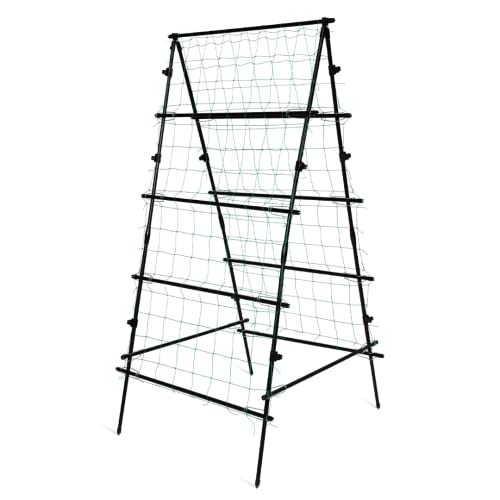
Gardener’s Supply Company Vertical Garden Trellis Netting
A flexible nylon mesh trellis netting with a tight grid pattern commonly used for pole beans and other twining vines that need to fully wrap a support.
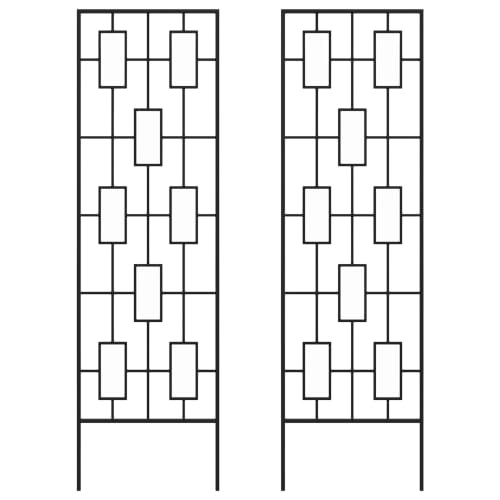
Panacea Products Adjustable Garden Trellis
A metal grid trellis with wider rectangular openings often used for cucumbers and similar tendril climbers that need separate grab points rather than a continuous wrap surface.
Questions worth asking
How do I know if my plant is a twining vine or a tendril climber?
Twining vines like pole beans and morning glory wrap their entire stem around a support in a spiral, while tendril climbers like cucumbers and peas send out thin curling tendrils separate from the main stem to grab onto things.
Can one trellis design work for both vine types?
A medium-spaced mesh, roughly 5 to 6 inches, can work reasonably well for both, though neither type will climb quite as efficiently as it would on spacing built specifically for its gripping method.
Why are my cucumbers sprawling instead of climbing the trellis?
This usually happens when the trellis spacing is too tight for the thin tendrils to find clean individual grab points, causing them to tangle on themselves instead of hooking cleanly onto the structure.
Do pole beans need a thicker support than cucumbers?
Yes, pole beans wrap their whole stem around a support and generally climb better on something with enough diameter for a secure spiral, while cucumbers’ tendrils can grip much thinner wire or string just as well.
Does trellis material matter as much as spacing?
Yes, a thin wire mesh gives tendril climbers more grab points, while a sturdier wood or thick PVC structure gives twining vines something substantial enough to wrap around securely, so material and spacing work together.
Can I train a twining vine onto a wide-spaced trellis manually?
Yes, with manual tying or guiding early in growth, a twining vine can be encouraged onto wider spacing, though it will likely need ongoing help since the plant’s natural wrapping instinct works best on narrower supports.
Why do some trellises have a diamond pattern instead of a square grid?
A diamond pattern offers angled grab points that some climbing plants, particularly tendril climbers, latch onto more easily than a straight square grid, though the practical difference is often minor compared to overall spacing size.
Does trellis spacing need to change as the plant grows larger?
Not usually, since the spacing is set at installation, but heavier plants later in the season may need additional support like ties or slings regardless of the original spacing, especially where fruit weight is a factor.
Can grapes use the same trellis spacing as peas?
Grapes are tendril climbers like peas and generally do well on similar wider spacing, though grape vines eventually need a much sturdier overall structure to support their long-term woody growth and fruit weight.
Is it bad to use chicken wire as a trellis for climbing vegetables?
Chicken wire’s small hexagonal openings work reasonably well for lightweight tendril climbers like peas, but it is usually too flimsy and tightly spaced to effectively support heavier twining vines like pole beans.
Why does my morning glory keep falling off its trellis?
This typically means the support is too wide in diameter or too widely spaced for the vine’s stem to get a secure wrap around it, causing the plant to slip rather than hold its climbing spiral.
Does trellis angle affect how well vines or tendrils climb?
A slight inward lean can help some climbers grip and distribute weight more evenly, but spacing and support thickness generally matter more to climbing success than the overall angle of the trellis.
How wide should trellis spacing be for squash?
Squash vines need wider, sturdier spacing, often 8 inches or more, primarily to support the plant’s substantial weight and large leaves rather than purely for climbing mechanics, since squash climbs somewhat loosely compared to true twining vines.
Can mismatched trellis spacing stunt a climbing plant’s growth?
It can slow upward growth and cause the plant to sprawl along the ground instead, which indirectly affects yield and sun exposure, even though it does not usually stunt the plant’s overall health directly.
Does a trellis need to be anchored differently for heavier climbing vegetables?
Yes, heavier producers like squash or melons put real lateral and downward force on a trellis as fruit develops, so a sturdier anchor or additional ground staking is often needed beyond what a lightweight flower vine trellis requires.
Can you mix plant types with different climbing styles on the same trellis?
You can, but each plant will climb less efficiently than it would on spacing suited to its specific gripping method, so expect to do more manual guiding and tying for whichever type is mismatched with the grid.
Does trellis spacing affect how much airflow reaches the plant’s leaves?
Yes, tighter spacing combined with dense foliage can reduce airflow around leaves, which in humid climates can slightly raise the risk of fungal issues compared to a more open grid that lets air circulate more freely.
The bottom line
The mismatch between vine type and trellis spacing is a common, fixable mistake rather than bad luck with a particular plant. Matching the grid size and support thickness to how the specific plant actually grips, wrapping stem versus curling tendril, makes the difference between a plant that climbs cleanly and one that sprawls.
Sierra Daniels
Sierra's background is in landscape design and nursery retail. She focuses on lawn and garden equipment, outdoor furniture and gear durability, weighing published specs against how materials actually hold up outside.


