Why Do Swim Goggles Fog Up So Quickly?
Swim goggles fog up because warm, moist air from your skin and breath condenses on the cooler inner lens surface, forming tiny water droplets, and that process speeds up once the factory-applied anti-fog coating wears away from repeated touching, rubbing, and exposure to sunscreen or pool chemicals.
The basic science behind the fog
Fogging is simple condensation, warm moist air trapped between your face and the lens meets a cooler lens surface and the water vapor in that air condenses into countless tiny droplets, which scatter light and create the cloudy appearance, the same mechanism that fogs a bathroom mirror during a hot shower.
Why new goggles resist fog better
Most goggles ship with a thin factory-applied anti-fog coating on the inner lens, often a hydrophilic layer that causes moisture to spread into an even, transparent film instead of forming visible droplets, and this coating is genuinely effective when fresh but is also a sacrificial layer that degrades with use.
What actually destroys the anti-fog coating
Touching or rubbing the inside of the lens with fingers, even just to adjust the goggles, transfers oils that break down the coating. Sunscreen, pool chemicals like chlorine, and regular washing with standard soap all accelerate this breakdown as well, which is why goggles that started fog-free often stop working within weeks or months.
Why some pools cause faster fogging than others
Warmer pool and air temperature differentials increase condensation, and heavily chlorinated or chemically treated pools can degrade anti-fog coatings faster than a mild home pool, which is part of why the same goggles might perform differently at different facilities.
How anti-fog sprays and gels actually work
Aftermarket anti-fog products work on the same hydrophilic principle as the factory coating, creating a thin film that spreads moisture evenly instead of letting it bead up, and reapplying one periodically can restore fog resistance even after the original factory coating has worn off. Most swimmers find that a fresh application lasts for several sessions before needing to be reapplied again, which makes keeping a small bottle in a swim bag a reasonably practical habit for anyone who swims multiple times a week and wants to avoid buying new goggles too often.
Why cleaning habits matter more than people expect
Rinsing goggles in fresh water after swimming and letting them air dry without touching the inner lens preserves the coating far longer than wiping them with a towel or fingers, since towels and skin both transfer oils and abrasion that strip the coating prematurely.
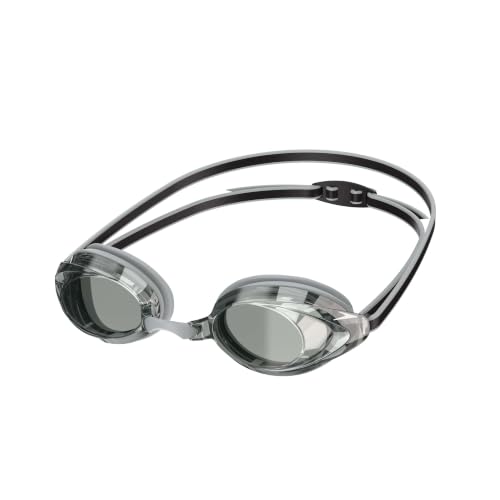
Speedo Vanquisher 2.0 Swim Goggles
A widely used competitive swim goggle that ships with a factory anti-fog coating on the lens, common among lap swimmers and racers.

Cressi Anti-Fog Spray for Masks and Goggles
A refresher spray applied to the inner lens to restore fog resistance after a factory coating has worn down.
Questions worth asking
How long does the factory anti-fog coating on goggles usually last?
It varies by brand and care, but many swimmers notice a meaningful drop in anti-fog performance somewhere between a few weeks and a few months of regular use, faster with poor handling habits.
Can you fix fogging without buying a new anti-fog product?
Dedicated anti-fog sprays or gels applied to the inner lens can restore meaningful fog resistance even after the original factory coating has worn away, and reapplying periodically is a normal part of goggle maintenance for frequent swimmers.
Does touching the inside of the lens really make that big a difference?
Yes, skin oils transferred by fingers are one of the fastest ways to break down the hydrophilic coating, which is why handling goggles by the strap or outer edges rather than the inner lens extends their fog resistance.
Is it bad to wash goggles with regular soap?
Yes, most standard soaps and especially anything with added fragrance or moisturizer leave a residue that degrades the anti-fog coating faster than rinsing with plain fresh water.
Do anti-fog sprays work as well as a factory coating?
A quality anti-fog spray can come close to factory performance when freshly applied, though most need to be reapplied every several swims, whereas the factory coating is a more durable baseline layer.
Can toothpaste or household items actually help with fogging?
Some swimmers use diluted baby shampoo or specific anti-fog gels as home remedies, and while mild versions can offer temporary improvement, household items like toothpaste can also scratch or damage lens coatings and are generally not recommended by goggle manufacturers.
Does water temperature affect how much goggles fog?
Yes, a bigger temperature gap between the warm air trapped against your face and a cooler lens, often worsened in cold pools or cold outdoor air, increases condensation and makes fogging happen faster and more visibly.
Is fogging worse in outdoor pools than indoor pools?
It can go either way, outdoor pools often have more variable air temperature which can increase fogging, but indoor pools with high humidity and less airflow can also create conditions that fog goggles quickly.
Can prescription swim goggles fog the same way as regular ones?
Yes, prescription swim goggles use the same type of lens material and coatings as standard goggles, so they fog through the identical condensation process and benefit from the same anti-fog care.
Does rinsing goggles after every swim actually help?
Yes, rinsing with fresh water removes chlorine, salt, and body oil residue that would otherwise sit on the lens and accelerate coating breakdown, making it one of the simplest habits for extending fog resistance.
Is it normal for goggles to fog more as they get older even with care?
Yes, to some degree even with excellent care, since the anti-fog coating is a thin sacrificial layer that will eventually wear down through simple repeated use and exposure to water and air.
Can sunscreen on your face transfer to goggles and cause fogging?
Yes, sunscreen residue on the face and hands transfers easily to the goggle strap and lens edges during adjustment, and that residue can migrate onto the lens surface and break down the coating.
Do more expensive goggles resist fogging longer than cheap ones?
Often yes, since higher-end goggles frequently use a more durable coating formulation, though price alone is not a guarantee, and even premium goggles eventually need the coating refreshed or the goggles replaced.
Should goggles be stored wet or dry between uses?
Letting goggles air dry fully before storing them, rather than sealing them away wet in a bag, helps prevent the coating from degrading through prolonged trapped moisture and also reduces odor buildup.
Can scratches on the lens make fogging worse?
Yes, scratches disrupt the smooth lens surface and can create spots where condensation forms more readily, in addition to the direct effect scratches have on visual clarity.
Is there a difference in fogging between mirrored and clear lenses?
Not meaningfully, mirrored and clear lenses use the same type of base lens material and anti-fog coating, so the mirror tint itself does not significantly change how prone the lens is to fogging.
Is it better to buy goggles with replaceable lenses for fogging reasons?
Some higher end goggles offer replaceable lenses specifically so swimmers can refresh the anti-fog coating without buying an entirely new pair, which can be a reasonable cost saving option for frequent swimmers who go through coatings quickly.
Does breathing heavily during a hard swim make fogging worse?
Yes, harder breathing during intense swimming increases the warm, moist air trapped inside the goggle, which raises the amount of condensation forming on the lens compared to a slower, more relaxed swim where less warm air builds up inside the seal.
Our take
Fogging is just condensation finding the easiest cold surface to land on, and the factory coating that prevents it is a thin, wearable layer rather than a permanent fix. Treating goggles gently, rinsing them in fresh water, and keeping fingers off the inner lens will buy real extra time before reaching for an anti-fog spray or a new pair.
Derek Holt
Derek has a background coaching recreational and amateur athletes and has worked the sales floor at specialty fitness retailers. He focuses on equipment durability, ergonomics and realistic use cases rather than marketing claims.