Why Does My Smart Speaker Mishear Commands in a Noisy Room?
Smart speakers rely on far-field microphone arrays and wake word detection algorithms tuned for relatively quiet environments, and background noise like a TV, music, or multiple people talking competes directly with your voice for the same frequency range the microphones are listening in. The speaker isn’t failing to listen, it is struggling to separate your voice from everything else using the same audio signal.
How far-field microphones work, and where they struggle
Most smart speakers use an array of several small microphones positioned around the device, using beamforming to estimate which direction a voice is coming from and boost that direction while suppressing others. This works well in typical rooms but becomes much less reliable when multiple competing sound sources, like a television and a conversation, are active at similar volume from different directions simultaneously.
Wake word detection is listening for a very specific sound pattern
The wake word, like a device name, is recognized through a lightweight always on model trained to detect that specific acoustic pattern. Loud background noise, especially sounds with overlapping frequencies to human speech such as other people talking, raises the error rate for both missed wake words and false positives triggered by similar sounding background audio.
Command recognition after the wake word has its own separate challenge
Once the wake word triggers, the speaker streams the following audio for full command processing, and this stage is even more sensitive to noise than wake word detection because it needs to parse full sentences and specific words accurately, not just recognize one trained phrase.
Distance and reflection make noisy rooms worse
In a noisy room, people often also end up further from the speaker or raise their own voice inconsistently, and hard surfaces in busy rooms like kitchens can create sound reflections that confuse the microphone array’s direction estimate, compounding the basic noise problem.
Hardware differences genuinely affect noisy room performance
Devices with more microphones in their array and more recent noise cancellation processing generally perform better in noisy conditions than older or budget models with fewer microphones, since more microphones give the beamforming algorithm more data to separate directions accurately.
What actually helps in practice
Moving closer to the speaker, pausing competing audio like a TV or music from the same room, and speaking at a normal clear pace rather than shouting over noise all measurably improve recognition, since shouting itself distorts the voice pattern the model is trained to recognize.
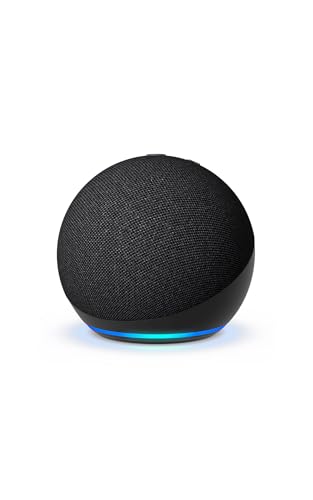
Amazon Echo Dot (5th Gen)
A compact smart speaker using a small microphone array, representative of how budget and mid-range devices handle wake word detection in everyday noisy rooms like kitchens.

Google Nest Audio
A smart speaker with a microphone array tuned for far-field pickup, often cited as handling moderate background noise reasonably well relative to its size.
Questions worth asking
Why does my smart speaker respond fine in a quiet room but not in the kitchen?
Kitchens typically have more competing noise sources like running water, appliances, and hard reflective surfaces, all of which make it harder for the microphone array to isolate your voice.
Does having more microphones in a smart speaker actually improve noisy room performance?
Yes, more microphones give the beamforming algorithm more data points to better estimate and isolate the direction your voice is coming from among competing noise.
Can shouting at a smart speaker over background noise make it worse at understanding you?
Yes, raising your voice significantly can distort the natural speech pattern the recognition model is trained on, sometimes making recognition worse rather than better.
Why does a TV playing in the background confuse voice assistants so often?
TV audio often contains speech itself, which competes directly with your voice in the same frequency range the speaker is trying to isolate, making separation particularly difficult.
Does the direction I’m facing relative to the speaker affect how well it hears me?
Facing toward the speaker can slightly improve pickup since voice projects more directly, though most modern far-field microphone arrays are designed to handle various speaking angles reasonably well.
Can a firmware or software update improve a smart speaker’s noise handling?
Yes, manufacturers periodically improve their noise suppression and wake word algorithms through software updates, which can measurably improve performance on existing hardware.
Is it better to pause music before giving a voice command, or will the speaker filter it out?
Pausing music, especially music playing from the speaker itself, significantly improves recognition, since the device has an easier time with external noise than with its own simultaneous audio output.
Why does the speaker sometimes think it heard its wake word when no one said it?
Background noise, particularly other speech or TV audio, can occasionally contain acoustic patterns similar enough to the wake word to trigger a false positive.
Does speaker placement in a room affect how well it performs in noisy conditions?
Yes, placing a speaker away from major noise sources like a TV or kitchen appliances, and avoiding corners that cause excessive sound reflection, generally improves recognition.
Can multiple smart speakers in the same room interfere with each other during noisy commands?
Multiple speakers in close proximity can sometimes both attempt to respond to the same command, which manufacturers typically address through proximity detection, though it can occasionally cause confusion.
Does distance from the speaker matter more than room noise level?
Both matter together, but increased distance generally reduces the effective signal to noise ratio reaching the microphones, compounding whatever background noise is already present.
Is there a setting to make a smart speaker more sensitive in noisy environments?
Some devices offer a sensitivity or wake word adjustment in their companion app, though increasing sensitivity can also increase false positive triggers from background noise.
Why do some smart speakers handle noisy rooms better than others of a similar price?
Differences in microphone array design, the number of microphones, and the sophistication of the noise suppression algorithm can vary meaningfully even among similarly priced devices.
Does background conversation confuse voice recognition more than mechanical noise like a fan?
Generally yes, since conversational speech overlaps more directly in frequency and pattern with the voice the device is trying to recognize, compared to steady mechanical noise like a fan.
Can external microphones or smart home mic accessories help in consistently noisy rooms?
Some smart home ecosystems support additional microphone accessories placed closer to where commands are typically given, which can improve recognition in persistently noisy spaces.
Does accent or speaking pace affect recognition accuracy in noisy conditions specifically?
Speech recognition models can show varying accuracy across accents and speaking paces generally, and that baseline variability becomes more pronounced once background noise is added to the challenge.
Does background music from a different room still interfere as much as music in the same room?
Music from another room generally interferes less, since the microphone array picks up a weaker signal from it compared to noise originating close to the device.
Can renaming the wake word to something less common improve recognition in noisy rooms?
Some platforms offer alternate wake word options, and a less common phrase can occasionally reduce false triggers from background conversation that happens to resemble a very common wake word.
Is it true that some smart speakers use noise cancellation similar to headphones?
Many higher end models use software based noise suppression that shares some underlying concepts with headphone noise cancellation, though it is applied to isolate your voice for recognition rather than to cancel sound for a listener.
Does a smart speaker’s volume level while playing audio affect how well it hears a command over itself?
Yes, most devices use a technique called echo cancellation to separate their own output from an incoming voice command, but very loud self playback still makes that separation harder than quieter playback.
Where this leaves you
A smart speaker misfiring in a noisy room is less about a broken device and more about an unsolved hard problem in audio processing: separating one voice from competing sound using the same microphones. Reducing competing noise and speaking normally, rather than louder, does more good than almost any setting change.
Marcus Chen
Marcus covered consumer electronics for enthusiast tech publications for six years before joining ChoiceCrest. He specializes in translating manufacturer spec sheets into plain-language buying advice, with a focus on audio, computing accessories and smart-home gear.


