Why Do Kitchen Scales Need to Be Recalibrated Over Time?
Kitchen scales need periodic recalibration because the internal load cell, the sensor that converts weight into an electrical signal, gradually drifts out of true accuracy over time due to normal wear, temperature changes, minor mechanical shock from drops or rough handling, and simple component aging. Even a scale that looks and functions normally can quietly read a few grams off from the actual weight without the user realizing it until a recipe or portion starts coming out wrong.
What is physically drifting inside the scale
The load cell uses a strain gauge that flexes very slightly under weight and reports that flex as a tiny voltage change. The precision of that voltage-to-weight conversion gradually shifts with age, temperature exposure, and repeated use, which is the root cause of calibration drift.
Why temperature changes affect accuracy
The strain gauge’s electrical properties are mildly sensitive to temperature, so a scale moved between a cold pantry and a warm kitchen, or used right after being near a hot stove, can read slightly differently until it either acclimates or is recalibrated.
Why drops and rough handling speed up the problem
Even a minor drop that does not visibly damage the scale can subtly bend or stress the load cell, shifting its calibration far more abruptly than gradual aging alone would.
Why recalibration restores accuracy rather than fixing something broken
Recalibration uses a known reference weight to let the scale’s internal electronics relearn the correct voltage-to-weight relationship, which corrects drift without requiring any physical repair, as long as the load cell itself is not physically damaged.
How to tell a scale actually needs recalibration versus needs replacing
If a scale with a known calibration weight reads consistently off by the same margin and a calibration cycle does not fix it, that generally points to a failing load cell rather than something recalibration alone can correct.
Why some tasks are more sensitive to small drift than others
Baking, where ratios of flour, water, and leavening matter precisely, is far more affected by a few grams of drift than casual produce weighing, which is why bakers in particular tend to notice calibration drift before casual cooks do.
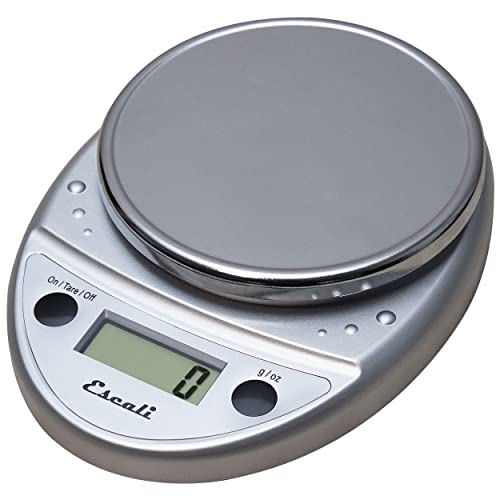
Escali Primo Digital Kitchen Scale
A digital kitchen scale with a built-in manual calibration function for correcting load cell drift over time.
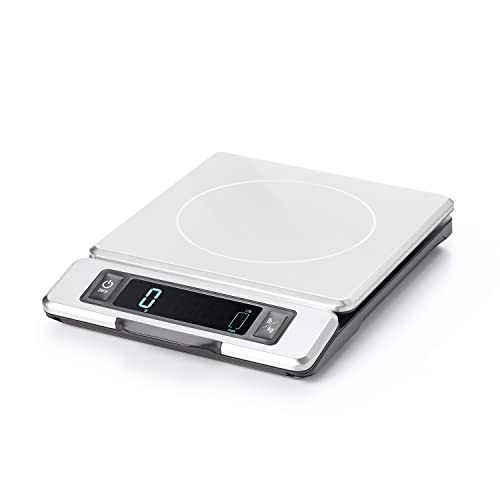
OXO Good Grips 11-Pound Food Scale
A household food scale commonly used for everyday cooking and baking, representative of the type of scale that benefits from periodic calibration checks.
Questions worth asking
How often should a kitchen scale actually be recalibrated?
There is no universal fixed interval, but checking every few months with a known weight, or any time the scale has been dropped or shows inconsistent readings, is a reasonable practice.
What do you need to recalibrate a kitchen scale at home?
Most digital scales need a specific known reference weight, often listed in the manual, along with the scale’s built-in calibration mode, usually accessed through a button combination.
Can you recalibrate a scale without an official calibration weight?
Some people use coins or other items of a documented exact weight as a substitute, though an actual calibration weight gives a more reliable, verified reference than most household substitutes.
Does every digital kitchen scale support manual recalibration?
No, some budget models do not include a calibration feature at all, in which case drift generally means the scale needs replacing rather than correcting.
Why does my scale read differently when I move it to a different counter?
Uneven or unstable surfaces can introduce reading errors independent of calibration drift, placing a scale on a hard, flat, stable surface is important for getting its true calibrated accuracy.
Can battery level affect a kitchen scale’s accuracy?
On most modern scales, low battery triggers a warning rather than silently skewing the reading, but on some cheaper models, very low battery can occasionally cause erratic readings.
Does zeroing or taring a scale count as calibration?
No, taring just resets the display to zero with a container already on the scale, it does not correct any underlying drift in the load cell’s actual weight measurement.
Why do professional kitchens recalibrate scales more often than home cooks?
Commercial environments often have stricter portion consistency requirements and heavier daily use, both of which make drift more consequential and worth catching sooner.
Can humidity affect a kitchen scale’s calibration?
High humidity can occasionally affect internal electronics over the long term, though it is a less direct factor than temperature swings or physical shock from drops.
Is it normal for a brand new scale to need calibration right out of the box?
Most ship pre-calibrated and ready to use, though checking against a known weight when new is a good habit to catch the rare factory calibration miss early.
Does recalibration fix a scale that will not power on or has a cracked display?
No, recalibration only addresses weight measurement accuracy, physical or electronic failures unrelated to the load cell’s calibration need actual repair or replacement.
Can extreme weight overload damage a scale’s calibration?
Yes, loading a scale well beyond its rated maximum capacity can physically stress or damage the load cell, often causing a more severe and sometimes permanent calibration problem.
How do you know your scale needs recalibrating without a calibration weight on hand?
Weighing a few household items with a well documented standard weight, like a specific coin, can give a rough sanity check, though it is less precise than an actual calibration weight.
Does a more expensive kitchen scale drift less over time than a cheap one?
Generally yes, higher quality load cells and better internal shielding tend to hold calibration longer and more consistently than low cost components in budget scales.
Does moving a scale frequently between locations make it drift faster?
Frequent moving itself is not the issue, but the handling and minor bumps that often come with moving a scale around can contribute to drift over time more than staying in one place would.
Can a scale read correctly for light items but incorrectly for heavy ones?
Yes, calibration drift and load cell wear do not always affect the entire weight range evenly, which is why checking accuracy at a weight similar to what you actually measure most often matters.
Is there a difference in how often mechanical spring scales need adjustment compared to digital load cell scales?
Mechanical spring scales rely on physical spring tension rather than an electronic load cell, and they tend to need adjustment on a different schedule, often less frequently but with less fine precision overall.
Does repeatedly loading a scale near its maximum rated capacity affect calibration over time?
Yes, repeatedly loading a scale right at or near its maximum rated capacity can accelerate wear on the load cell, which may shorten the time before noticeable drift appears.
Can the surface a scale sits on, like a soft mat versus a hard counter, affect readings?
Yes, a soft or uneven surface can cause inconsistent readings independent of the scale’s actual calibration, a hard flat surface matters for both an accurate reading and performing calibration correctly.
Is it worth recalibrating a scale before a particularly precise baking task rather than waiting for a scheduled check?
Yes, for a precision-sensitive recipe, a quick calibration check right beforehand is a reasonable extra step even if the scale was checked more recently.
Does extreme cold, like storing a scale in an unheated garage, affect its calibration?
Yes, significant temperature extremes can affect the strain gauge’s electrical behavior more than normal kitchen temperature swings would, so storing a scale in a stable indoor environment helps it hold calibration longer.
Our take
Drift is a normal, expected part of how load cell scales work over time, not a sign of a defective product. A quick periodic calibration check with a known weight is the actual fix, replacing the scale is only necessary once calibration itself stops correcting the error.
Dana Whitfield
Dana spent eight years buying and merchandising for a regional kitchenware retailer before moving into editorial work. She has handled thousands of SKUs across cookware, small appliances and kitchen organization, and focuses on the practical differences that matter once a product is actually in daily use.


