Why Does a Juicer Leave More Pulp Than a Blender Smoothie?
A juicer leaves more pulp than a blender not because it is less efficient, but because it is doing the opposite job. A juicer mechanically separates pulp, meaning fiber, from liquid and discards or collects it separately, while a blender fully liquifies the entire fruit or vegetable, fiber included, which is why a blended result comes out as a thick smoothie rather than a clear juice. The extra pulp from a juicer is actually the point, a smoothie simply keeps everything blended in rather than filtering it out.
What a juicer is mechanically designed to do
Masticating and centrifugal juicers both grind or press produce and push the resulting liquid through a fine mesh screen or filter, physically separating the fiber, or pulp, from the juice that passes through.
What a blender does instead
A blender’s blades liquify everything in the container, including skins and fiber, into one uniform mixture with nothing physically filtered out. That is why the result is thicker and includes all the fiber a juicer would normally discard.
Why some juicers leave noticeably more pulp than others
Centrifugal juicers spin produce quickly against a mesh basket and tend to leave more pulp behind, meaning less complete extraction, than slower masticating or cold press juicers, which press more thoroughly and extract more juice from the same amount of produce.
Why pulp amount also varies by produce type
Fibrous vegetables like celery or kale leave more visible pulp than something like watermelon or cucumber, simply based on how much actual fiber structure the produce contains to begin with.
What people do with leftover juicer pulp
Adding it back into baked goods, soups, or compost are common uses rather than discarding it outright, since the pulp still carries nutritional fiber content even after being separated from the liquid.
The nutrition and fullness tradeoff between the two
Juice lacks the fiber a smoothie retains, which affects satiety and blood sugar response differently between the two drinks. Pulp removal is not a flaw of the juicer, it is a deliberate tradeoff of texture and nutrition for a smoother, lighter drink.
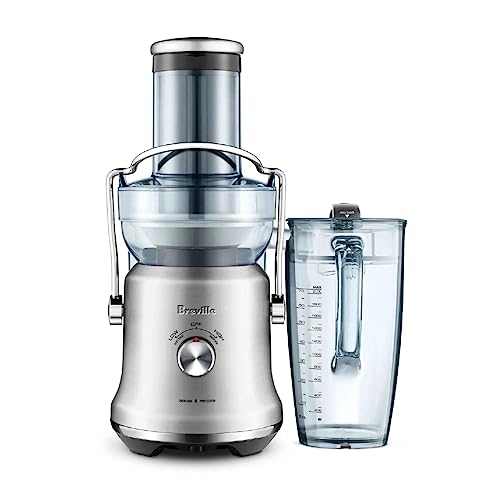
Breville Juice Fountain Cold Plus
A centrifugal juicer that spins produce quickly against a mesh filter basket, typically leaving somewhat more pulp behind than a slower extraction method.

Omega NC900HDC Masticating Juicer
A slow, cold press style masticating juicer that presses produce more thoroughly, generally leaving drier, more compact pulp behind than a centrifugal model.
Questions worth asking
Does a masticating juicer really leave less pulp than a centrifugal one?
Yes generally, the slower pressing action extracts juice more thoroughly from the same produce, leaving drier, more compact pulp than a fast-spinning centrifugal juicer typically does.
Can you put juicer pulp into a blender to make it smoother?
Yes, some people blend reserved pulp back into a smoothie or soup to reclaim the fiber and texture rather than discarding it.
Is pulp in juice actually unhealthy or just a texture preference?
Pulp is not unhealthy, it is fiber. Removing it is purely a texture and mouthfeel choice that defines juice versus a smoothie, not a health requirement.
Why does celery leave so much more visible pulp than an apple?
Celery has a stringy, fibrous structure that resists full breakdown, while an apple’s flesh breaks down more completely, leaving less fibrous residue behind in the juicer’s filter basket.
Does running produce through a juicer twice reduce the amount of pulp?
Running leftover pulp through again can extract a small amount of additional juice, but it yields diminishing returns, and the pulp that remains afterward is genuinely spent of most of its liquid.
Is cold press juicing the same thing as masticating juicing?
Yes, the terms are generally used interchangeably to describe the slower, press-based extraction method rather than fast-spinning centrifugal extraction.
Can a blender ever produce a pulp-free result like a juicer?
Only if the blended mixture is then strained through a cheesecloth or fine mesh afterward, a blender alone does not separate fiber the way a juicer’s built-in filter does.
Why does my juicer’s pulp come out wetter on some fruits than others?
Juicier, less fibrous produce like watermelon naturally leaves behind wetter pulp with more residual liquid than denser fibrous produce like carrots or kale.
Does more pulp mean the juicer is less powerful or lower quality?
Not necessarily, it more often reflects the juicer type, centrifugal versus masticating, and the specific produce being juiced, than raw power or build quality.
Is it worth buying a juicer specifically rated for low pulp output?
If a smooth, pulp-free glass of juice matters to you, a masticating or cold press model marketed around juice yield and low pulp is worth the higher price over a basic centrifugal model.
Can leftover pulp be frozen and used later?
Yes, many people freeze juicer pulp in portions to add to future baking, soups, or smoothies rather than using it immediately.
Does juicing leafy greens produce more pulp than juicing fruit?
Generally yes, leafy greens have more fibrous cell structure relative to their liquid content than most fruit, leaving more pulp behind per amount juiced.
Why does a centrifugal juicer sometimes feel wasteful with produce?
Its faster, less thorough extraction leaves more juice trapped in the discarded pulp compared to a masticating juicer, which is the main tradeoff for its faster juicing speed.
Is there a juicer type with essentially no leftover pulp at all?
No juicer eliminates pulp entirely, since separating pulp from liquid is the defining mechanical function of a juicer, but high-extraction masticating models minimize it noticeably compared to centrifugal designs.
Does peeling fruit before juicing reduce the amount of pulp produced?
It can for produce with tough or bitter skins, though for many fruits the skin itself contributes relatively little pulp compared to the fibrous flesh and pith.
Can a juicer’s mesh filter get clogged by pulp during use?
Yes, a filter basket can gradually clog with pulp during a long juicing session, which is why many juicers recommend pausing periodically to clear built-up pulp for consistent extraction.
Does juicing soft fruits like bananas work the same way as juicing harder produce?
Not well in most traditional juicers, very soft, low-liquid fruits like bananas tend to clog the mechanism rather than release juice the way firmer, higher-water produce does.
Is there a meaningful nutrient loss in the pulp that gets discarded?
Yes, pulp retains a meaningful share of the produce’s fiber and some nutrients, which is part of why saving and reusing pulp appeals to people trying to avoid food waste.
Does a juicer’s speed setting change how much pulp ends up in the final juice?
On juicers with adjustable speed, a slower setting often extracts more thoroughly with less pulp passing through, while a faster setting can push more fine pulp particles into the juice itself.
Can straining finished juice afterward remove pulp a juicer left behind?
Yes, running finished juice through a fine mesh strainer or cheesecloth catches any remaining fine pulp particles for an even smoother final result.
Does the age or sharpness of a juicer’s cutting components affect pulp output?
Yes, worn or dull cutting and grinding surfaces extract less efficiently over time, often resulting in wetter, less fully processed pulp than a newer or well maintained juicer would produce.
Does adding water while juicing change how much pulp separates out?
Most juicers are not designed to have water added during extraction, since the mechanism relies on the produce’s own moisture content to separate properly, adding water is more relevant to blending than juicing.
Is pulp content a useful way to judge a juicer’s overall extraction efficiency?
Yes, drier leftover pulp generally indicates more thorough juice extraction from the same amount of produce, which is one practical way to compare how efficiently different juicers perform.
The bottom line
Pulp is not a byproduct of a juicer doing its job poorly, it is the literal material being separated out by design. A blender never removes it in the first place, so the real comparison is not which machine leaves less pulp, but whether you actually want juice or a whole-fruit smoothie to begin with.
Dana Whitfield
Dana spent eight years buying and merchandising for a regional kitchenware retailer before moving into editorial work. She has handled thousands of SKUs across cookware, small appliances and kitchen organization, and focuses on the practical differences that matter once a product is actually in daily use.