Why Does a High Chair’s Tray Shape Affect How Much Mess Gets Made?
A high chair’s tray shape controls where dropped food and spilled liquid actually go, not just how the tray looks. A raised perimeter lip holds puree and liquid on the surface instead of letting it run off the edge, while the gap between the tray’s inner edge and the child’s torso determines how much food slides straight into a lap or onto the floor before it ever reaches a napkin. Tray depth, seam count, and surface texture add another layer on top of that, since smooth one-piece trays wipe clean in a single pass while textured or multi-piece trays trap food in grooves that reappear at the next meal.
The lip height does most of the work
A tray’s raised outer rim, often just a few millimeters tall, is the main barrier between a spilled cup of water and a wet floor. Trays with a low or nearly flat lip let liquid run straight over the side the moment the tray tips even slightly, while a taller perimeter wall holds that same spill long enough for a parent to catch it. This is also why purees and loose finger foods like peas or rice puffs scatter more off a shallow tray than a deeper one, even when the child’s motions are identical.
The torso gap matters more than people expect
Most trays do not form a perfect seal against a child’s stomach, and that gap is where a surprising amount of food disappears. A tray shaped to curve in close to the body, often called a contoured or wraparound design, closes most of that space so dropped food lands back on the tray surface instead of falling into the child’s lap or straight down to the floor. Trays with a wide, straight front edge leave a larger opening, which is part of why some very simple, flat tray designs earn a reputation for mess despite being easy to wipe clean otherwise.
Seams and texture change where food gets trapped
A tray molded as one smooth piece of plastic wipes clean with a single pass of a cloth, but many trays use a textured or ridged surface for grip, or are built from a tray insert sitting inside a tray frame. Every seam, ridge, or gap between pieces becomes a place where sauce, yogurt, or cracker crumbs lodge and dry out, and that residue often does not show up until the next meal when it flakes loose into new food. This is a cleaning problem more than a spill problem, but it compounds the same mess issue over repeated meals.
Tray size relative to reach changes what lands where
A wider, deeper tray simply gives a child more surface area to drop things onto before gravity takes over, which matters most in the months when a child is still learning to grab, release, and throw food on purpose. A narrow or shallow tray has less room to catch anything thrown slightly off-center, so more of that food ends up on the chair’s seat, the child’s clothing, or the floor around the chair rather than back on the tray itself.
Double-tray and removable-insert systems contain mess differently
Some high chairs use a two-layer tray system, where a smaller removable topper snaps onto a larger base tray that stays attached to the chair. Food and spills stay on the removable top piece, which lifts off and goes straight into a sink or dishwasher, while the base tray underneath stays clean and never needs scrubbing. This does not reduce how much food initially spills, but it narrows down to one washable piece where the resulting mess actually has to be cleaned from, which is a meaningfully different problem than tray shape alone solves.
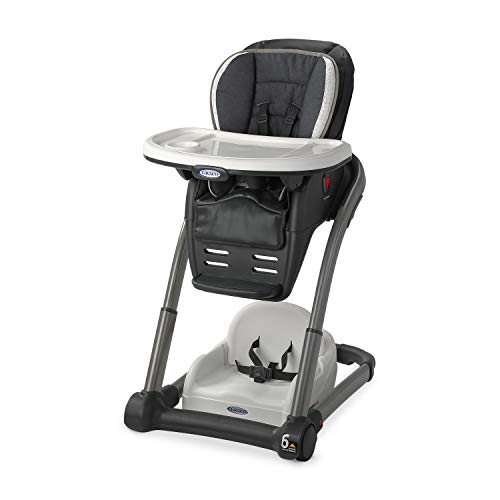
Graco Blossom 6-in-1 Convertible High Chair
Uses a two-layer tray system with a removable, dishwasher-safe top tray that snaps onto a base tray, so spills stay on the piece that lifts out for cleaning.

IKEA Antilop High Chair
Known for a shallow, minimal-lip tray that wipes clean quickly but offers less of a barrier against liquid running off the edge compared to deeper, high-rim trays.
Good to know
Does a deeper tray always mean less mess?
Generally yes for solid foods and crumbs, since there is more surface area to catch what gets dropped or thrown, though a deep tray with a wide front gap can still let plenty of food slide into a child’s lap before it ever touches the tray floor.
Why do some high chair trays feel sticky even after wiping?
That is usually residue trapped in seams, textured grip patterns, or the gap where a removable insert meets its frame, areas a quick wipe does not reach as thoroughly as a flat surface.
Can a tray’s shape affect how well suction bowls work?
Yes, trays with a smooth, flat center hold suction-bottom bowls and plates more reliably than textured or contoured trays, where ridges can break the seal needed for suction to hold.
Is a one-piece tray easier to clean than a tray with a removable insert?
A one-piece tray has fewer places for food to hide, but a removable insert can usually go straight into a dishwasher, which some parents find faster than hand-wiping a fixed tray around its edges.
Why does my child’s high chair tray drip onto the floor even with a raised lip?
A raised lip holds liquid up to a point, but it is not a sealed wall, so enough volume or enough tilt from a child pushing on the tray can still send liquid over the edge.
Do textured trays help or hurt mess control?
Texture mainly helps with grip, giving a child more purchase on finger foods, but it tends to hurt cleanup because the same grooves that hold food in place for grabbing also hold crumbs and residue after the meal.
How much does the gap between the tray and the high chair seat matter?
It matters for crumbs and small pieces of food specifically, since anything that rolls off the tray’s inner edge can drop straight through that gap onto the floor or into the seat’s crevices rather than landing anywhere visible.
Will a bigger high chair tray actually reduce floor mess?
In most cases yes, because a larger catch area means more dropped or thrown food lands back on the tray instead of past its edges, though this depends on how wide the tray is relative to the child’s actual reach.
Are tray liners or silicone mats a good fix for a tray’s mess problems?
They can help on trays with a shallow lip or a lot of texture, since a silicone mat creates one smooth, higher-walled surface over the top, though it adds one more piece that needs its own cleaning after each meal.
Why do some high chairs skip a removable tray altogether?
A few compact or travel-style high chairs use a fixed tray or no tray at all to save weight and folding complexity, trading some mess containment for portability.
Does tray shape affect how food temperature holds during a meal?
Only marginally, since tray material and ambient air matter far more than the tray’s shape or lip height for how quickly food cools.
Can a high chair’s tray shape make self-feeding messier on purpose, in a good way?
Some designs intentionally keep a shallow lip and open shape specifically to let a child explore food with less restriction, treating the resulting mess as a normal and expected part of early self-feeding rather than something to minimize.
Is it normal for liquid to pool in the corners of a high chair tray?
Yes, most trays are molded with a very slight slope toward the center or toward drainage points, but corners near the lip can still collect small pools of liquid, especially on trays with a flatter overall profile.
Does a high chair’s tray shape change how mess looks as the child gets older?
The tray itself does not change shape, but how a child uses it does, so a tray that handled infant purees fine can show new mess patterns once a toddler starts throwing finger foods or pushing plates around.
Should I prioritize tray shape over other high chair features when buying?
Tray shape is worth checking closely if daily cleanup time is a real concern, but seat recline, safety harness fit, and ease of folding usually matter more for day-to-day usability than tray design alone.
Our take
Tray shape is not a cosmetic detail, it is the main variable separating a high chair that keeps most mess contained from one that sends food straight to the floor. A taller lip, a closer torso fit, and fewer seams all point in the same direction, toward less cleanup, but no tray shape eliminates mess entirely once a child is actively exploring or throwing food, so the honest expectation is less mess, not none.
Rachel Simmons
Rachel previously worked in child-product retail and brings a practical, detail-first eye to gear reviews, focusing on safety standards, ease of use and the fine print that matters most for new caregivers.


