Why Do Garden Kneeling Pads Matter for Long Weeding Sessions?
A kneeling pad matters because it changes how pressure and moisture reach your knees during an activity that keeps you in one awkward position for a long stretch of time. Without one, body weight concentrates on a small, bony area of the knee against hard or wet ground, which causes joint strain and knee pain well before most gardeners would otherwise want to stop. A decent pad spreads that pressure out and keeps cold, dampness, and small debris away from direct contact with skin and joints.
What actually happens to your knees without one
Kneeling directly on soil or a hard patio surface puts your body weight through the kneecap and the thin layer of tissue around it, an area with very little natural cushioning compared to, say, your thigh or seat. Over even twenty or thirty minutes, that concentrated pressure can restrict blood flow and press on nerves, which is why knees start aching well before the rest of the body feels fatigued during a weeding or planting session.
Why the material of the pad changes how much it actually helps
Thin foam pads compress quickly under body weight and stop cushioning effectively after extended kneeling, while denser, thicker foam or gel filled pads resist compressing all the way down and keep distributing pressure for longer sessions. A pad that bottoms out partway through a task is only marginally better than no pad at all for the remainder of that time.
The moisture and temperature problem a pad solves that padding alone does not
Garden soil holds moisture and stays cooler than air temperature for much of the day, and kneeling directly on damp or cold ground transfers both into joints over time, which some gardeners report as a dull ache that lingers after the task is done. A pad with a water resistant underside blocks that moisture transfer even when the cushioning itself is otherwise basic.
Why knee pain from gardening often shows up later, not during the task
Because kneeling compresses tissue and reduces blood flow gradually rather than causing sharp, immediate pain, many gardeners do not notice real discomfort until after they stand up or the next morning, which makes it easy to underestimate how much a session without proper padding is actually costing the joints in the moment.
How a kneeler seat hybrid changes the equation compared to a flat pad
A garden kneeler and seat combination lets you alternate between kneeling and sitting without getting up and repositioning tools, which matters because changing position periodically is one of the most effective ways to prevent the joint strain that comes from staying in one kneeling posture for an extended stretch, something a flat pad alone cannot offer.
Who benefits most from a dedicated pad versus just toughing it out
Gardeners with existing knee issues, older gardeners, and anyone doing extended sessions of an hour or more get the clearest benefit, since the cumulative effect of unpadded kneeling compounds with both age and session length. Someone doing five minutes of quick weeding occasionally will notice far less difference than someone spending a weekend morning on a full garden bed.

Gorilla Grip Extra Thick Kneeling Pad
A dense, water resistant foam pad thick enough to resist bottoming out during longer kneeling sessions, used for gardening as well as general home projects.
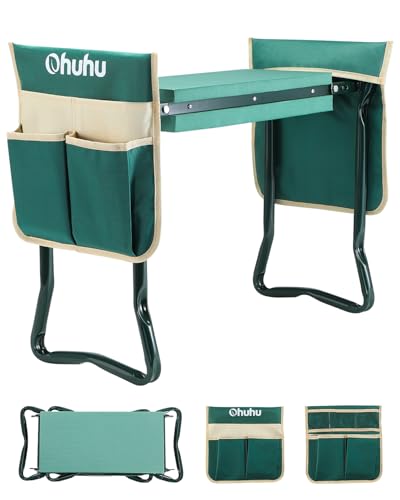
Ohuhu Garden Kneeler and Seat with Tool Pouch
A folding kneeler seat combination that flips between a padded kneeling position and a bench seat, with side pouches for small tools during extended weeding sessions.
Questions worth asking
How thick should a garden kneeling pad be to actually make a difference?
A pad thinner than about half an inch tends to compress flat under body weight within minutes, so most gardeners find at least three quarters of an inch to a full inch of dense foam necessary to still feel cushioned after thirty minutes or more.
Can a yoga mat work as a substitute for a dedicated kneeling pad?
A yoga mat offers some initial cushioning but compresses quickly under concentrated knee pressure and has no water resistance, so it helps briefly but does not hold up the way a purpose built garden kneeling pad does during a longer session.
Do kneeling pads help with existing knee injuries or arthritis?
Yes, in the sense that reducing direct pressure and joint compression during kneeling is generally helpful for anyone with existing knee pain, though a pad does not treat arthritis itself and someone with significant joint issues should still limit how long they stay in a kneeling position regardless of padding.
Why do some kneeling pads feel fine at first but uncomfortable after twenty minutes?
That usually means the foam density is too low, so the pad feels soft and supportive while fresh but bottoms out under sustained weight, at which point your knees are effectively back on the hard surface underneath with just a thin layer of compressed foam between.
Is a kneeler seat combo worth it over a simple flat pad?
For sessions longer than about twenty or thirty minutes, a kneeler seat combo is usually worth it because the ability to switch positions reduces the joint strain that comes from staying kneeling the whole time, which a flat pad cannot offer on its own.
Does the size of the pad matter, or just the thickness?
Size matters for comfort and stability, since a pad too small to fully support both knees forces uneven weight distribution, but thickness is the bigger factor for how well pressure is actually cushioned over time.
Can kneeling pads get moldy if left outside?
Yes, foam pads left outside in damp conditions can develop mold or mildew over time, which is why most are designed to be brought inside between uses or at minimum stored somewhere dry rather than left on the ground or in a damp shed.
Do gel filled pads work better than foam for gardening specifically?
Gel filled pads typically distribute pressure a bit more evenly than foam and resist bottoming out longer, though they also tend to be heavier and pricier, so many gardeners find dense foam a reasonable middle ground for typical use.
Is it normal for knees to still ache the next day even with a pad?
Yes, some residual ache the next day is common after an extended kneeling session even with good padding, since a pad reduces but does not eliminate joint compression, and alternating positions or taking breaks matters as much as the pad itself.
Do kneeling pads help on hard patio surfaces the same way they help on soil?
Pads help on both surfaces, but the benefit is somewhat different: on hard patio or concrete the pad is mainly softening a rigid surface, while on soil it is also blocking moisture and cold from reaching the knees directly.
How do you clean a foam garden kneeling pad after muddy use?
Most foam garden kneeling pads can be rinsed with a hose and mild soap, then air dried fully before storage, since trapping moisture inside a closed foam structure is what tends to cause odor or mildew over repeated use.
Can a kneeling pad prevent long term knee damage from frequent gardening?
A pad reduces the pressure and strain of any single session, which likely helps over the long run, but it is not a guaranteed prevention against cumulative joint wear from years of frequent kneeling, especially without also varying position and taking breaks.
Is there a real difference between cheap foam pads and more expensive ones?
The main real difference is foam density and how well the pad resists compressing flat under sustained weight, along with build quality of stitching and water resistant covering, rather than any dramatic difference in the basic concept.
Do kneeling pads help with back strain too, or just the knees?
Indirectly yes, since a kneeler seat design that lets you sit upright periodically also reduces the hunched forward posture that contributes to lower back strain during long weeding sessions, which a flat kneeling pad alone does not address.
Our take
A kneeling pad is one of the cheapest, least glamorous upgrades in a garden shed, but the mechanism behind why it helps is straightforward: less direct pressure and less cold or moisture transfer during a task that otherwise keeps you locked in one position for a long stretch. Anyone gardening in short bursts will notice less difference than anyone doing a full weekend bed cleanup.
Sierra Daniels
Sierra's background is in landscape design and nursery retail. She focuses on lawn and garden equipment, outdoor furniture and gear durability, weighing published specs against how materials actually hold up outside.