Why Do Diaper Bags Need Insulated Pockets?
Insulated pockets in a diaper bag exist to slow how fast a bottle, pumped milk, or a food pouch warms or cools while you are away from a refrigerator, not to actively chill anything on their own. That distinction matters because infant formula and breast milk have a fairly short safe window at room temperature, and a few extra minutes of slower warming can be the difference between finishing a bottle and having to toss it.
What the insulation layer is physically doing
An insulated pocket is lined with a foil backed foam or a thin layer of thermal material rather than plain fabric, which slows the rate heat moves between the outside air and whatever is inside the pocket. It does not generate cold the way a refrigerator does. Left alone long enough, a bottle inside an insulated pocket will still reach room temperature, it just takes noticeably longer to get there than it would in a plain fabric pocket sitting in a warm car or diaper bag.
Why bottle temperature is more time sensitive than most parents expect
Prepared infant formula is generally considered safe at room temperature for about two hours before bacterial growth becomes a real concern, and that window shrinks further in a hot car or on a warm day. Pumped breast milk has a similarly short safe window outside a cooler. An insulated pocket buys extra time inside that window, which is often the entire point for a parent running errands or sitting through a longer daycare pickup than planned.
What an insulated pocket cannot do on its own
Without an ice pack or a frozen gel pack inside it, an insulated pocket is only slowing temperature change, not maintaining a cold temperature for hours. Parents who need milk to stay meaningfully cold for a full day, such as during daycare drop off in the morning for an afternoon bottle, still need to pack an ice pack alongside the insulated pocket. The pocket by itself is suited to shorter outings of an hour or two, not all day cold storage.
How an insulated pocket differs from a regular side pocket
A standard diaper bag pocket is just fabric, so a bottle inside heats or cools at close to the same rate as the air around the bag. An insulated pocket is also usually a separate zippered compartment rather than an open sleeve, which keeps a slightly damp or condensation prone bottle away from diapers, wipes, or anything else that should stay dry. That separation is as practically useful as the thermal benefit for many parents.
Who actually benefits most from this feature
Pumping parents carrying milk home from work, families doing daycare drop off with a bottle that needs to last until a specific feeding time, and anyone traveling with formula without reliable access to a fridge get the most real benefit. A parent who is always within a few minutes of home or a fridge, feeding on demand without much time between pumping or mixing and feeding, will notice the feature far less.
What to pair with an insulated pocket for real cold retention
A small reusable ice pack or a frozen gel pack sized to fit the pocket does most of the actual cooling work, with the insulation then slowing how fast that cold escapes. Without an ice pack, treat the insulated pocket as a way to buy an extra thirty minutes to an hour before food reaches room temperature, not as a substitute for a cooler bag on a longer outing.
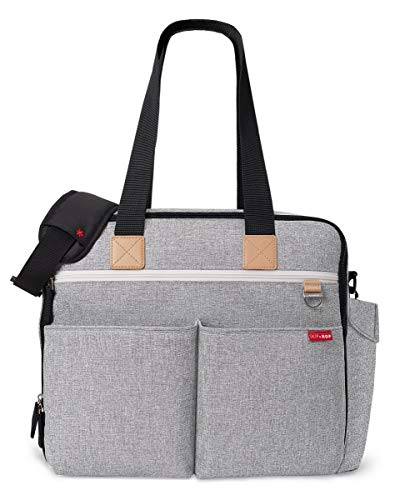
Skip Hop Duo Signature Diaper Bag
A structured diaper bag with a dedicated insulated bottle pocket on the side, separate from the main compartment holding diapers and wipes.

Bag Nation Diaper Bag Backpack
A backpack style diaper bag with insulated side pockets sized for two bottles, along with a stroller strap and a dedicated wipes pocket.
Common questions
How long does an insulated diaper bag pocket actually keep a bottle cold?
Without an ice pack, expect it to slow warming by roughly thirty minutes to an hour compared to a regular pocket, not to keep a bottle meaningfully cold for several hours on its own.
Do I still need an ice pack if my diaper bag has insulated pockets?
Yes, for anything beyond a short one or two hour outing. The insulation slows temperature change, an ice pack is what actually keeps the contents cold.
Can insulated pockets keep food warm instead of cold?
Yes, the same slowed heat transfer works in both directions, so a warmed bottle or a food pouch will also cool down more slowly inside an insulated pocket than in a plain one.
Is it safe to put a bottle of formula in an insulated pocket for a full daycare day?
Not without an ice pack. A full day easily exceeds the safe room temperature window for prepared formula, so the pocket alone is not enough for that length of time.
Why do some diaper bags put the insulated pocket on the outside rather than inside the main compartment?
An external insulated pocket is quicker to access without opening the whole bag and keeps a potentially damp or sweating bottle away from diapers and other dry contents.
Does an insulated pocket affect how much a diaper bag can hold overall?
Slightly, since the padded lining takes up a little interior space compared to a plain fabric pocket of the same outer size, though most diaper bags account for this in the overall bag dimensions.
Can breast milk storage bags go directly in an insulated pocket, or do they need a hard container?
Storage bags can go directly in, though a small rigid container or a dedicated milk cooler sleeve inside the pocket reduces the risk of a bag getting punctured or leaking against other items.
Do insulated pockets wear out or lose effectiveness over time?
The foil or foam lining can degrade with repeated washing or heavy use over a few years, gradually becoming less effective at slowing temperature change, similar to how an older cooler bag loses some of its insulating power.
Is a separate small cooler bag better than relying on a diaper bag’s insulated pocket?
For all day cold storage, yes, a dedicated cooler bag with its own ice pack usually outperforms a diaper bag’s built in pocket, which is sized more for convenience than maximum insulation.
Do all diaper bags marketed as having insulated pockets perform the same?
No, insulation quality varies by lining thickness and material, and a bag’s marketing description rarely specifies exactly how well the pocket performs compared to a plain pocket.
Can I use the insulated pocket for something other than bottles, like snacks or a juice box?
Yes, it works for any food or drink item a parent wants to keep from warming or cooling quickly, not just infant bottles.
Does the insulated pocket need to be washed differently than the rest of the bag?
Usually it can be wiped down the same as other pockets, though some linings are not fully machine washable the way fabric exterior sections are, so checking the specific bag’s care instructions before washing is worth doing.
Why do some parents skip the insulated pocket feature entirely and just use a regular bottle bag?
Parents who are rarely more than a short walk from a fridge, or who feed on a schedule that matches when milk is freshly prepared, often find the extra insulation unnecessary for their specific routine.
Is it normal for condensation to build up inside an insulated pocket with a cold bottle?
Yes, this is a normal side effect of the temperature difference between the cold contents and the warmer air outside, which is part of why these pockets are usually separated from the main diaper and clothing compartment.
Do insulated pockets make a diaper bag noticeably heavier?
Only marginally, the padded lining adds a small amount of weight compared to plain fabric, far less than the weight of an ice pack if one is added inside.
Can an insulated pocket replace a bottle warmer for on the go feeding?
No, it works in the opposite direction, slowing temperature loss or gain rather than actively heating anything, so a cold bottle inside an insulated pocket stays cold longer but does not warm up on its own.
Should I buy a diaper bag specifically for the insulated pocket feature, or is it a minor add-on?
If you regularly carry prepared bottles or pumped milk away from a fridge for more than a few minutes at a time, it is worth prioritizing. If feeding happens mostly at home or on demand, it is a reasonable bonus feature rather than a deciding factor.
Our take
The insulated pocket is doing a narrower job than its name suggests, it slows temperature change rather than creating cold storage, which means it genuinely helps for short outings but still needs an ice pack for anything approaching a full day away from a fridge.
Rachel Simmons
Rachel previously worked in child-product retail and brings a practical, detail-first eye to gear reviews, focusing on safety standards, ease of use and the fine print that matters most for new caregivers.