Why Do Car Detailing Brushes Come in So Many Different Shapes?
Different detailing brush shapes exist because cars have wildly different surfaces to clean, from flat painted panels to tight vent slats to deep wheel barrel curves, and a single bristle shape and stiffness simply cannot reach or safely clean all of them. A brush soft and flexible enough for interior air vents would be too weak to dislodge brake dust from a wheel, while a brush stiff enough for wheels would scratch delicate interior plastic or leather.
Why bristle stiffness is matched to surface hardness and grime type
Softer natural or synthetic bristles are used on surfaces that scratch easily or need gentle agitation, like interior trim, leather, or glass, while stiffer bristles are reserved for durable surfaces caked in heavier grime, like wheel barrels coated in baked-on brake dust, where a soft brush would simply fail to dislodge the buildup.
Why brush head shape matters as much as bristle stiffness
A long, narrow brush head reaches into tight gaps like door jambs, emblem crevices, and air vent slats where a wide brush simply cannot physically fit, while a wide, flat brush head covers broad flat areas like carpets or floor mats more efficiently than a narrow one ever could.
Why wheel-specific brushes look so different from interior brushes
Wheel brushes are often built with a wide, bulbous, densely packed bristle head on a long handle specifically to reach deep into wheel barrels and around spokes without requiring you to put your hand close to sharp wheel edges, a shape that would be completely impractical and oversized for cleaning a dashboard vent or cupholder.
Why some brushes use boar’s hair or horsehair instead of synthetic bristles
Natural bristles like boar’s hair taper to a fine point and hold a small amount of product, like wax or detailing spray, differently than synthetic bristles do, which some detailers prefer for specific finishing tasks on paint, though synthetic bristles are generally more consistent, more affordable, and more resistant to breaking down from chemical cleaners over repeated use.
Why color coding brushes actually matters for avoiding cross contamination
Using the same brush on both wheels, which collect abrasive brake dust and road grime, and on paint or interior surfaces risks transferring tiny abrasive particles that can cause fine scratches, which is why many detailers keep color coded or clearly separated brush sets specifically to avoid using a wheel brush anywhere near paint.
Why specialty shapes exist for specific small components
Brushes designed specifically for things like engine bay components, wheel lug nuts, or emblem lettering exist because those components have shapes and surrounding surfaces, like delicate wiring or recessed lettering, that general purpose brushes either cannot physically access or risk damaging during cleaning.

Chemical Guys Nooks and Crannies Detailing Brush
A soft, flexible bristle brush shaped to reach tight gaps like vents, emblems, and door jambs without scratching delicate interior or exterior trim.
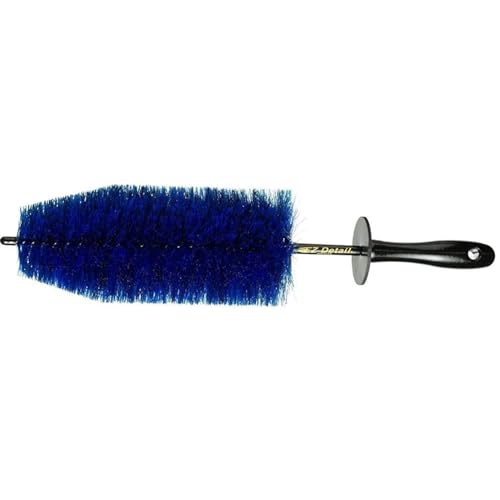
EZ Detail Brush
A wheel and tire brush with a bulbous, densely packed bristle head designed to reach into wheel barrels and spokes that flatter brushes cannot access as effectively.
Questions worth asking
Can one all-purpose brush realistically replace a full detailing brush set?
A single all-purpose brush can handle basic tasks reasonably well, but it will compromise on either reach, stiffness, or safety for at least some surfaces, which is why dedicated sets exist for anyone detailing regularly rather than occasionally.
Why do some detailing brushes have angled or bent handles?
Angled or bent handles let the bristle head reach into recessed or angled spaces, like behind a wheel spoke or into a sloped dashboard vent, at a usable angle without forcing your hand into an awkward or cramped position.
Is it actually risky to use a wheel brush on painted surfaces?
Yes, wheel surfaces collect abrasive brake dust particles that can transfer onto a brush’s bristles, and using that same brush later on paint risks dragging those abrasive particles across the clear coat, which is a realistic cause of fine scratching over repeated use.
Do softer bristles mean a brush is less effective, or just safer?
Softer bristles are chosen specifically for delicate surfaces where effectiveness is less important than avoiding damage, so softness is a deliberate safety tradeoff for those surfaces rather than a general sign of lower quality or weaker cleaning power.
Why do interior vent brushes often look like tiny paintbrushes?
A narrow, tapered shape similar to a paintbrush lets the bristles reach into the thin slats of an air vent or the small gaps around buttons and trim pieces, where a wider or flatter brush head simply cannot physically fit.
Does bristle material affect how well a brush holds cleaning product?
Yes, denser or more textured bristles tend to hold more liquid product, like a detailing spray or diluted cleaner, which can be useful for tasks that benefit from a small reservoir of product rather than constant redipping.
Can natural bristle brushes wear out faster than synthetic ones?
Yes, natural bristles can break down more noticeably from repeated exposure to strong chemical cleaners compared to most synthetic bristles, which tend to hold up more consistently over the same number of uses.
Why do some detailing brush sets come with so many near-identical sizes?
Near identical sizes in a set are usually meant for slightly different gap widths across different vehicle makes and models, since vent slat spacing, emblem recess depth, and trim gaps vary enough between cars that one size does not always fit every situation.
Is a stiffer brush always better for stubborn dirt, or can it cause damage?
A stiffer brush is not automatically better, since excessive stiffness on a surface that cannot handle it can create fine scratches or wear away soft materials like matte trim or vinyl, so stiffness should match the surface’s actual durability, not just the amount of dirt present.
Do detailing brushes need to be cleaned differently depending on their bristle type?
Yes, natural bristle brushes generally need gentler cleaning and should avoid harsh solvents that can damage the hair structure, while synthetic bristles typically tolerate a wider range of cleaning chemicals without breaking down as quickly.
Why do engine bay brushes sometimes have a completely different handle length than other brushes?
Engine bay brushes often use a longer handle specifically to keep hands farther from hot components or sharp edges under the hood, a safety consideration that does not apply the same way to an interior cupholder or dashboard brush.
Can using the wrong brush shape actually cause more harm than using no brush at all?
Yes, using a stiff wheel brush on soft interior trim, for example, can scratch or mar the surface more than simply wiping it by hand without a brush at all, so the wrong shape and stiffness combination is not a neutral choice.
Do leather-specific detailing brushes differ meaningfully from general interior brushes?
Yes, leather specific brushes typically use very soft, fine bristles meant to work cleaner or conditioner into the leather’s grain without scuffing the surface, which is a notably gentler design than brushes meant for general interior plastic or vinyl.
Is brush shape really that important, or is it mostly a marketing distinction?
It is a genuine functional distinction rather than purely marketing, since reach, stiffness, and surface safety are real physical constraints that different car surfaces impose, even though brand packaging understandably emphasizes the variety as a selling point too.
Where this leaves you
The variety in detailing brush shapes is less about marketing and more about the genuinely different physical constraints each part of a car presents, from tight vent slats to abrasive wheel grime. The mistake that actually causes damage is using one brush everywhere rather than matching stiffness and shape to the surface.
Tony Russo
Tony trained as an automotive technician and spent years in service and parts retail before moving into writing. He focuses on garage tools, car care products and accessories from a hands-on maintenance perspective.


