Why Do Some Curtains Block More Light Than Others at the Same Thickness?
Light blocking depends far more on weave density, fabric layering, and whether a curtain has a dedicated blackout lining than on raw fabric thickness, since a thick but loosely woven fabric can let more light through than a thinner, tightly woven one. Two curtains that feel similarly heavy in the hand can perform very differently simply because of how the fibers are woven and finished.
Weave density matters more than thickness alone
Light passes through the tiny gaps between woven threads, so a fabric with a tight, dense weave blocks more light than a looser weave of the same or even greater thickness, since the loose weave simply has more and larger gaps for light to pass through regardless of how much the fabric weighs.
What a blackout lining actually adds
True blackout curtains use a separate foam or polyurethane-coated layer bonded or sewn to the back of the decorative fabric, specifically engineered to block nearly all light rather than relying on the decorative fabric’s weave alone. This is why a blackout-lined curtain in a thinner, lighter-looking fabric often outperforms a heavy, unlined curtain in light blocking despite feeling less substantial.
Why color and dye density affect light blocking
Darker, more densely dyed fabrics absorb more light rather than letting it scatter through the fiber, which is part of why a dark curtain in the same weave and thickness as a light-colored one noticeably blocks more light, independent of any lining.
How curtain width and overlap change the result in practice
Even a genuinely effective blackout fabric fails to block light well if the curtain is too narrow for the window, since light leaks in around the edges and through any gap where two panels meet in the middle. A curtain rated for strong light blocking still performs poorly if it is undersized or hung without enough overlap and side coverage.
Why layering a liner behind an existing curtain helps even with thin curtains
A separate blackout liner panel hung behind a decorative curtain adds the dedicated light-blocking layer that the decorative fabric itself was never designed to provide, which is a common and effective way to improve light blocking without replacing curtains that are otherwise the right look and size for a room.
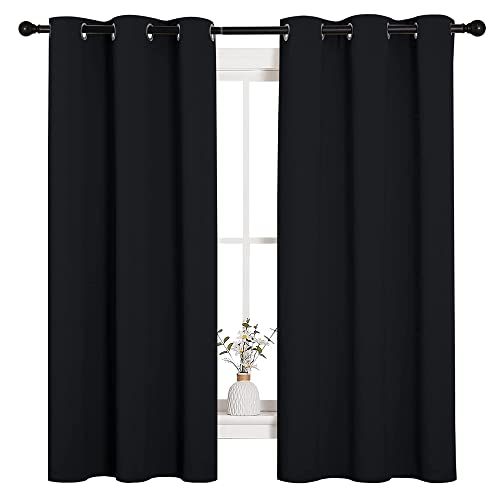
NICETOWN Blackout Curtains
A widely sold blackout curtain line using a dedicated triple-weave fabric rather than relying on thickness alone, commonly chosen specifically for bedrooms needing daytime darkness.

Deconovo Thermal Insulated Blackout Curtains
A blackout curtain option with a foam-backed lining layer, often compared against unlined heavy curtains that look similar but block noticeably less light.
Questions worth asking
Does a heavier curtain always block more light than a lighter one?
Not necessarily, since weave density, color, and whether there is a dedicated blackout lining matter more than raw weight, so a lighter curtain with a tight weave or foam backing can outperform a heavier, loosely woven one.
What is the actual difference between room darkening and blackout curtains?
Room darkening curtains reduce light significantly through a denser fabric or basic liner but still let in some glow, while true blackout curtains use a dedicated opaque backing layer engineered to block close to all light, which is a meaningfully bigger difference than the names alone suggest.
Can light still get through a blackout curtain even if the fabric itself blocks it completely?
Yes, light commonly leaks around the sides, top, and bottom of the curtain if it is undersized for the window or hung without enough overlap, which is a sizing and installation issue rather than a fabric performance issue.
Does curtain color matter as much as the weave for blocking light?
Color plays a real role since darker, more densely pigmented fabric absorbs more light than a pale fabric of the same weave, though weave density and lining still tend to have the larger overall effect.
Is a double layer of regular curtains as effective as one true blackout curtain?
A double layer can meaningfully improve light blocking over a single thin curtain, but it generally still falls short of a proper foam-backed blackout curtain specifically engineered for that purpose, since the layers are not designed with the same opacity target.
Do blackout curtains also block heat and noise, or just light?
Many blackout curtains provide a secondary benefit of some thermal insulation and modest noise reduction because the dense, layered fabric also resists air and sound transfer somewhat, though they are not a substitute for dedicated soundproofing or insulation products.
Does washing a blackout curtain reduce its light blocking ability over time?
Repeated washing, especially on high heat, can gradually degrade the foam or polyurethane backing layer in some blackout curtains, which is why checking the care label and washing on a gentler cycle helps preserve light-blocking performance longer.
Why do some blackout curtains still let in a faint glow around the edges even when properly sized?
A small amount of edge glow is common even with well-fitted blackout curtains because completely sealing every edge against a wall or window frame generally requires additional hardware like side tracks or a wrap-around rod, which most standard curtain installations do not include.
Does curtain lining color need to match the decorative fabric to work well?
No, blackout linings are typically a neutral white or off-white backing regardless of the decorative fabric’s color or pattern on the front, since the lining’s job is opacity, not appearance, and it is usually not visible from inside the room.
Can sheer curtains ever be made to block significant light?
Not effectively on their own, since sheer fabric is specifically woven to be open and light-permeable, so meaningful light blocking for a sheer-style look generally requires pairing it with a separate opaque liner panel behind it.
Is there a difference in light blocking between pleated and flat blackout curtains?
The pleating style itself affects light blocking mainly through how it changes overlap and fullness when hung, since pleated panels often bunch more fabric across the window, which can modestly improve coverage compared to a flatter hanging style of the same fabric.
Does a wider curtain rod placement improve blackout performance?
Yes, mounting the rod a few inches wider than the window frame on each side, combined with curtains sized to overlap that width, significantly reduces the side light gaps that are one of the most common blackout performance complaints.
Do blackout curtains lose effectiveness as they age?
Over several years, repeated sun exposure and washing can thin or crack the backing layer in lower-quality blackout curtains, gradually reducing how much light they block compared to when new.
Is there a way to test how much light a curtain actually blocks before buying?
Holding the fabric sample up to a bright light source and checking for visible light coming through gives a rough practical sense, though it will not fully replicate how the curtain performs once hung with proper width and overlap at an actual window.
Does curtain fabric content, like polyester versus cotton, affect light blocking independent of weave?
Yes, polyester fibers are often woven more densely and uniformly at a given thickness than natural fibers like cotton or linen, which is part of why many dedicated blackout curtains use polyester or microfiber blends rather than natural fabrics alone.
Is there a meaningful difference in light blocking between curtains hung close to the window and those hung further away?
Hanging curtains closer to the window glass generally reduces the gap light has to travel around before reaching the room, so curtains mounted close to the window frame with good side coverage tend to perform slightly better than the same curtains hung loosely further into the room.
Final word
Thickness is a weak proxy for real light blocking. Weave density, a true foam or polyurethane backing layer, dark color, and correct sizing with enough overlap all matter more, so checking for an actual blackout construction claim is more reliable than judging a curtain by how heavy it feels.
Dana Whitfield
Dana spent eight years buying and merchandising for a regional kitchenware retailer before moving into editorial work. She has handled thousands of SKUs across cookware, small appliances and kitchen organization, and focuses on the practical differences that matter once a product is actually in daily use.


