Why Does a Cordless Drill Lose Torque as the Battery Drains?
A cordless drill loses torque mainly as its battery’s voltage sags under load while it discharges, since a drill’s motor produces less rotational force as available voltage drops, and that effect gets more noticeable as the battery nears empty or as the cells age and lose their ability to deliver current efficiently. Heat buildup in the motor during extended heavy use can compound the same effect temporarily.
Why voltage sag happens as a battery discharges
A lithium-ion battery’s voltage is highest right after a full charge and gradually declines as it discharges, and under heavy load, like driving a long screw into dense wood, the voltage dips even further for the duration of that load. Since a drill motor’s torque output is directly tied to available voltage and current, a battery sitting at 70 percent charge simply cannot deliver the same peak torque as one at 100 percent, even on the exact same drill.
How battery age and cell wear make this worse over time
Lithium-ion cells gradually lose capacity and increase in internal resistance after repeated charge cycles, which means an older battery sags in voltage more severely under the same load than it did when new. This is why a drill that used to power through a task easily can start stalling on the same task as its specific battery pack ages, even if a fresh battery of the same model restores full performance.
Why cold weather makes torque loss worse
Lithium-ion chemistry is noticeably less efficient at delivering current in cold temperatures, which is part of why cordless tools used outdoors in winter often feel weaker than the same tool and battery used indoors. The battery is not damaged, it is just chemically slower to deliver power until it warms up, either from ambient temperature or from its own internal resistance generating some heat during use.
Motor heat buildup during extended heavy use
Pushing a drill hard for an extended period, like repeatedly driving large lag bolts, heats up the motor’s windings, and most motors lose some efficiency as they heat up, contributing a smaller secondary torque loss on top of whatever the battery is doing. Letting the tool rest briefly during heavy jobs helps both the motor and the battery recover some of that lost performance.
Why higher voltage and higher amp-hour batteries hold torque longer
A higher voltage battery platform, like 20V compared to 12V, starts with more headroom before voltage sag becomes a practical problem, and a higher amp-hour rating within the same voltage platform means the same load draws a smaller percentage of the battery’s total capacity, which generally results in less voltage sag per task and more consistent torque across a work session.
Brushless motors slow this decline compared to brushed motors
Brushless motors are generally more efficient at converting battery power into torque and generate less internal resistance and heat than older brushed motor designs, which is part of why brushless drills tend to maintain closer to peak torque for a larger portion of the battery’s discharge curve compared to a similarly rated brushed model.
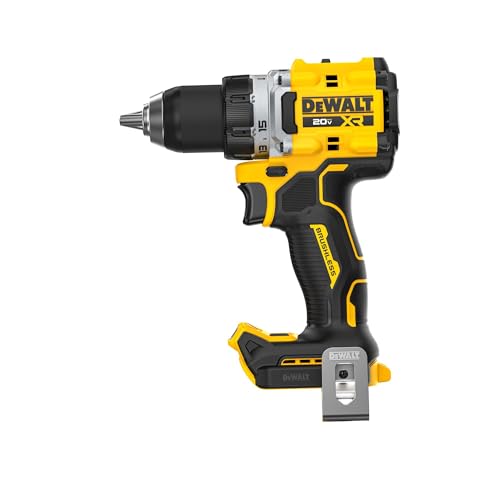
DEWALT DCD791 20V MAX XR Brushless Drill
A brushless cordless drill built on DEWALT’s 20V MAX battery platform, chosen often specifically because brushless motors hold torque more consistently through a battery’s discharge than older brushed designs.

Milwaukee M18 FUEL 2803-20 Drill
A brushless drill on Milwaukee’s M18 platform, paired with higher amp-hour battery options specifically to reduce voltage sag during heavier, longer tasks.
Questions worth asking
Does a cordless drill lose torque at the same rate throughout a full battery discharge?
No, torque loss is usually more gradual through the middle of the discharge curve and becomes noticeably sharper as the battery approaches empty, since voltage sag accelerates near full depletion.
Will a new battery fully restore a drill’s original torque?
Yes, in nearly all cases, since the torque loss over a battery’s lifespan is caused by the battery’s chemistry wearing down, not by physical wear in the drill’s motor or gearing.
Does charging a battery to 100 percent every time help preserve its torque output?
Not necessarily for long-term battery health, since most lithium-ion batteries actually last more charge cycles when not consistently charged to a full 100 percent, though a full charge does provide the highest immediate torque output for that specific session.
Is it bad for a drill’s motor to run at reduced torque near a dead battery?
It is not typically damaging in the short term, though repeatedly running a tool to near-complete depletion under heavy load does accelerate general battery wear over the long run compared to charging more proactively.
Why does my drill feel weaker on cold mornings even with a full charge?
Lithium-ion batteries are chemically less efficient at delivering current in cold temperatures, so a battery showing a full charge indicator can still deliver noticeably less peak torque until it warms up through use or ambient temperature.
Does a higher amp-hour battery actually provide more torque, or just longer runtime?
Primarily longer runtime, but a higher amp-hour battery also sags less in voltage under the same load compared to a lower amp-hour battery of the same voltage, which indirectly helps maintain more consistent torque during heavy tasks.
Can overheating permanently damage a drill’s torque output?
Occasional heat buildup during normal heavy use is generally temporary and recovers once the tool cools, but sustained overheating well beyond the manufacturer’s duty cycle recommendations can shorten the long-term lifespan of both the motor and the battery.
Do brushless drills really maintain torque better than brushed ones?
Yes, brushless motors are generally more efficient and run cooler under the same load, which translates to more consistent torque output across more of the battery’s discharge curve compared to a similarly rated brushed motor.
Is it normal for an 18V and a 20V MAX battery to behave the same despite the different voltage label?
Yes, in many product lines the 20V MAX label refers to the battery’s peak voltage immediately after charging, while its nominal working voltage is closer to 18V, so these platforms often perform similarly despite the different marketing number.
Does using the wrong drill bit make torque loss feel worse than it actually is?
Yes, a dull or incorrect bit for the material requires more torque to cut or drive effectively, which can make a perfectly adequate battery and motor feel underpowered when the real issue is bit condition or selection.
Can a battery’s torque output be tested or measured directly?
Some advanced battery testers and diagnostic tools can measure voltage sag under a simulated load, but most users judge torque loss practically, by noticing the drill stalling or slowing on tasks it previously handled without issue.
Does storing a battery fully depleted damage its future torque output?
Yes, storing lithium-ion batteries at very low charge for extended periods can accelerate capacity loss, which is part of why manufacturers generally recommend storing batteries at a partial charge rather than fully empty or fully full for long periods.
Why do two batteries of the same model sometimes perform differently in the same drill?
Individual battery packs age and wear at slightly different rates even within the same model and purchase batch, due to normal manufacturing variance and differences in how each specific pack was charged and used over time.
Does a drill’s clutch setting affect how torque loss feels during use?
The clutch setting limits how much torque the drill applies before slipping, which is a separate mechanical limit from the battery’s available torque, so a low clutch setting can mask battery-related torque loss until the setting is raised for a harder task.
Is there a way to reduce voltage sag during a heavy task without buying a new battery?
Pausing briefly between difficult drives or cuts lets both the battery and motor recover slightly, and switching to a spare fully charged battery for the remainder of a heavy task is the most direct way to restore peak torque without purchasing new equipment.
Final word
Torque loss in a cordless drill almost always traces back to voltage sag, how much a battery’s output dips under load as it discharges and ages, not a flaw in the drill itself. A fresh, healthy battery on the same drill restores full performance, which is the simplest way to tell battery wear apart from an actual tool problem.
Jake Monroe
Jake worked as a residential contractor for over a decade before shifting to full-time writing. He evaluates power tools, hand tools and workshop gear through the lens of someone who has actually used them on job sites, not just read the box.