Why Does a Cat Carrier’s Opening Style Matter for Vet Visits?
A carrier’s opening style determines how much a stressed, resistant cat can be removed or examined without a prolonged physical struggle, which matters a great deal during a vet visit. A top-loading or removable-top carrier lets a vet lift a cat out vertically or even examine it while it stays inside the bottom half, while a carrier that only opens through a small front door often forces a tense tug-of-war that raises stress for the cat and the risk of a scratch or bite for everyone involved.
Why front-only openings cause problems specifically at the vet
A cat that is frightened in an unfamiliar vet office instinctively braces against being pulled out through a narrow front opening, often spreading its legs against the carrier walls or backing into the far corner, which turns extraction into a drawn out physical struggle that increases stress hormones in the cat and increases the chance of a defensive scratch or bite toward the handler.
How a top-loading or removable-top design changes this
A carrier with a top opening, or one with a top shell that fully detaches from the base, lets a vet or technician either lift the cat straight up and out with less resistance than pulling horizontally against braced legs, or in many cases perform a good portion of the exam with the cat simply sitting in the bottom half with no top at all, which many cats tolerate far better than full removal.
Why many veterinary clinics specifically recommend this feature
Reducing extraction stress is not just about convenience, since a cat examined while visibly distressed can show skewed heart rate, respiration, and blood pressure readings that complicate an accurate physical exam. Clinics that routinely handle anxious cats often ask owners directly whether their carrier opens from the top before the appointment even begins, specifically to plan the visit around minimizing that stress.
What this means for carrier choice beyond just the vet visit
A front-opening-only carrier is not useless the rest of the time, since many cats enter and travel in one without issue for routine transport, but it becomes a real limitation specifically at moments like a vet exam when quick, low-stress access matters more than during an ordinary car ride.
Other opening-related features that add to the same benefit
Mesh side panels that let a vet see and reach a cat from multiple angles, a carrier that lies flat with the top removed rather than needing full disassembly, and secure but easy-release latches that do not require fumbling during a stressed moment all compound the benefit of a good opening design rather than any single feature working alone.
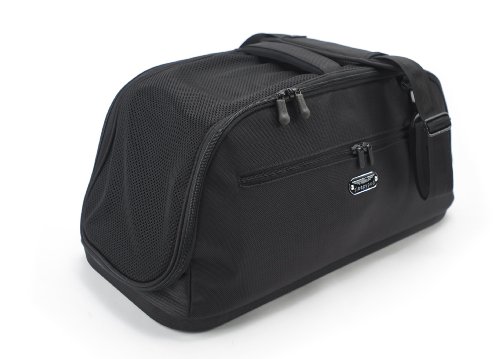
Sleepypod Air In-Cabin Pet Carrier
A carrier with multiple mesh access points and a design built around airline travel, commonly noted for making a cat easier to check on and access without full removal.

Petmate Two Door Top Load Carrier
A hard-sided carrier offering both a front door and a top opening, giving owners and vets a choice of access point depending on how the cat is reacting that day.
Common questions
Do most vet clinics actually prefer top-loading carriers?
Many do express a preference, particularly clinics that see a lot of anxious or fractious cats, since it measurably reduces the time and struggle needed to access the cat during the visit.
Can a front-opening carrier be adapted for easier vet access?
Not structurally, though some owners work around it by training the cat to walk out calmly on cue at home, which helps somewhat but does not fully replace the benefit of a true top or removable-top design during an already stressful vet visit.
Is a soft-sided carrier or hard-sided carrier better for top access?
Hard-sided carriers more reliably offer a true removable top or latched top door, while soft-sided carriers vary more in whether they include a comparable top opening, so checking this specific feature matters more than the material itself.
Does a top-loading carrier make it harder to get a cat to willingly enter it at home?
Not inherently, since most top-loading carriers also include a front opening for voluntary entry, and the top access is simply an additional option used mainly for the vet visit itself rather than routine entry.
Can the vet actually examine a cat without fully removing it from the carrier?
Often yes for a basic exam, listening to the heart and lungs, checking eyes, ears, and mouth, and palpating the abdomen can frequently be done with the cat remaining in the bottom half of a top-load carrier with the lid removed.
Why do some cats panic more during removal than during the car ride itself?
The car ride is often a familiar, enclosed, relatively calm experience, while removal at the vet introduces unfamiliar smells, sounds, and handling by strangers all at once, which is a very different stress trigger than simply riding in the carrier.
Should a towel or blanket be used inside the carrier during a vet visit?
Yes, a familiar-smelling towel can have a calming effect and also gives the vet something to gently drape or use for extra restraint during handling, which pairs well with a good opening design rather than replacing the need for one.
Does the opening style matter for getting a cat out at home after a vet visit?
Somewhat, since a top-opening carrier can also make it easier to lift out an already stressed cat once home, avoiding another round of resistance right after a difficult vet experience.
Can two cats share one carrier for a vet visit if it has a good opening design?
This is generally not recommended regardless of opening style, since two cats in close confinement during a stressful visit can redirect anxiety toward each other, and separate carriers are safer even if it means bringing two.
Is a carrier with a top opening more expensive than a basic front-only carrier?
Often somewhat more, due to the added hardware and hinge or latch mechanisms, though the price difference is usually modest compared to the practical benefit during veterinary visits over the carrier’s lifespan.
Can a cat be sedated to avoid the carrier removal problem altogether?
For cats with severe veterinary anxiety, a vet may prescribe a pre-visit calming medication, but this addresses the cat’s stress response generally and does not replace the practical value of easier physical access during the appointment itself.
Does a carrier’s opening style affect how a vet weighs or scans a cat?
Weighing usually still requires some form of removal or at minimum setting the whole carrier on a scale, but a top-opening design can make lifting the cat directly onto a scale considerably smoother than extracting through a front door.
Why do some owners still choose front-opening-only carriers despite the vet visit downside?
Often for reasons like lighter weight, lower cost, or simple familiarity, and for a calm cat that does not resist handling, the downside at the vet may never become a practical issue in the first place.
Can a carrier’s opening style make a difference for fractious or aggressive cats specifically?
Yes, this is often where it matters most, since a fractious cat that cannot be safely pulled through a narrow opening may require sedation or specialized handling techniques that a top-loading design can sometimes reduce the need for.
Should the opening style be a priority over size and ventilation when choosing a carrier?
Not necessarily a higher priority, but a reasonable factor to weigh alongside size and ventilation, since all three affect how comfortable and manageable the carrier is for both routine use and the specific demands of a vet visit.
Where this leaves you
The opening style is one of those features that seems minor until the exact moment it matters, which for most cats is the vet office rather than the car ride there. A carrier that lets a vet work with the cat rather than against it tends to make the whole visit measurably less stressful for everyone in the room.
Olivia Hartley
Olivia spent several years working at an animal shelter and a pet-supply retailer before joining the editorial team. She researches pet gear with an emphasis on safety, comfort and the fine print that owners often miss.


