Why Do Baby Socks Fall Off Constantly?
Baby socks fall off mostly because an infant’s ankle and heel are proportionally smaller and less defined than an adult’s, giving a sock far less to grip onto, combined with the near-constant kicking babies do, which works a loose-fitting sock down and off within minutes. Sock size, fabric stretch, and whether the sock has a proper heel pocket or grip band matter far more to this than most parents expect. No single fix solves it completely, but sizing by weight and choosing stretchier fabric closes most of the gap. It’s a near-universal early parenting frustration rather than a sign that anything is being done wrong.
Why baby anatomy works against socks staying on
A baby’s ankle doesn’t yet have the defined narrowing between calf and foot that helps an adult sock stay anchored, so even a well-fitted sock has less structure holding it in place. This is also why a sock that fit perfectly a month ago can suddenly start slipping again as the baby’s proportions shift during a growth spurt.
The role of constant kicking and leg movement
Babies kick reflexively and almost continuously while awake, and that repetitive motion acts like a slow, steady tug that works a sock down the foot over the course of minutes rather than hours. Tummy time and active play sessions tend to work socks loose noticeably faster than quiet periods like being held or riding in a car seat.
Sizing is the single biggest fixable factor
Socks sized to a baby’s current weight range rather than age alone fit noticeably better, since babies vary widely in foot size at the same age, and a sock that’s even slightly too big won’t stay on no matter the fabric. Trying a size up or down from what the label suggests, based on how a specific baby’s current socks are fitting, is often more useful than strictly following the printed age range. Buying one size up specifically for the newborn stage, when ankles are at their least defined, often solves more of the problem than any other single change.
Fabric and stretch matter
All-cotton socks with little stretch tend to loosen and slide more than socks blended with a bit of spandex or elastic, which maintain gentler, more even pressure around the ankle through repeated kicking and washing. A gentle stretch test, pulling the cuff slightly and watching how quickly it springs back, is a simple way to judge how much usable stretch a sock still has left.
Design features that actually help
A wide ribbed cuff, a seamless heel pocket shaped to the foot rather than a flat tube-sock shape, and sometimes a thin grip strip around the ankle opening all measurably reduce slippage compared to basic flat-knit socks. Checking that the heel pocket is actually positioned correctly relative to the baby’s own heel when putting the sock on matters too, since a sock put on slightly twisted undoes some of that design benefit.
When to stop fighting it with socks
For very young infants in cooler weather, some parents find footed sleepers or footed onesies solve the problem entirely by removing the separate sock altogether, reserving actual socks for slightly older babies with more defined ankles. Many parents end up using a mix, footed layers for sleep and simple travel, and proper socks mainly for supervised playtime on the floor.
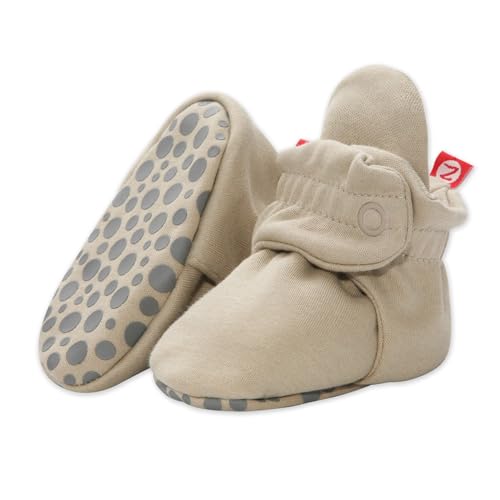
Zutano Cotton Baby Socks
A ribbed-cuff cotton sock line commonly used for its wider, stretchier opening designed to resist slipping off during kicking.

Trumpette Baby Socks Gift Set
A fitted cotton-blend baby sock set with a shaped heel pocket intended to hold position better than a flat tube-style sock.
Questions worth asking
Do bigger baby socks ever stay on better than smaller ones?
No, oversized socks typically slip off faster since there’s more loose fabric for kicking to work free, correct sizing matters more than going bigger.
Does sock fabric stretch actually make a measurable difference?
Yes, a bit of spandex or elastic blended into the fabric helps the sock maintain gentle, even pressure that resists sliding compared to pure, non-stretch cotton.
Are footed sleepers a better solution than socks for young infants?
For very young babies, many parents find footed sleepers eliminate the problem entirely since there’s no separate sock to lose.
Do grip-strip socks work better than plain ribbed ones?
Grip strips can add extra friction against the skin that helps some babies, though a well-fitted ribbed cuff alone often performs similarly well.
Why do some brands fit noticeably better than others at the same labeled size?
Sizing standards vary between brands, so a sock labeled for the same age range can have different actual dimensions depending on the manufacturer.
Does washing and drying shrink or loosen baby socks over time?
Repeated washing, especially with heat drying, can loosen elastic fibers over time, which is part of why older socks in a baby’s drawer may fall off more than newer ones.
Is it normal for socks to fall off within the same day they’re put on?
Yes, this is extremely common for young infants given how much they kick, it’s not necessarily a sign of a poorly made sock.
Do older babies with more defined ankles have less trouble with socks?
Generally yes, as a baby grows and the ankle becomes more defined, socks tend to stay on more reliably than they did in the newborn stage.
Are seamless socks better for keeping shape?
Seamless construction can help a sock keep its shaped heel pocket intact through repeated wear and washing compared to seamed designs that can stretch unevenly.
Should you size baby socks by age or by weight?
Weight-based sizing tends to be more accurate, since babies vary significantly in foot size even within the same age bracket.
Do thicker winter socks stay on better than thin cotton ones?
Not necessarily, thickness alone doesn’t improve grip, it’s the cuff design and stretch that matter more than fabric weight.
Can a sock that’s too tight cause circulation issues while trying to prevent slipping?
Yes, a sock that’s uncomfortably tight to prevent slipping can restrict circulation, so a snug but not constricting fit is the goal.
Is there a difference between crawling-stage and newborn-stage sock fit?
Yes, crawling babies often need a slightly more secure fit since the additional movement and friction against surfaces adds more opportunities for socks to work loose.
Do sock clips or fasteners actually work?
Some parents find small sock clips helpful for keeping pairs together or slightly more secure, though they don’t address the core fit and stretch issue.
Are wool-blend socks worth it for warmth versus just doubling up on cotton socks?
Wool blends tend to retain warmth better per layer than cotton, which can mean one wool-blend sock does the job of two cotton layers.
How many pairs of socks does a typical newborn actually need given how often they’re lost?
Many parents find they need a larger rotation than expected, often a dozen or more pairs, specifically because of how frequently individual socks get lost or misplaced.
Do daycare centers have specific sock requirements for safety?
Some daycares request grip-sole socks for mobile infants and toddlers specifically for traction on smooth floors, so checking with your specific provider is worthwhile.
Are name labels or writing a baby’s name on socks a practical way to reduce losing them?
It doesn’t prevent a sock from slipping off, but it does make it easier to reunite a lost sock with the right baby in shared spaces like daycare, where many families’ socks end up mixed together.
Our take
The sock isn’t failing, the anatomy and the kicking are working against it from the start. Getting sizing right by weight rather than age, and choosing a sock with real stretch and a shaped heel, fixes most of the problem without needing to give up on socks entirely. A sock that fits snugly by weight, not just age, and includes real stretch in the cuff will outperform almost any other single change a parent tries. Expect some sock loss regardless of what you buy, but the right sizing and fabric choice cuts it down considerably.
Rachel Simmons
Rachel previously worked in child-product retail and brings a practical, detail-first eye to gear reviews, focusing on safety standards, ease of use and the fine print that matters most for new caregivers.