Is a Trench Coat Warm Enough for Winter?
A classic trench coat alone is generally not warm enough for genuinely cold winter weather, since the traditional cotton twill or gabardine construction is designed primarily for wind and light rain resistance, not insulation. It works well as an outer shell layered over a sweater or a thin insulated vest in cold but not freezing conditions, but it falls short compared to a down or wool coat once temperatures drop well below freezing.
What a trench coat was actually designed for
The trench coat originated as a military field garment meant to resist wind and rain while remaining breathable enough for active movement, not to trap body heat the way an insulated winter coat does. That original design intent carries through to most modern trench coats, which prioritize a tailored silhouette and weather resistance over thermal insulation.
The fabric itself has almost no insulating layer
Traditional gabardine or cotton twill is a tightly woven fabric that blocks wind effectively, but it has essentially no air trapping loft, which is the property that actually keeps body heat in. Compare that to a puffer jacket’s down or synthetic fill, which works specifically by trapping warm air in pockets, something a flat woven trench coat fabric simply doesn’t do.
Lining makes a real difference between models
Some modern trench coats add a quilted or wool blend removable liner specifically to extend their usable temperature range into colder weather, and those lined versions perform noticeably warmer than an unlined classic trench. Buyers comparing trench coats for actual winter use should check specifically for this liner feature rather than assuming all trench coats perform the same.
Layering underneath changes the equation significantly
A trench coat worn over just a dress shirt provides very little warmth, but the same coat worn over a sweater, a thin down vest, or thermal base layers can comfortably handle cold days, since the coat’s job shifts from providing warmth directly to blocking wind that would otherwise strip heat away from the layers underneath.
Where a trench coat genuinely struggles
In sustained freezing temperatures, heavy snow, or situations involving extended time outdoors rather than quick transitions between indoor spaces, a trench coat’s lack of real insulation becomes a genuine limitation that no amount of clever layering fully solves. For that kind of weather, a dedicated winter coat with real insulation is simply doing a different job than a trench coat is built for, and trying to stretch a trench coat past that point usually just means being cold.
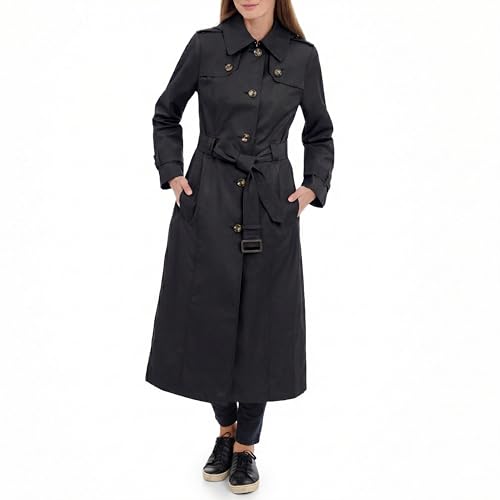
London Fog Women’s Heritage Trench Coat
A classic, widely sold trench coat built in the traditional gabardine style with optional removable liner versions.

Cole Haan Signature Trench Coat
A tailored trench coat available in both lined and unlined versions for different seasonal use.
Common questions
Can you add a liner to a trench coat that didn’t come with one?
Some trench coats are designed with a snap-in or button-in liner system that lets you add a separate quilted or faux-fur liner afterward, though this depends entirely on whether the coat was built with that attachment in mind.
Is wool warmer than a traditional cotton trench coat?
Yes, wool has natural insulating properties from its fiber structure that cotton gabardine lacks, which is why a wool coat generally outperforms an unlined trench coat in genuinely cold weather.
Do double-breasted trench coats keep you warmer than single-breasted ones?
Slightly, since the overlapping front panel reduces wind gaps compared to a single-breasted design, though the difference is minor compared to adding an actual insulating liner.
Can a trench coat be worn comfortably in light snow?
Yes, for brief exposure, since the fabric is typically water resistant enough to shed light snow, though sustained wet snow can eventually soak through if the coat isn’t specifically treated for water resistance.
What temperature range is a trench coat realistically comfortable in?
Most people find an unlined trench coat comfortable roughly from the mid 40s down to the low 30s Fahrenheit with a sweater underneath, with performance dropping off meaningfully below that without additional layering.
Does the belt on a trench coat actually help with warmth?
Slightly, since cinching the belt reduces the gap at the waist where wind would otherwise flow through, though its primary purpose is silhouette rather than insulation.
Can men’s and women’s trench coats differ in warmth for the same fabric weight?
Not meaningfully, since the insulating properties come from the fabric and construction rather than the cut, though fit differences can affect how much air gap exists for wind to penetrate.
Is a longer trench coat warmer than a shorter one?
Yes, to a degree, since more coverage down the legs blocks wind from a larger area of the body, though the core torso warmth depends more on layering than coat length alone.
Do heavier gabardine trench coats perform noticeably better in cold weather?
Somewhat, since a heavier weave blocks wind slightly more effectively, but the difference is incremental compared to the much larger jump in warmth that comes from adding an actual insulated liner.
Can you wear a trench coat as your only outer layer in a city winter with lots of walking between indoor spaces?
Yes, that’s actually where trench coats perform best, since brief outdoor exposure between warm indoor stops plays to the coat’s wind resistance without exposing its lack of deep insulation for long.
Does a synthetic trench coat insulate differently than a cotton one?
Some synthetic blends trap slightly more heat than pure cotton gabardine due to the fiber structure, but the difference is generally smaller than what a dedicated liner adds.
Is it worth buying a trench coat with a hood for winter use?
A hood adds useful wind and precipitation protection for the head and neck specifically, which matters a lot for comfort in cold wind even if it doesn’t change the coat’s overall body warmth.
Can trench coats be dry cleaned without damaging water resistant treatments?
Most can, but repeated dry cleaning gradually wears down factory-applied water repellent finishes, so reapplying a fabric-safe water repellent spray periodically helps maintain performance.
Do darker colored trench coats feel warmer in sunlight than light colored ones?
Slightly, since darker fabrics absorb more solar radiation, though this effect is minor compared to wind blocking and layering, and mostly noticeable on sunny days rather than overcast winter conditions.
Is a trench coat a good choice for someone who commutes mostly by car?
Yes, since the coat’s main weakness is sustained cold exposure, and a car commute involves mostly brief walks to and from the vehicle, which plays well to a trench coat’s strengths.
Can a trench coat replace a parka for genuinely harsh winter climates?
No, in regions with sustained sub-freezing temperatures or heavy snow, a properly insulated parka or down coat is doing a fundamentally different job that a trench coat’s design was never meant to replicate.
Does fabric weight get listed on trench coat product pages, and does it matter for warmth?
Some listings do mention fabric weight in ounces or grams per square meter, and a heavier weight generally does correlate with slightly better wind resistance and a touch more warmth retention.
Can a scarf meaningfully extend a trench coat’s comfortable temperature range?
Yes, since a scarf closes the gap at the collar and neck where a trench coat alone offers the least coverage, and heat loss from the neck area is disproportionately noticeable compared to its small surface area.
The bottom line
A trench coat is an excellent transitional and city coat, not a genuine cold-weather coat, and buyers who expect deep winter warmth from the classic design alone will likely be disappointed. Pair it with real layers underneath or look specifically for a lined version if winter performance actually matters for where you live.
Priya Nathan
Priya spent years in apparel buying and merchandising for a multi-brand retailer before moving into editorial work. She focuses on fit, fabric and construction quality across everyday wear, activewear and accessories, reading past marketing copy to the details that affect how a garment actually wears and holds up.


