Is a Trailer Brake Controller Necessary for Small Trailers?
Not always. Most states require trailer brakes once a trailer’s gross weight exceeds 3,000 pounds, and a brake controller is needed to operate electric brakes from the tow vehicle. For small trailers under that threshold, a brake controller is usually not legally required, but it can still improve safety and control, especially on steep grades or with a light tow vehicle.
The legal threshold: weight and state rules
Trailer brake laws vary by state, but a common cutoff is 3,000 pounds gross trailer weight (the trailer plus its load). Some states set the limit at 1,500 or 2,000 pounds, while others use 4,000 or 5,000. If your small trailer’s loaded weight exceeds your state’s threshold, brakes are legally required, and if those brakes are electric, you will need a brake controller to activate them. Check your state’s specific regulations, as ignoring them can lead to fines and liability in an accident.
What a brake controller actually does
A brake controller is an aftermarket device that sends a proportional electrical signal to the trailer’s electric brakes when you press the tow vehicle’s brake pedal. Without it, electric trailer brakes simply do not engage. The controller modulates the braking force based on deceleration and user settings, so the trailer brakes in sync with the tow vehicle rather than locking up or lagging. For small trailers with electric brakes, a controller is the only way to make those brakes function.
When a small trailer might still benefit from a controller
Even if your trailer is under the legal weight limit, a brake controller can be worthwhile in certain situations. Towing on steep downhills, in heavy traffic, or with a vehicle that is close to its tow rating can put extra strain on the tow vehicle’s brakes. Trailer brakes add stopping power and stability, reducing the chance of the trailer pushing the tow vehicle during hard braking. Also, some small trailers, like utility or enclosed cargo trailers, may come with electric brakes from the factory even if not legally required, and a controller lets you use them.
Alternatives to electric brakes: surge and inertia systems
Not all small trailers use electric brakes. Surge brakes are common on boat trailers and some utility trailers; they operate via a hydraulic coupler that senses the tow vehicle slowing down and applies the trailer brakes automatically. Surge brakes do not require a brake controller. Inertia-based systems are another option. If your trailer has surge brakes, you do not need a brake controller, but you should still verify that the system is functioning correctly.
How to determine if your trailer has electric brakes
Look at the trailer’s wheels: electric brakes typically have a drum brake assembly with a magnet and wires, and you will see a breakaway cable and a 7-pin electrical connector on the trailer tongue. If your trailer has a 4-pin flat connector, it almost certainly does not have electric brakes. You can also check the trailer’s manual or contact the manufacturer. If you are unsure, a local trailer shop can inspect the axle and wiring.
Choosing and installing a brake controller
If you determine that a controller is needed, you have two main types: time-delayed and proportional. Proportional controllers are generally smoother and better for varying loads, while time-delayed models are simpler and less expensive. Installation typically involves mounting the controller under the dash and wiring it to the tow vehicle’s brake pedal switch, power, ground, and the trailer connector. Many modern vehicles come pre-wired with a plug for a controller, making installation straightforward. Always follow the controller and vehicle manufacturer’s instructions, and consider having a professional install it if you are not comfortable with electrical work.
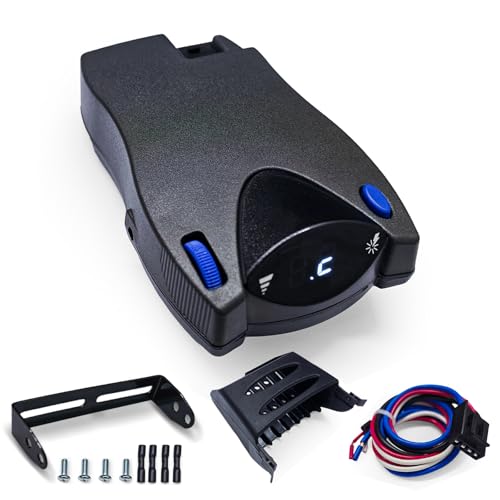
Tekonsha Prodigy P2 Electric Brake Controller
A popular proportional brake controller that automatically adjusts braking force based on deceleration, suitable for a wide range of trailers including small utility and cargo trailers with electric brakes.

Reese Towpower 8508211 Control Proportional Brake Controller
An affordable proportional brake controller with a digital display and easy setup, often used for small to medium trailers that require electric brake activation.
Common questions
Do I need a brake controller for a 2,000 lb trailer?
It depends on your state’s laws. Many states require trailer brakes at 2,000 or 3,000 pounds gross weight. If your trailer has electric brakes and exceeds the threshold, you need a controller. If it is under the threshold but has electric brakes, a controller is still needed to use them.
What is the weight cutoff for trailer brakes in most states?
Most states set the cutoff at 3,000 pounds gross trailer weight, but some are as low as 1,500 pounds or as high as 5,000 pounds. Always check your specific state’s regulations.
Can I tow a small trailer without trailer brakes?
Yes, if the trailer’s weight is below your state’s brake requirement threshold and the trailer is not equipped with brakes. However, you must ensure your tow vehicle is rated for the load and that you drive cautiously, especially on hills.
How do I know if my trailer has electric brakes?
Look for a 7-pin electrical connector, wires running to the wheels, and a breakaway cable. A 4-pin connector typically indicates no electric brakes. You can also check the trailer manual or have a professional inspect it.
Are surge brakes legal on small trailers?
Yes, surge brakes are legal and common on boat trailers and some utility trailers. They do not require a brake controller because they are self-contained and activate hydraulically when the tow vehicle slows.
Can I install a brake controller myself?
Yes, many brake controllers are designed for DIY installation, especially if your vehicle has a pre-wired plug. However, you should be comfortable with basic electrical work and follow the instructions carefully. If in doubt, have a professional install it.
What happens if I tow a trailer with electric brakes but no controller?
The electric brakes will not activate, so the trailer will have no braking assistance. This can lead to longer stopping distances and potential loss of control, and it may be illegal if brakes are required.
Do all brake controllers work with all trailers?
Most aftermarket controllers work with standard electric brakes, but you should match the controller to the number of axles and the trailer’s brake type. Proportional controllers are generally more versatile.
Is a brake controller necessary for a pop-up camper?
Pop-up campers often weigh under 3,000 pounds and may not require brakes, but some states have lower thresholds. If the camper has electric brakes, a controller is needed to use them.
Can I use a brake controller with a rental trailer?
Yes, if the rental trailer has electric brakes and your vehicle is equipped with a compatible controller. However, rental companies may have specific requirements, so check with them first.
How much does a brake controller cost?
Prices vary, but most aftermarket brake controllers range from around 50 to 200 dollars, depending on features and brand. Installation costs extra if you hire a professional.
Do I need a brake controller for a boat trailer?
Most boat trailers use surge brakes, which do not require a controller. However, some larger boat trailers may have electric brakes, in which case a controller is needed.
Will a brake controller improve my fuel economy?
No, a brake controller does not affect fuel economy. It only activates the trailer’s brakes when needed.
Can a brake controller be transferred between vehicles?
Yes, most brake controllers can be uninstalled and moved to another vehicle, but you may need a new wiring harness or mounting bracket.
What is the difference between proportional and time-delayed brake controllers?
Proportional controllers sense deceleration and apply braking force proportionally, providing smoother stops. Time-delayed controllers apply a preset amount of braking after a delay, which is simpler but less precise.
Do I need a brake controller if my trailer has surge brakes?
No, surge brakes are self-actuating and do not require an electronic controller. They operate independently when the tow vehicle slows.
Can I tow a small trailer with a brake controller in a state that does not require brakes?
Yes, you can use a brake controller even if not legally required, and it may improve safety. However, ensure the controller is compatible with your trailer’s braking system.
How do I adjust a brake controller for a small trailer?
Follow the manufacturer’s instructions, which typically involve setting the gain so that the trailer brakes do not lock up on a dry surface. Start low and increase until you feel confident in the braking performance.
The bottom line
For many small trailers under 3,000 pounds, a brake controller is not legally necessary, but it is a wise investment if your trailer has electric brakes or if you frequently tow in challenging conditions. Always verify your state’s requirements and ensure your towing setup is safe and compliant.
Tony Russo
Tony trained as an automotive technician and spent years in service and parts retail before moving into writing. He focuses on garage tools, car care products and accessories from a hands-on maintenance perspective.
You might also need

How Does a Trailer Brake Controller Actually Sync Braking With the Tow Vehicle?

Heavy-Duty Tire Gauges for Trucks, Trailers, and RVs

Small But Mighty: Top Compact Diagnostic Scanners for Pros
