Is a Rowing Machine a Full Body Workout or Mostly Legs?
A proper rowing stroke is roughly sixty percent legs, twenty percent core, and twenty percent arms and back by the common coaching breakdown, which means it is genuinely a full body workout, but only when the legs then back then arms sequence is done correctly. Rowing mostly with the arms, a common beginner mistake, turns it into a much smaller upper body dominant workout.
The correct stroke sequence
Legs drive first in a motion similar to a leg press, then the back and core finish the lean backward, and the arms pull last to complete the stroke. This order is exactly why the legs contribute the majority of total power.
What happens when people row with just their arms
Skipping the leg drive and yanking with the arms first is the most common form mistake. It reduces total power output, shortchanges the legs almost entirely, and increases strain on the lower back and arms.
How the recovery phase uses different muscles
The recovery, or sliding back to the catch position, is lower intensity and relies on controlled leg and core engagement rather than being a passive glide, which is why good rowers stay deliberate even on the way back.
Why rowing is often praised as low impact despite being full body
The seated, sliding motion avoids the repetitive joint impact that running involves while still working the legs, core and upper body, which is part of why it’s often recommended for joint sensitive full body cardio.
Differences between air, magnetic, hydraulic and water resistance rowers
Resistance type changes how the stroke feels, air rowers get harder the faster you pull, magnetic rowers offer quieter, more consistent resistance, and water rowers add a naturally variable resistance from paddle drag, but none of this changes which muscles the stroke uses.
How to tell from your splits whether you’re using your legs enough
A high stroke rate paired with a slower than expected split time often signals short, arm dominant pulls rather than full leg driven strokes, which is a more useful signal to watch than how tired your arms feel mid workout.

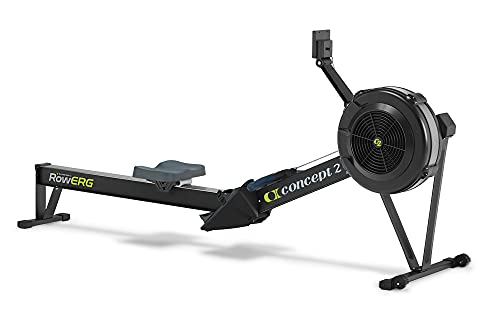
Concept2 Model D Indoor Rowing Machine
A widely used air resistance rower common in competitive rowing training and CrossFit gyms.

WaterRower Natural Rowing Machine
A water resistance rower that uses paddle drag inside a water tank for a naturally variable feel.
Good to know
Can rowing machines build muscle, or are they just cardio?
Rowing builds strength endurance in the legs, back and arms with consistent use, though it’s generally not a replacement for dedicated heavy resistance training when it comes to maximal muscle size.
Why do my arms get tired before my legs on the rowing machine?
That’s usually a sign of pulling with the arms too early in the stroke instead of driving through the legs first, which overloads the arms disproportionately.
Is rowing good for people with bad knees?
It’s often considered lower impact than running, but the deep knee flexion at the catch position can still bother some existing knee issues, so checking with a professional first is a reasonable step.
Does rowing work your abs?
Yes, the core stabilizes the body and helps transfer power from the legs to the arms throughout the stroke, acting almost like a bridge between the two.
How long should a rowing workout be to get a full body benefit?
Even short sessions of fifteen to twenty minutes done with correct form engage the full body sequence, duration mostly affects cardio conditioning rather than which muscles get used.
Why does my lower back hurt after rowing?
Rounding the back instead of hinging from the hips during the stroke is a common cause, and maintaining a straight back with a proper hip hinge protects the lower back.
Is a rowing machine better than a stationary bike for full body training?
A bike is largely leg and cardio focused, while rowing adds meaningful back and arm engagement, making it the more full body option of the two.
Do air resistance rowers work different muscles than magnetic ones?
The muscles used are essentially the same, the real difference is in how the resistance feels and scales with effort, not which muscle groups engage.
Can beginners row with correct form on their first try?
Many beginners default to arm first pulling, so learning the legs, back, arms sequence, often by rowing slowly at first, usually takes some deliberate practice.
Does rowing help with posture?
A consistent, correctly executed rowing stroke can reinforce a strong, upright back position, which may carry over to better posture habits, though it isn’t a guaranteed fix for existing posture problems.
Why do competitive rowers have such different builds than typical gym goers?
Elite rowers train at a volume and intensity far beyond typical home workouts, which develops both leg and upper body size and endurance substantially more over time.
Is it normal to feel the workout mostly in your legs the next day?
Yes, since the legs supply the majority of stroke power, soreness there after a hard session, especially for newer rowers, is common and expected.
Can you get a good full body workout without rowing fast?
Yes, rowing slower with a full range of motion and correct sequencing still engages the same muscle groups, intensity mainly affects cardio load rather than which muscles are used.
Does rowing machine use translate to on water rowing ability?
It builds similar stroke mechanics and conditioning, but balance and boat specific skills on actual water still require separate practice.
Can rowing machines help improve cardiovascular endurance specifically?
Yes, sustained rowing at a steady pace is a well established way to build aerobic endurance, similar in principle to running or cycling but with added upper body engagement.
Does rowing machine resistance level change which muscles are worked?
Higher resistance mainly increases the force each muscle group has to produce during the same sequence, it doesn’t fundamentally shift which muscles are involved in the stroke.
Is it normal for grip or forearm fatigue to happen before leg fatigue?
Some early forearm fatigue can happen from gripping the handle, but if it happens well before leg fatigue it’s often still a sign of pulling too much with the arms rather than driving with the legs.
Can rowing machines be used effectively for interval training, not just steady state?
Yes, many rowers support interval style workouts alternating hard efforts with easier recovery rowing, which is a common training approach alongside steady state sessions.
Does seat height or rail length affect how full body the workout feels?
A properly sized rower for your height helps ensure a full range of motion at both the catch and finish positions, which matters for engaging the full sequence of muscles as intended.
Is rowing considered a good workout for people who dislike running?
Many people who find running jarring on the joints find rowing a more comfortable full body cardio alternative, since it avoids the repeated impact running involves.
Can poor rowing machine form lead to strain injuries over time?
Yes, consistently rounding the back or pulling primarily with the arms can contribute to lower back or forearm strain over repeated sessions, which is part of why learning correct sequencing matters beyond just getting a good workout.
Where this leaves you
Whether a rowing machine counts as full body or mostly legs comes down entirely to form, not the machine itself. Get the legs, back, arms sequence right and it’s one of the more genuinely full body cardio options available. Pull mostly with your arms and you’ve quietly turned it into an upper body workout with worse leverage than a dedicated arm exercise would give you.
Derek Holt
Derek has a background coaching recreational and amateur athletes and has worked the sales floor at specialty fitness retailers. He focuses on equipment durability, ergonomics and realistic use cases rather than marketing claims.
You might also need
Professional Adjustable Rowing Machines for Serious Indoor Rowers

Foldable Rowing Machines for Apartments and Small Home Gyms

Sturdy Treadmills for Serious Runners and Tough Workouts