Is a Linen Shirt Good for Hot, Humid Weather?
A linen shirt is usually a good choice in hot weather because the fiber is hollow and the weave is loose, so air moves through it easily and it releases body heat faster than cotton or synthetic blends. In humid conditions it still helps, but linen absorbs moisture rather than wicking it away, so on very sticky days it can feel damp and cling to the skin instead of staying crisp.
Why linen feels cooler than cotton in the first place
Flax fibers, which linen is woven from, are naturally hollow and thicker than cotton fibers, and the yarn is typically woven into a looser, more open structure. That open weave lets air pass straight through the fabric instead of trapping it against the skin, which is the main reason a linen shirt feels airy even when the material itself is sitting directly on your body. Cotton can be woven just as thin, but linen’s fiber shape gives it a natural edge in raw airflow.
How linen behaves differently once you start sweating
Linen is highly absorbent, pulling moisture off the skin fast, which is why it feels dry to the touch moments after you sweat even though the fabric itself has taken on that moisture. The tradeoff is that linen holds onto what it absorbs longer than a moisture-wicking synthetic, which pushes sweat to the surface to evaporate instead. In low humidity that barely matters since moisture evaporates quickly anyway. In high humidity, evaporation slows down for any fabric, and that is when linen’s absorb-and-hold behavior starts to show as damp patches.
Where linen actually struggles in humid climates
Once ambient humidity climbs into the range where sweat has nowhere to evaporate to, no fabric performs great, but linen’s tendency to hold moisture rather than push it outward means a linen shirt can start clinging and looking visibly damp sooner than a technical wicking shirt would. This is less about linen being a poor choice and more about matching expectations. It is still cooler than cotton or wool in that same humidity, just not magic.
Pure linen versus linen-cotton blends
A linen-cotton blend, often sold as fifty-five percent linen and forty-five percent cotton or similar, irons more easily and wrinkles less than pure linen, but it also breathes a little less since cotton fibers are denser and the weave is usually tighter to make the blend behave. For maximum airflow in heat and humidity, a higher linen percentage wins. For a shirt you want to look sharp in all day without constant ironing, a blend is the more practical tradeoff.
Weight, weave and color choices that matter more than the label
Not all linen shirts are equal. A lightweight, open-weave linen in a pale or light color reflects more heat and breathes better than a heavier, tightly woven linen in a dark shade. Checking the fabric weight, lighter is cooler, and holding it up to light to see how open the weave is tells you more about how it will perform than simply seeing the word linen on the tag.
How washing and ironing change linen’s performance over time
Linen actually gets softer and more breathable the more it is washed, as the fibers relax and the weave loosens slightly. Heavy starching or pressing it completely flat for a crisp dress-shirt look reduces some of that airflow by compressing the weave, so a linen shirt meant for hot, humid days performs best left a little relaxed rather than starched stiff.
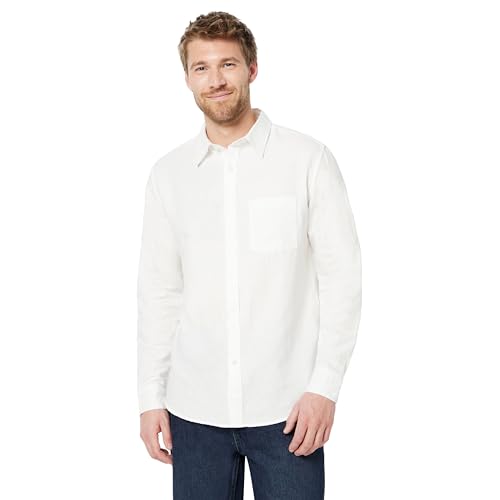
Amazon Essentials Men’s Regular-Fit Long-Sleeve Linen Shirt
A straightforward 100% linen button-down in a relaxed cut that is commonly picked for warm-weather travel and everyday wear.

Buttoned Down Women’s Relaxed-Fit Linen Shirt
A lightweight linen shirt cut loose through the body, which adds airflow on top of what the fabric itself provides.
Common questions
Does linen get more comfortable the more humid it gets, or less?
Less, generally. Linen performs best in dry heat where sweat evaporates quickly. As humidity rises, the air itself holds more moisture, which slows evaporation for any fabric, and linen’s tendency to absorb rather than wick becomes more noticeable at that point.
Is 100% linen always better than a linen blend for hot weather?
For raw breathability, yes, pure linen usually edges out a blend. But a cotton-linen blend wrinkles less and still breathes far better than pure cotton, so it is a reasonable middle ground if you do not want to iron a shirt daily.
Why does my linen shirt feel damp even when I’m not sweating heavily?
Linen holds a noticeable amount of ambient moisture from humid air itself, not just sweat, so on a sticky day the fabric can feel slightly damp to the touch even before you have worked up a sweat.
Does dark colored linen trap more heat than light colored linen?
Yes, darker colors absorb more solar heat than light or white shades, which matters outdoors in direct sun. Indoors or in shade, the color difference has much less effect on how hot you feel.
Can linen be worn in tropical climates year round?
Many people in tropical regions do wear linen regularly, often favoring lightweight, light colored, looser cuts specifically because of the breathability, though they typically pair it with looser fits rather than fitted dress shirts.
Is linen better than moisture-wicking synthetic fabric for humid weather?
Not necessarily for pure sweat management. A good wicking synthetic actively pushes sweat to the surface to evaporate and often outperforms linen in heavy, sustained humidity. Linen wins on breathability and comfort against the skin, and most people find it more pleasant to wear even if a technical fabric manages moisture more efficiently.
Why does linen wrinkle so easily compared to other fabrics?
Linen fibers are stiffer and less elastic than cotton, so they do not spring back into shape after bending, which is exactly what creates wrinkles. It is a direct tradeoff for the airy, structured drape that makes linen breathable in the first place.
Does washing linen in cold water change how it performs in heat?
Washing temperature mainly affects shrinkage and color retention rather than breathability. Linen softens with repeated washing regardless of water temperature, and that softening slightly improves comfort over time.
Is a looser fit linen shirt actually cooler than a fitted one?
Yes, a looser cut allows air to circulate between the fabric and your skin, adding ventilation on top of what the open weave already provides. A fitted linen shirt still breathes well but loses some of that extra air gap benefit.
Can you wear linen shirts in air conditioned offices without feeling cold?
Linen does not insulate much, so in a strongly air conditioned space some people find a lightweight linen shirt leaves them feeling cooler than a cotton equivalent. Layering a light undershirt or cardigan solves this without losing linen’s outdoor benefits.
Does linen smell worse than synthetic fabrics after sweating?
Generally linen resists picking up body odor better than many synthetics, since synthetic fibers tend to trap the bacteria that causes odor more than natural fibers do. This is one underrated reason it is popular for travel in hot climates.
Why do some linen shirts feel scratchy and others feel soft?
Thread quality and finishing process both matter. Higher quality flax fiber and a softer finishing treatment produce a smoother hand feel, while cheaper, shorter-fiber linen can feel coarser, especially before its first few washes.
Is it normal for linen to shrink after the first wash?
A small amount of shrinkage, often a few percent, is normal on the first wash or two as the fibers relax from the manufacturing tension. Buying a size that allows for this, or choosing a pre-washed linen shirt, avoids surprises.
Does linen hold up well against sun exposure outdoors?
Linen is reasonably sun-resistant for short exposure, and lighter colors reflect more UV than dark ones, but any fabric degrades with prolonged sun exposure over months and years, so it is not meant as sun protection on its own.
Can a linen shirt be worn for exercise in hot weather?
It is not built for that. Linen does not stretch or wick the way athletic fabrics do, so it is better suited to casual wear, travel, or low-activity days outdoors rather than a workout or run.
Does the weight of linen fabric actually matter when buying a shirt?
Yes, a lower weight linen, often in the range used for summer shirts, breathes noticeably better than a heavier linen meant for jackets or structured pieces, so checking the weight class helps match the shirt to the climate.
Is it worth paying more for higher quality linen if I live somewhere hot and humid?
Higher quality flax, usually from regions known for long-fiber linen, tends to soften faster, breathe a bit better, and hold its shape longer, so for someone wearing linen shirts constantly in a hot climate the difference is more noticeable than for occasional wear.
Where this leaves you
Linen earns its reputation in heat because the fiber itself is built to move air, not because of marketing. Humidity just changes how it shows that moisture, not whether it is a smart choice. For most hot, humid climates a lightweight, light colored, looser cut linen shirt still beats cotton or wool, even on the stickiest days.
Priya Nathan
Priya spent years in apparel buying and merchandising for a multi-brand retailer before moving into editorial work. She focuses on fit, fabric and construction quality across everyday wear, activewear and accessories, reading past marketing copy to the details that affect how a garment actually wears and holds up.