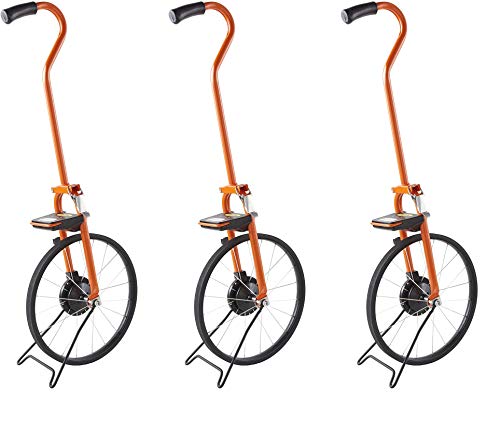
Is a Laser Distance Measurer Accurate Outdoors?
A laser distance measurer can still work outdoors, but it is genuinely less reliable than indoors because bright sunlight washes out the laser dot the device needs to see reflected back, and longer outdoor distances amplify small aiming errors. Most consumer models are honestly rated for shorter outdoor range than their indoor spec, and a few lose the target entirely in direct sun at longer distances. None of this means the tool is broken outdoors, it just means the published maximum range number needs a mental asterisk once direct sunlight enters the picture.
Why sunlight is the real enemy, not distance
Laser distance measurers work by timing or phase-shifting a laser beam reflected off a target, and the sensor needs to distinguish that reflected beam from ambient light. Direct sunlight floods the sensor with far more light than the laser itself, which is why a device can measure accurately across a shaded 100 foot yard but struggle at 30 feet in full midday sun.
How manufacturers quietly account for this
Most laser measurers publish two effective ranges, a longer one for indoor or shaded conditions and a shorter one for direct sunlight, often without making the distinction obvious on the packaging. A model listed as reaching 200 feet might realistically only hold accuracy to 50 or 65 feet in bright outdoor sun.
What surface you are aiming at changes accuracy too
Hard, flat, light-colored surfaces reflect a clean, strong laser signal back to the sensor. Dark, textured, wet, or reflective glass surfaces either absorb too much of the beam or scatter it unpredictably, and this problem gets worse outdoors where ambient interference is already higher, compounding the error.
Temperature and humidity play a smaller but real role
Extreme heat or cold can affect the internal electronics and battery performance slightly, and humidity or light haze can scatter the beam over longer distances, though for typical home and job site use these effects are minor compared to direct sun exposure.
Practical ways to get a reliable outdoor reading
Taking the measurement in shade, angling the device so direct sun does not hit the target surface, using a reflective target card at longer ranges, and taking two or three readings to confirm consistency all meaningfully improve outdoor reliability without needing a different tool.
When outdoor conditions call for a tape measure instead
For short, simple outdoor measurements, a basic tape measure is often more reliable than fighting sunlight interference with a laser unit. Laser measurers earn their value most clearly on long spans, awkward angles, or solo measuring where holding a tape taut alone is impractical.

Bosch GLM 50 CX Laser Distance Measurer
A laser distance measurer with Bluetooth connectivity and an extended outdoor range rating commonly used by contractors on job sites.
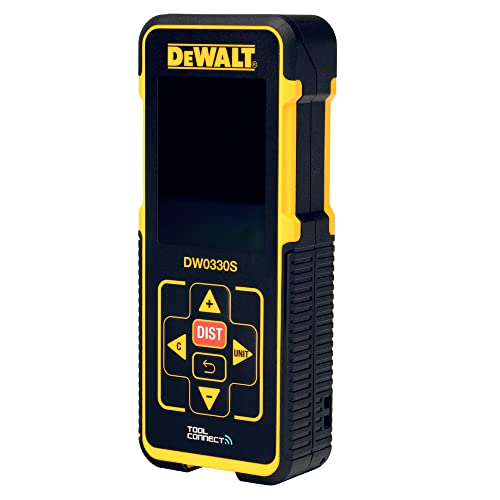
DEWALT DW033 Laser Distance Measurer
A compact laser distance measurer frequently used for both indoor layout work and shorter outdoor measurements.
Frequently asked questions
Can you use a laser distance measurer in direct sunlight at all?
Yes for shorter distances, but accuracy and the device’s ability to even register the reflected laser drop off noticeably compared to shaded or indoor conditions, especially past the midpoint of its rated outdoor range.
Why does a laser measurer sometimes fail to get a reading outdoors?
Usually because ambient sunlight is overpowering the reflected laser signal the sensor needs to detect, which happens more often at longer distances or when aiming at a dark or textured surface.
Does a reflective target card actually help outdoors?
Yes, a dedicated target card gives the laser a clean, consistent surface to bounce off, which noticeably extends usable outdoor range compared to aiming at an inconsistent natural surface like grass or brick.
Is a more expensive laser measurer more accurate outdoors?
Generally yes to a point, since higher-end models use stronger laser diodes and more sensitive receivers that handle ambient light interference better, though even premium models lose some range in bright sun.
Does rain or wet surfaces affect laser measurer accuracy?
Wet surfaces can scatter the laser beam unpredictably and standing water or heavy rain in the air can interfere with the beam path, so accuracy drops in wet outdoor conditions beyond what sunlight alone causes.
Can you measure long distances outdoors accurately, like across a yard?
Yes in shaded or overcast conditions many consumer units handle this well, but in full sun the effective reliable range is often much shorter than the device’s maximum rated distance.
Why do some laser measurers have a higher indoor range than outdoor range listed?
Because the sensor can distinguish the reflected laser far more easily without competing ambient light, so manufacturers often publish a realistic shorter number specifically for outdoor or sunlit use.
Does the color of the surface being measured matter outdoors?
Yes, lighter colored and smoother surfaces reflect the laser signal more reliably than dark, matte, or very textured surfaces, and this effect is more pronounced outdoors where the signal is already competing with ambient light.
Is Bluetooth connectivity on a laser measurer useful for outdoor work?
It can be, mainly for logging measurements to a phone or tablet without re-entering numbers manually, though it does not change the underlying sunlight accuracy limitation.
Can temperature extremes affect laser measurer readings?
Very high or low temperatures can slightly affect battery performance and electronics, but for most everyday outdoor temperature ranges this effect is minor compared to the impact of direct sunlight on the sensor.
Do laser distance measurers work well at dawn or dusk outdoors?
Yes, generally better than at midday, since lower ambient light levels make it easier for the sensor to distinguish the reflected laser beam from the surrounding light.
Is it worth buying a laser measurer specifically rated for outdoor use?
If outdoor measuring in bright conditions is a regular need, yes, since models marketed with extended outdoor range typically use stronger laser output and better receivers suited to that specific challenge.
Can fog or haze reduce laser measurer accuracy outdoors?
Yes, airborne moisture and particulates can scatter the beam over longer distances, which is a smaller factor than direct sun but still measurable on hazy or humid days at longer ranges.
Does holding the device steady matter more outdoors than indoors?
Slightly, since outdoor measurements are more often taken at longer distances where even small angular movement translates into a larger positional error at the target end.
Why does a laser measurer sometimes give inconsistent readings in a row outdoors?
Fluctuating sunlight, such as passing clouds or a slightly shifted aim between readings, can cause small variations, which is why taking two or three readings and comparing them is a sensible habit outdoors.
Can you trust a laser measurer reading for a property boundary or legal measurement outdoors?
No, laser distance measurers are convenience tools for construction and DIY work, not surveying instruments, and any legally significant boundary measurement should go through a licensed surveyor using proper equipment.
Does measuring across grass or gravel reduce outdoor accuracy compared to pavement?
Yes, loose or uneven natural surfaces scatter the reflected laser signal more than a flat, solid surface like pavement or a wall, which can make outdoor readings on landscaping or gravel noticeably less consistent.
Can wearing polarized sunglasses help you see the laser dot better outdoors?
Some polarized lenses can actually make a faint laser dot harder to see against bright pavement or grass, so removing sunglasses or shading the target area by hand often works better than trying to compensate with eyewear.
The bottom line
A laser distance measurer is still genuinely useful outdoors, just not as bulletproof as its spec sheet suggests once direct sunlight enters the picture. Measuring in shade, using a target card for longer distances, and not assuming the maximum rated range applies in full sun will save a lot of head-scratching over a reading that simply would not lock in. Treat the outdoor number on the box as a best-case figure rather than a guarantee, and the tool will rarely disappoint.
Jake Monroe
Jake worked as a residential contractor for over a decade before shifting to full-time writing. He evaluates power tools, hand tools and workshop gear through the lens of someone who has actually used them on job sites, not just read the box.