Is a Jump Starter Box Better Than Just Carrying Jumper Cables?
A portable jump starter box is generally more practical than jumper cables alone, mainly because it lets a driver restart a dead battery without needing a second vehicle present, which is the single biggest limitation of cables. Cables are still useful as a reliable backup and are cheaper, but a jump box solves the far more common real-world problem of being stranded alone with no other car around to help.
The core practical difference
Jumper cables require two vehicles, meaning someone with a dead battery has to find another driver willing to help and position their car correctly, which is not always possible in a parking garage, a remote area, or late at night. A jump starter box is self-contained, so the driver with the dead battery can solve the problem entirely on their own using just the box’s own battery charge.
What a jump box actually contains
Modern portable jump starters use a lithium battery pack with integrated safety electronics, delivering a short, powerful burst of current directly to the dead battery’s terminals through heavy-gauge clamps, similar in concept to what a second car’s battery and alternator would provide through cables. The key difference is that the jump box supplies this from its own stored charge rather than from another vehicle’s running engine.
Where cables still have an edge
Jumper cables have no battery of their own to maintain, do not degrade in storage the way a lithium pack slowly self-discharges over months, and are significantly cheaper, which makes them a reasonable minimum backup to carry regardless of whether a jump box is also in the car. They also do not rely on remembering to recharge them periodically the way a jump box does.
Why jump box maintenance is the real tradeoff
A jump starter box needs to be recharged periodically, often every few months even if unused, because its internal battery self-discharges slowly over time, and a jump box that has not been checked in a year may not have enough charge when actually needed. This maintenance requirement is the main practical downside compared to cables, which need no charge management at all.
Which one actually matches more real breakdown situations
Most dead-battery situations happen with the driver alone, whether in a driveway, a parking lot, or on the side of a road, which is exactly the scenario cables cannot solve without outside help. That is the main reason jump boxes have become the more commonly recommended option for emergency kits, with cables kept as a backup rather than the primary tool.

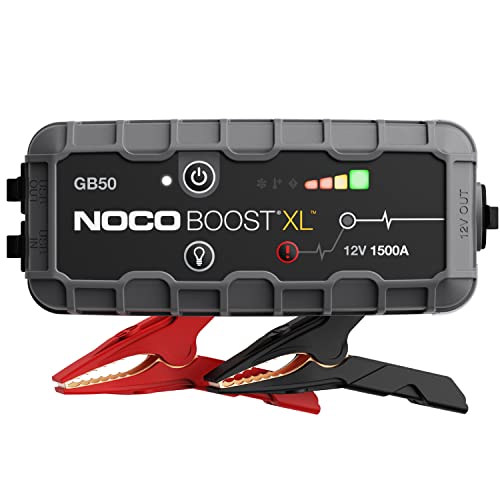
NOCO Boost Plus GB40 Jump Starter
A compact lithium jump starter rated for most car and light truck batteries, commonly kept in a glovebox or trunk for emergencies.
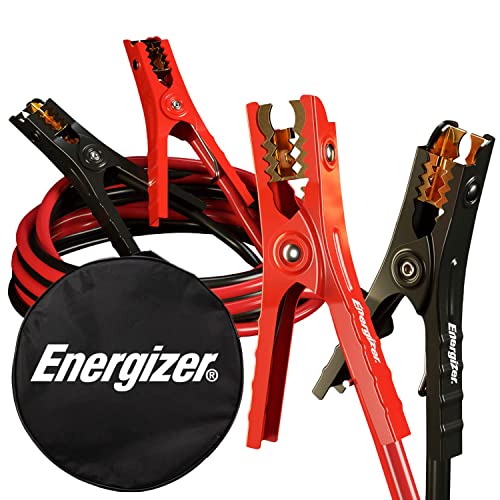
Energizer Heavy Duty Jumper Cables
A standard set of heavy-gauge jumper cables, a reliable low-cost backup that needs a second running vehicle to work.
Questions worth asking
Can a jump starter box actually start a car on its own?
Yes, that is its core function; it delivers a burst of current from its internal battery directly to the dead car battery’s terminals without needing another vehicle present at all.
How often does a portable jump starter need to be recharged if not used?
Most manufacturers recommend recharging every one to three months even without use, since the internal lithium battery slowly self-discharges and may not have enough reserve charge after sitting unused for longer.
Are jumper cables still worth carrying if you already have a jump starter box?
Yes, keeping both is a reasonable approach, since cables serve as a no-maintenance backup in case the jump box’s battery happens to be low when actually needed.
Can a jump starter box jump start a truck or larger vehicle, or only small cars?
This depends on the jump starter’s rated output; smaller units are matched to smaller engines, while higher-output models are specifically rated for larger trucks, SUVs, or multiple jump attempts in a row.
Is it safe to use a jump starter box on a vehicle with sensitive electronics?
Reputable jump starters include reverse polarity and spark protection specifically to protect both the user and the vehicle’s electronics during connection, making them generally safe when used as instructed.
Does a jump starter box work in very cold weather?
Lithium battery performance drops somewhat in extreme cold, so a jump starter kept in a freezing trunk may have reduced output compared to one kept at a more moderate temperature, which is worth considering for winter reliability.
Can jumper cables damage a car if connected incorrectly?
Yes, connecting cables with reversed polarity can cause electrical damage to both vehicles’ systems, which is one advantage of jump starter boxes with built-in reverse-polarity protection that cables alone do not have.
How long does it typically take to recharge a jump starter box after use?
Most compact units recharge fully within a few hours using a standard charger or USB-C power source, though this varies by the specific battery capacity of the unit.
Is a jump starter box reusable for multiple jump starts before needing a recharge?
Many units are rated for several jump starts on a single charge depending on battery health and engine size, though output and remaining jumps decrease progressively as the stored charge depletes.
Can a jump starter box be used for anything other than starting a car?
Yes, most include USB ports and can charge phones or small electronics, and some include a built-in flashlight, making them useful beyond the specific jump-starting function.
Do jumper cables ever fail or wear out over time?
Yes, cable clamps can corrode and the wire gauge can degrade with age and repeated use, which reduces how much current they can reliably deliver compared to a newer set.
Is it harder to use a jump starter box correctly compared to jumper cables?
Generally no, most jump starter boxes are designed to be simpler than cables since there is no second vehicle to coordinate with, just connecting the clamps to the dead battery in the correct order.
Can a jump starter box damage a battery if left connected too long?
Most modern units include automatic shutoff and safety timers to prevent this, though leaving clamps connected well beyond the brief time needed to start the engine is still not recommended practice.
Does battery size or vehicle type affect which jump starter box to buy?
Yes, manufacturers typically rate jump starters by engine size or battery amp-hour capacity, so matching the unit’s rated output to the vehicle is important rather than assuming any jump starter works for any car.
Is it worth buying a jump starter box with an air compressor built in?
Combination units add tire inflation capability to the same device, which can be a practical space-saving choice for an emergency kit, though it is a separate convenience from the jump-starting function itself.
Can a weak or old car battery still be jump started successfully?
Usually yes, as long as the battery can hold at least some charge, since the jump starter is providing the initial current needed to turn the engine over, after which the alternator takes over charging during normal driving.
Does leaving a jump starter box in a hot car affect its battery health?
Yes, sustained high heat degrades lithium battery cells faster over time, so storing a jump starter somewhere more temperature-stable, like inside the cabin rather than a hot trunk, can help it hold a reliable charge longer.
Can a jump starter box be shared between multiple vehicles in a household?
Yes, as long as its rated output matches each vehicle’s battery size, a single jump starter can reasonably serve multiple cars, though it does mean remembering to recharge it more often given more frequent potential use.
Where this leaves you
For the actual situation most people face, a dead battery with no other car around, a jump starter box solves the problem that cables fundamentally cannot. The sensible setup is both, since the cables cost little and cover the one real weakness of a jump box: forgetting to keep it charged.
Tony Russo
Tony trained as an automotive technician and spent years in service and parts retail before moving into writing. He focuses on garage tools, car care products and accessories from a hands-on maintenance perspective.