Is an Immersion Blender Better Than a Countertop Blender?
Neither is universally better since they are built for different jobs. An immersion blender wins on convenience, blending directly in the pot you already used, and easy cleanup, while a countertop blender wins on raw power, handling ice and frozen fruit, and producing a more consistently smooth texture for bigger batches.
What each tool is actually designed for
An immersion blender is a portable wand meant to be lowered directly into whatever pot, bowl or cup you are already using, built around soups, sauces and small batches. A countertop blender is a fixed, sealed jar on a high-torque motor base, built to handle tougher jobs like crushing ice or blending frozen ingredients.
Power and texture differences in practice
Countertop blenders generally have stronger motors paired with a fixed jar shape that creates a vortex, pulling ingredients past the blades repeatedly for a smoother final texture. Immersion blenders can genuinely struggle with hard or frozen ingredients, and pushing them too hard on those jobs puts more strain on a smaller motor.
Convenience and cleanup
An immersion blender blends right in the pot or bowl on the counter, leaving only the blending head itself to rinse. A countertop blender requires transferring food into the jar first and then washing both the jar and the base area, which adds steps even for a small job.
Capacity and batch size
Countertop blenders handle larger volumes and multiple servings in one go more reliably, while immersion blenders are better matched to single-batch soups, sauces or a quick smoothie in a cup, though some brands now sell wider bowl attachments to close that gap somewhat.
Where each one still falls short
An immersion blender typically cannot puree fibrous or starchy foods as smoothly as a countertop blender can, since there is no fixed wall forcing the mixture to recirculate past the blades repeatedly. A countertop blender, meanwhile, is overkill and messier for finishing a single cup of soup right in the pot.
Why many kitchens genuinely use both
An immersion blender covers everyday jobs like emulsifying a sauce or smoothing a pot of soup without extra dishes, while a countertop blender handles smoothies, frozen drinks and nut butters that need real crushing power. They solve different problems rather than duplicating each other.

Breville Control Grip Immersion Blender
A higher-end immersion blender with a locking speed trigger and multiple attachments, built for blending directly in pots and bowls without transferring food to a jar.
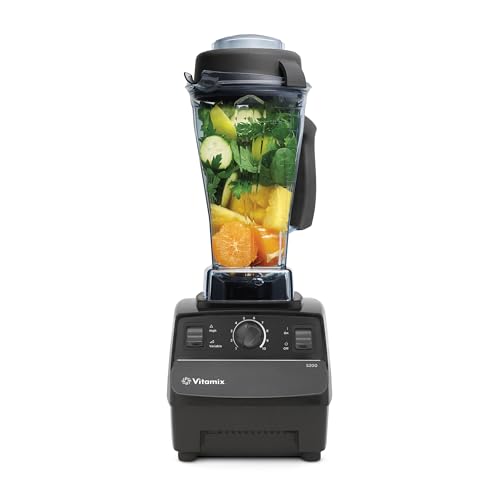
Vitamix 5200 Blender
A long-running, high-powered countertop blender known for handling ice and frozen fruit smoothly, often used as the benchmark for countertop blending power.
Questions worth asking
Can an immersion blender crush ice like a countertop blender can?
Not reliably. Immersion blenders are built for softer ingredients, and regularly forcing them through ice puts extra strain on a motor that is smaller than what a countertop blender uses.
Which is better for making smoothies, immersion or countertop?
A countertop blender generally produces a smoother result for smoothies, especially with frozen fruit, since its sealed jar and stronger motor handle that resistance better.
Which one is easier to clean?
An immersion blender is usually easier, since only the blending head needs rinsing rather than a full jar and base.
Is an immersion blender generally cheaper than a countertop blender?
Entry-level immersion blenders are often less expensive than a comparable countertop blender, though high-end immersion models can cost as much as a mid-range countertop blender.
Which is better suited for blending soup directly in the pot?
An immersion blender, since it is designed specifically to be lowered into a pot on the stove without transferring hot liquid into a separate jar.
Does motor wattage matter as much for immersion blenders as it does for countertop models?
Wattage still matters, but the blending mechanism and jar shape of a countertop blender contribute more to final texture than wattage alone does for either type.
Do immersion blenders come with useful attachments?
Many do, including whisk and small chopper attachments, which extend their usefulness beyond basic blending for tasks like whipping cream or chopping small amounts of vegetables.
Is a countertop blender better for making nut butter?
Yes, the sustained power and fixed jar of a countertop blender generally handle the long grinding time nut butter requires better than most immersion blenders can.
Which takes up less storage space?
An immersion blender, since it is a single slim wand rather than a jar and separate base that need counter or cabinet space.
Is one noticeably quieter than the other?
Immersion blenders are often a bit quieter during light tasks, though a high-powered countertop blender working on ice or frozen ingredients tends to be louder regardless of brand.
Is it safe to use an immersion blender in a hot pot on the stove?
Yes, that is one of its main intended uses, though the pot should generally be removed from direct heat first and the blending head should stay fully submerged to avoid splattering.
Which lasts longer with regular use?
Both can last many years with normal care, though immersion blender motors used frequently on hard or frozen ingredients they are not built for tend to wear out sooner.
Can the blades on an immersion blender be replaced if they get dull or damaged?
On many models the blending head is replaceable as a unit, though replacement parts are more model-specific than universally interchangeable.
Is an immersion blender good for making baby food?
Yes, it is a common use since it can puree small batches directly in a pot or bowl without needing to transfer hot food into a separate jar.
Which is better for emulsifying something like mayonnaise or vinaigrette?
An immersion blender is often preferred for small-batch emulsions like mayonnaise, since it can be worked directly in a narrow container while slowly adding oil.
Is a countertop blender overkill for someone who only makes small amounts of soup?
For someone mostly blending single servings or finishing soup in the pot, a countertop blender adds extra cleanup without much benefit over an immersion blender.
Can pushing an immersion blender too hard on thick mixtures damage the motor?
Yes, forcing it through very thick or frozen mixtures repeatedly can overheat and shorten the life of the motor, since it is not built with the same torque as a countertop blender.
Does an immersion blender need special care to keep water out of the motor?
Yes, only the blending head with the blades should ever be submerged, while the motor housing at the top needs to stay dry during both use and cleaning.
Is a cordless immersion blender as powerful as a corded one?
Cordless models have improved over the years but generally still deliver somewhat less sustained power than a corded immersion blender, which matters more for tough jobs than quick finishing tasks.
Can an immersion blender overheat during a long blending session?
Yes, running it continuously on a thick mixture for an extended stretch can heat up the motor, which is why many models are rated for short bursts rather than continuous use.
Does a wider blending head perform differently than a narrow one?
A wider head processes more volume per pass but needs a deeper container, while a narrower head fits tight spaces like a measuring cup more easily for small batches.
Is it normal for a countertop blender jar to look cloudy after a while?
Yes, repeated washing and contact with acidic or oily ingredients can gradually cloud a plastic blender jar over time, which is a cosmetic change rather than a sign the jar is failing.
Does an immersion blender’s attachment system wear out over time?
The locking mechanism between the blending head and motor can loosen slightly after years of regular use, though it rarely fails outright with normal care.
Where this leaves you
The real question is not which blender is better in general, but which job is in front of you. For soup finished in the pot or a quick emulsion, reach for the immersion blender; for ice, frozen fruit or a genuinely smooth large batch, the countertop blender still does it better.
Dana Whitfield
Dana spent eight years buying and merchandising for a regional kitchenware retailer before moving into editorial work. She has handled thousands of SKUs across cookware, small appliances and kitchen organization, and focuses on the practical differences that matter once a product is actually in daily use.