Is a Greenhouse Fan Necessary in a Small Space?
Yes, even a small greenhouse benefits from air circulation, because still, humid air inside a closed structure promotes fungal disease and uneven temperatures far more than the square footage would suggest. A small circulation fan is usually enough for this; a full exhaust and intake venting system is only needed if the space also struggles with heat buildup on sunny days.
What stagnant air actually causes
Trapped humid air sitting around leaves is one of the biggest drivers of fungal issues like powdery mildew and botrytis in enclosed growing spaces, and this happens regardless of how small the structure is. A tiny greenhouse with no airflow can develop disease pressure just as easily as a large commercial one.
Circulation fans vs. exhaust fans
A small oscillating or clip fan simply keeps air moving inside the space, while an exhaust fan actively vents hot or humid air outside and pulls fresh air in to replace it. Small greenhouses often need the first far more urgently than the second, since moving stale air around solves most of the humidity-related disease risk on its own.
Temperature stratification in small spaces
Even a compact greenhouse can develop a noticeable temperature gradient between the top and bottom, with hot air pooling near the roof while the area near plant level stays cooler. A simple circulation fan corrects this cheaply by mixing the air layers rather than letting them separate.
When passive ventilation is genuinely enough
A small greenhouse with roof vents, a door that’s opened regularly, and good spacing between plants may get adequate airflow without any powered fan at all, especially in a mild climate with regular breezes. Passive airflow becomes less reliable, though, in calm weather or a tightly sealed structure.
Sizing a fan for a small structure
Oversized exhaust fans waste energy and can overcool a small space quickly, so a fan rated for roughly the actual cubic footage of the greenhouse, rather than a generic small-greenhouse label, avoids both stagnant air and an over-chilled interior on a cool day.
Power and placement considerations
In an unheated, unpowered greenhouse, a battery or solar-powered circulation fan is often the practical choice, and placing it to move air across plant canopy level, rather than just near the roof where it does little for the plants themselves, matters more than raw airflow numbers.

AC Infinity CLOUDLINE T4 Inline Duct Fan
A quiet, speed-controllable inline fan originally designed for grow tents that works well for active air circulation in a small greenhouse structure.
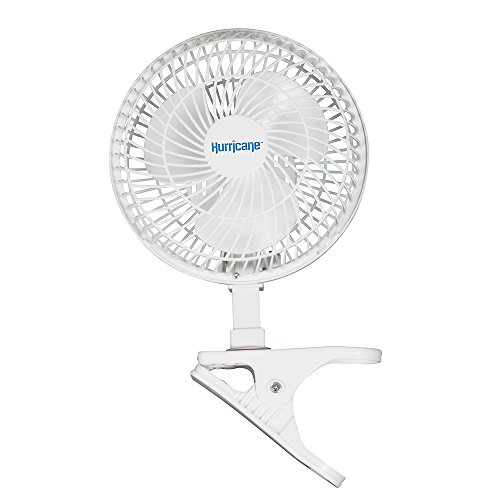
Lasko 2-Speed Clip Fan
A simple clip-mountable fan that can be positioned at canopy height to keep air moving across plants in a small, powered greenhouse setup.
Frequently asked questions
Can a regular household fan work instead of a greenhouse-specific fan?
Yes, for basic circulation a standard household fan works fine, though it lacks the weather and humidity resistance a purpose-built greenhouse fan is designed for over time.
Does a small greenhouse need both an intake and exhaust fan?
Not usually, a small space often only needs a circulation fan unless heat buildup on sunny days is a persistent problem, at which point a single exhaust fan with a passive intake vent is typically enough.
How many hours a day should a greenhouse circulation fan run?
Many growers run a circulation fan for a good portion of daylight hours, or continuously on low speed, since the goal is preventing still air pockets rather than blasting plants constantly.
Can too much airflow damage seedlings or young plants?
Yes, a fan aimed directly and continuously at young seedlings can cause excessive moisture loss or physical stress, so gentle, indirect circulation works better than a strong direct airstream on tender plants.
Does a solar-powered fan provide enough airflow for a small greenhouse?
For basic circulation in a small space, yes, though output drops on cloudy days unless the unit has a small battery buffer, which matters more for consistent coverage.
Is a thermostat-controlled fan worth it for a small space?
It can be, since it automates venting on hot days without manual checking, though for pure air circulation rather than heat venting, a simple always-on low-speed fan is often sufficient.
Can a fan replace the need for roof vents?
Not entirely, roof vents allow hot air to actually escape the structure, while a fan just moves air around inside, so the two serve different purposes and work best together.
Does humidity still build up in winter if a fan is running?
Humidity can still accumulate in winter since cold air holds less moisture and condensation increases, but a running fan helps distribute that moisture more evenly rather than letting it concentrate on specific leaves.
Will a fan help prevent frost damage on cold nights?
A circulation fan can help slightly by preventing cold air from pooling in low spots, but it’s not a substitute for actual heating or frost protection on genuinely cold nights.
Can a fan be too close to plants and cause leaf damage?
Yes, a fan positioned too close and running at high speed can cause physical abrasion or excessive drying on nearby leaves, so some distance or a lower speed setting is usually better.
Is it better to run a fan constantly or on a timer?
Many small-space growers prefer running a low-speed fan nearly constantly during daylight, since the risk from stagnant air generally outweighs the minimal energy cost of continuous low-speed operation.
Does a greenhouse fan use much electricity over a season?
Small circulation fans are generally low-wattage and inexpensive to run continuously over a season, especially compared to heating or cooling equipment in the same space.
Can a greenhouse fan help with pollination in an enclosed structure?
Yes, gentle air movement can help distribute pollen for some self-pollinating plants like tomatoes, which rely partly on movement rather than insects in a fully enclosed space.
Does fan placement matter more than fan power?
Often yes, a modestly powered fan placed to move air across the whole growing area evenly tends to outperform a stronger fan aimed in one fixed direction that leaves other areas stagnant.
Is a misting system a substitute for air circulation?
No, misting adds moisture rather than moving stagnant air, and without circulation a misting system can actually make fungal disease risk worse by adding humidity without airflow to disperse it.
Can a greenhouse fan cause cold spots near the air outlet of an exhaust system?
Yes, especially in winter, the area directly near an exhaust fan’s outlet can run noticeably cooler than the rest of the space, so placing sensitive plants away from that zone helps.
Can a battery-powered fan run long enough to matter in a small greenhouse?
It depends on battery capacity, but many small circulation fans draw little enough power that a modest battery or solar setup can keep one running through most of a day without needing frequent recharging.
Does adding a fan reduce the need for manual watering?
Not directly, though better air circulation can reduce how unevenly soil surface moisture evaporates, which indirectly makes watering needs a bit more predictable across the growing space.
Can two small fans work better than one larger fan in a tiny greenhouse?
Sometimes yes, positioning two smaller fans to create a gentle circular airflow pattern can cover a compact space more evenly than a single fan blowing in just one fixed direction.
Does fan noise matter in a small backyard greenhouse near a house?
Small circulation fans are generally quiet enough not to be a concern, though a larger exhaust fan running continuously could be noticeable at night in a yard close to bedroom windows, worth checking before buying a louder model.
Our take
Size alone doesn’t exempt a greenhouse from airflow problems, so a basic circulation fan is close to a must-have even in a small structure. A full powered exhaust system is only worth adding once heat buildup, not just stale air, becomes the actual issue in that specific space.
Sierra Daniels
Sierra's background is in landscape design and nursery retail. She focuses on lawn and garden equipment, outdoor furniture and gear durability, weighing published specs against how materials actually hold up outside.