Is Foam Roller Density Important for Beginners?
Yes, density matters quite a bit for someone just starting out, because a very firm, high-density roller applies much more pressure for the same amount of body weight pressed into it, which can be painful enough that a beginner tenses up and rolls incorrectly instead of actually releasing muscle tension. A softer, lower-density roller lets a new user control pressure more easily and learn proper technique before progressing to firmer options later.
What density actually refers to on a foam roller
Density describes how firm or soft the roller’s core material is, which depends on both the type of foam and how it’s constructed. A solid, closed-cell EPP foam roller feels noticeably firmer than a softer NBR or EVA foam roller of the same size, and some rollers go even firmer with a rigid PVC pipe core wrapped in a thin foam layer, which transmits far more direct pressure than an all-foam design.
Why a high-density roller hurts more for the same body weight
Pressure applied through a firmer material concentrates more force into a smaller contact area against the muscle, since less of the roller’s surface compresses and spreads that load out. The same person lying on a firm roller and a soft roller, applying identical body weight, will feel meaningfully more intense pressure on the firm one, simply because of how little the material gives.
The specific problem this creates for beginners
When pressure crosses from uncomfortable into genuinely painful, most people’s muscles instinctively tense up to guard against it, which works directly against the point of foam rolling, releasing tension in that muscle. A beginner using a very firm roller before building any tolerance often ends up tensing through the exercise rather than relaxing into it, getting less benefit than a gentler session would have provided.
How a softer roller makes pressure easier to control early on
A lower density roller lets a beginner adjust how much pressure they’re applying mostly through body positioning, shifting more or less weight onto the roller, within a range that stays tolerable. This makes it much easier to learn proper rolling technique, pace, and breathing without the experience being dominated by pain management.
How density tolerance builds over time, similar to other training adaptations
Just as strength or flexibility improves gradually with consistent practice, tolerance for firmer roller pressure tends to increase the more someone rolls regularly, as the nervous system adapts and muscles become more accustomed to sustained pressure. Many people who start on a soft roller naturally progress to firmer options over weeks or months rather than needing to start firm from day one.
Texture is a separate variable from density, and the two get confused often
A smooth roller and a roller covered in raised ridges or knobs can both come in soft or firm densities, and texture changes how pressure is distributed, concentrating more intensely at contact points on a ridged roller, rather than changing the overall firmness of the core material. Beginners are generally better served starting with a smooth surface at a moderate density before adding textured surfaces into the mix.

TriggerPoint GRID Foam Roller
A moderate-density roller with a multi-density surface pattern that’s commonly recommended as an accessible starting point rather than a very firm, rigid option.
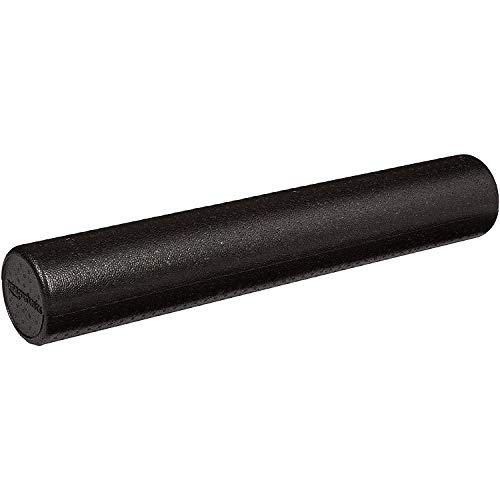
AmazonBasics High-Density Round Foam Roller
A firmer, higher-density round roller that applies more direct pressure, generally a better fit once someone has built up some rolling tolerance.
Questions worth asking
What density of foam roller is best for someone who has never used one?
A soft to moderate density roller is generally a more comfortable starting point, letting a new user control pressure through body positioning rather than being overwhelmed by a very firm surface right away.
Can using too firm a foam roller actually cause bruising?
Yes, especially for a beginner applying full body weight onto a very firm roller over a bony or sensitive area, excessive pressure can lead to bruising or soreness beyond normal muscle tenderness.
How do you know when it’s time to move up to a firmer foam roller?
If a current roller no longer produces a meaningful release or feels too gentle to reach deeper muscle tension, that’s generally a sign tolerance has built up and a firmer option may be more effective.
Is a hollow core foam roller always firmer than a solid one?
Often yes, since a rigid PVC or similar hollow core transmits pressure more directly than a fully solid foam construction, though the thickness and type of foam wrapped around that core also affects overall firmness.
Does body weight affect which roller density is appropriate?
Yes, a heavier person compresses a given roller more than a lighter person applying the same effort, so someone with more body weight may find a moderate density roller feels firmer in practice than it would for a lighter user.
Can foam roller density affect how long a rolling session should last?
A firmer roller used at high pressure typically calls for shorter rolling time per muscle group to avoid overdoing it, while a softer roller can often be used a bit longer per area without the same discomfort buildup.
Is it normal for foam rolling to hurt at all, even on a soft roller?
Some discomfort, especially over tight or overworked muscle areas, is common and expected, but it should generally feel like a tolerable, releasing kind of discomfort rather than sharp or guarding pain, even on a softer roller.
Does foam roller density matter differently for different muscle groups?
Yes, larger, less sensitive muscle groups like the quads or glutes can often tolerate firmer pressure sooner than smaller or more sensitive areas like the calves or IT band region, which often benefit from softer density longer.
Can a foam roller that’s too soft actually be ineffective?
If a roller is so soft that it compresses almost completely under body weight without creating meaningful pressure, it may not produce much of a release effect, which is part of why most beginners are pointed toward moderate rather than extremely soft options.
Do physical therapists generally recommend starting with a softer or firmer roller?
Many physical therapists do recommend beginners start softer, specifically to build comfort with the sensation and proper technique before progressing to firmer tools, though individual recommendations vary by person and condition.
Is foam roller density the same thing as foam roller size?
No, density refers to firmness of the material, while size refers to the roller’s length and diameter, and the two are independent, a roller can be long or short, large or small diameter, at any density level.
Does a textured or ridged roller always apply more intense pressure than a smooth one?
Generally yes, at the same density, because the raised ridges or knobs concentrate pressure into smaller contact points rather than spreading it evenly, which is a separate effect from the underlying material’s firmness.
Can using the wrong density roller lead to skipping foam rolling altogether?
Yes, this happens fairly often, a beginner who has a painful first experience with too firm a roller may associate foam rolling itself with discomfort and avoid it, when a softer starting point might have led to a better, more sustainable habit.
Is it worth buying multiple foam rollers at different densities?
For someone who rolls regularly and targets different muscle groups or wants to progress over time, having both a softer and a firmer option on hand is a reasonable, practical approach rather than committing to just one density.
Does foam roller density affect how it’s used for warming up versus recovery?
A slightly firmer roller is sometimes used briefly before activity to stimulate muscles, while a softer roller used more slowly after exercise is often preferred for general recovery and relaxation, though personal preference plays a large role either way.
Can foam roller density change over time as the foam wears out?
Yes, foam does compress and lose some of its original firmness with extended use over months or years, so a roller that felt quite firm when new may feel noticeably softer after a long period of regular use.
Should someone with an injury choose a different foam roller density than a healthy beginner?
Generally yes, and ideally with guidance from a physical therapist or trainer, since an injured or recovering area often needs gentler, more controlled pressure than a standard beginner recommendation for a healthy muscle group.
Final word
Density is one of the few foam roller specs that genuinely changes the experience, especially early on. Starting softer lets a beginner learn proper rolling technique without pain overwhelming the benefit, and moving to a firmer roller later is a natural progression rather than something to rush into on day one.
Derek Holt
Derek has a background coaching recreational and amateur athletes and has worked the sales floor at specialty fitness retailers. He focuses on equipment durability, ergonomics and realistic use cases rather than marketing claims.

